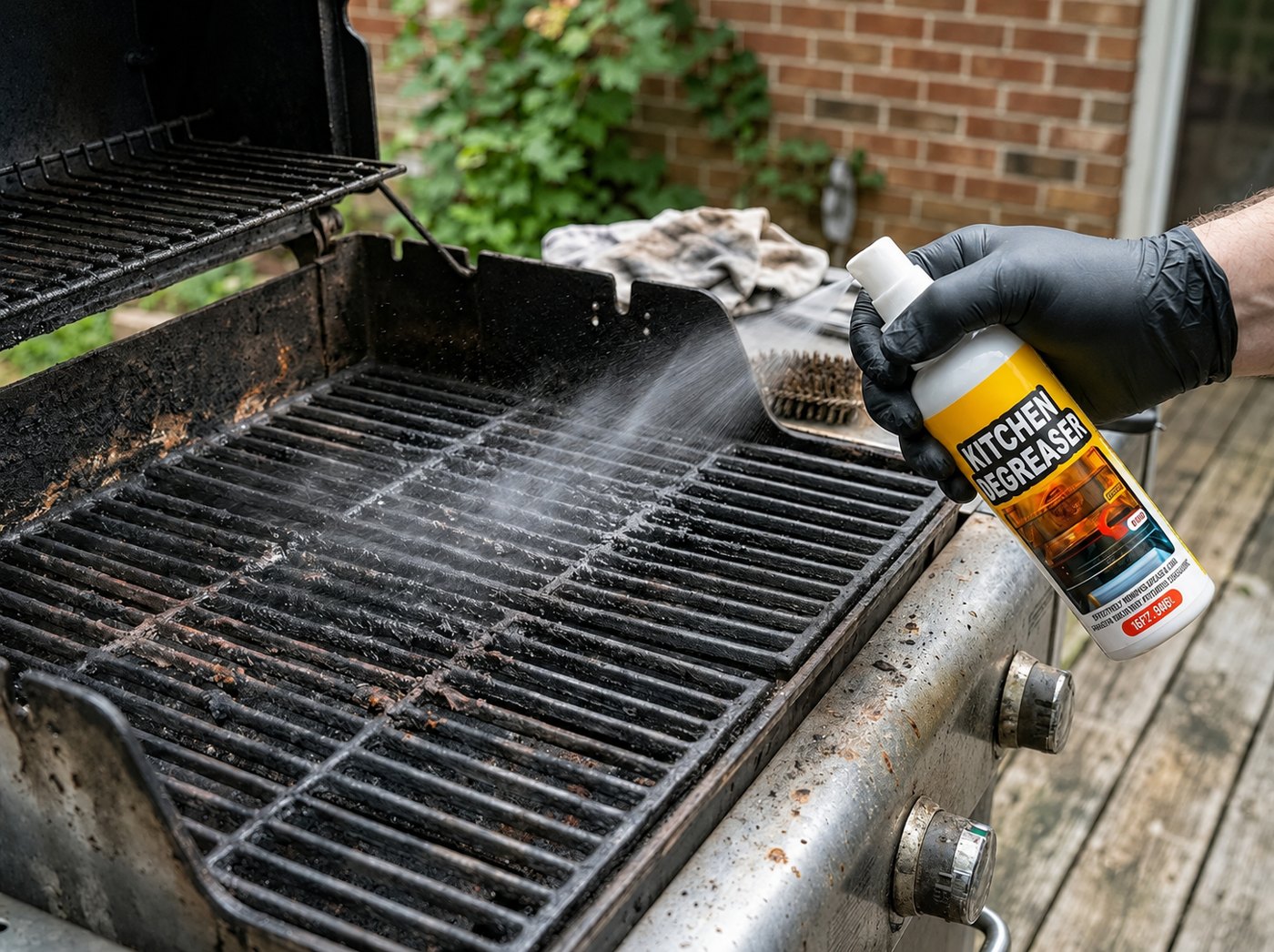
Why it works when dish soap doesn't
Cooking fat that has been heated repeatedly does not stay fat. It polymerises: the molecules cross-link into a hard, varnish-like solid bonded to the metal. Detergent works by surrounding liquid grease droplets. There are no droplets left to surround, which is why scrubbing feels like the only option.
A dedicated degreaser attacks that bond chemically instead of mechanically. Once the bond fails, the layer no longer holds to the metal — and a cloth is enough.
Where it performs best
- Grill grates with 1–3 seasons of build-up: usually one coat, one wipe.
- Oven doors and glass: the brown film clears without razor blades.
- Hob surrounds and burner caps: the ring of baked spill lifts in one pass.
- Range hood filters: the sticky film that clogs mesh releases quickly.
Where it underperforms
- Grease older than about five years: expect two applications, not one.
- Rust: this is corrosion of the metal itself, not a deposit. No degreaser reverses it.
- Chipped or crazed porcelain enamel: cleaning it will not restore the finish.
- Cold garages in winter: chemistry slows down below roughly 10°C, so allow extra dwell time.
- Unfinished aluminium and unsealed wood: the alkaline formula can dull or stain these — don't use it there at all.
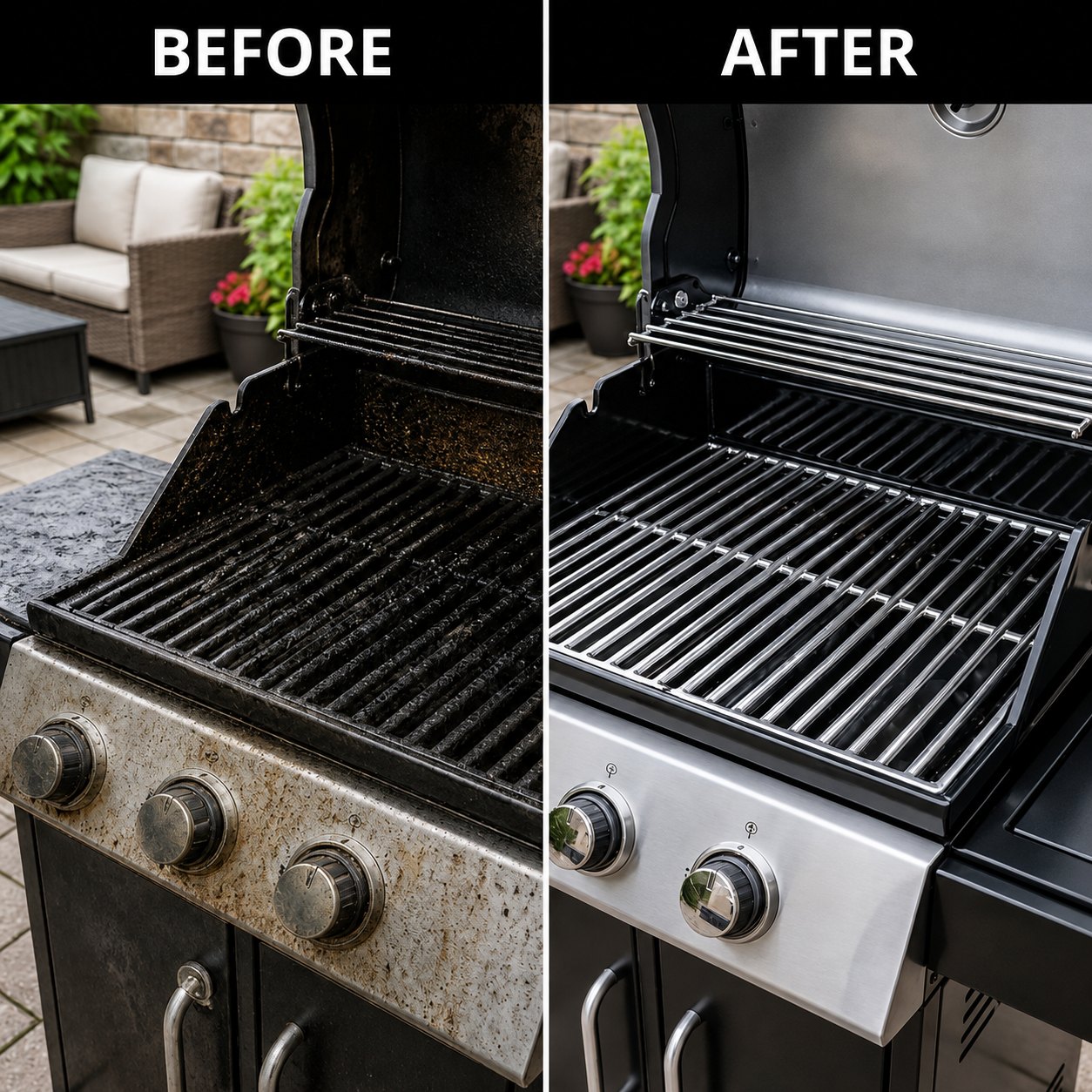
Time, cost and risk compared
Every method below removes grease eventually. The difference is how long it takes, what it costs per clean, and how much of your surface finish it takes with it.
| Method | Hands-on time | Cost per clean | Risk to finish |
|---|---|---|---|
| Dish soap + scrubbing | 20+ min | $0.50 | Rarely removes polymerised carbon at all |
| Wire brush | 15–25 min | $0 | Scratches grates, wears protective coatings |
| Caustic oven cleaner overnight | 10 min + 8–12 hr wait | $8–$12 | Fumes, gloves required, can etch aluminium |
| GreaseKiller™ Spray | 2 min dwell + wipe | $4–$6 per clean | Low, avoid raw aluminium and unsealed stone |
How to test it yourself in ten minutes
- 1
Pick the worst square foot you own
Don't test on the easy area. Choose the corner of the grate or the oven door panel you have already given up on.
- 2
Spray, wait two minutes, wipe half
Wipe only half of the sprayed area, so you have a side-by-side comparison on the same surface with the same history.
- 3
Judge the line between them
If there is a clear boundary, it worked. If there isn't, re-coat and give it five minutes before you conclude anything.
- 4
Still not convinced? Claim the guarantee
Email support with your order number within 90 days. No returned bottles, no photos, no restocking fee.
How we tested this
Everything below comes from bench runs on grill grates, oven glass and hob surrounds with documented ages of build-up rather than marketing copy. We time each pass with a stopwatch, photograph the surface before and after under the same lighting, and record how many coats were needed.
- Photographed the same panel before spraying, at 2 minutes, and after the final wipe under matched lighting.
- Ran a control strip with dish soap and a wire brush alongside each test for direct comparison.
- Repeated the two-minute test at room temperature and again at 8°C to check the cold-weather slowdown.
- Logged how many coats each surface needed before a clean cloth wipe came away clean.
What a real customer found
“I was skeptical because every grease spray claims two minutes. This one actually delivered on a grate I'd been meaning to throw out. Second coat on the worst corner and it was done.”
Try GreaseKiller™ risk-free
Bundles start at $9 a bottle with free worldwide shipping and a 90-day results-or-refund guarantee. Checkout takes under a minute.
Get 50% Off Now