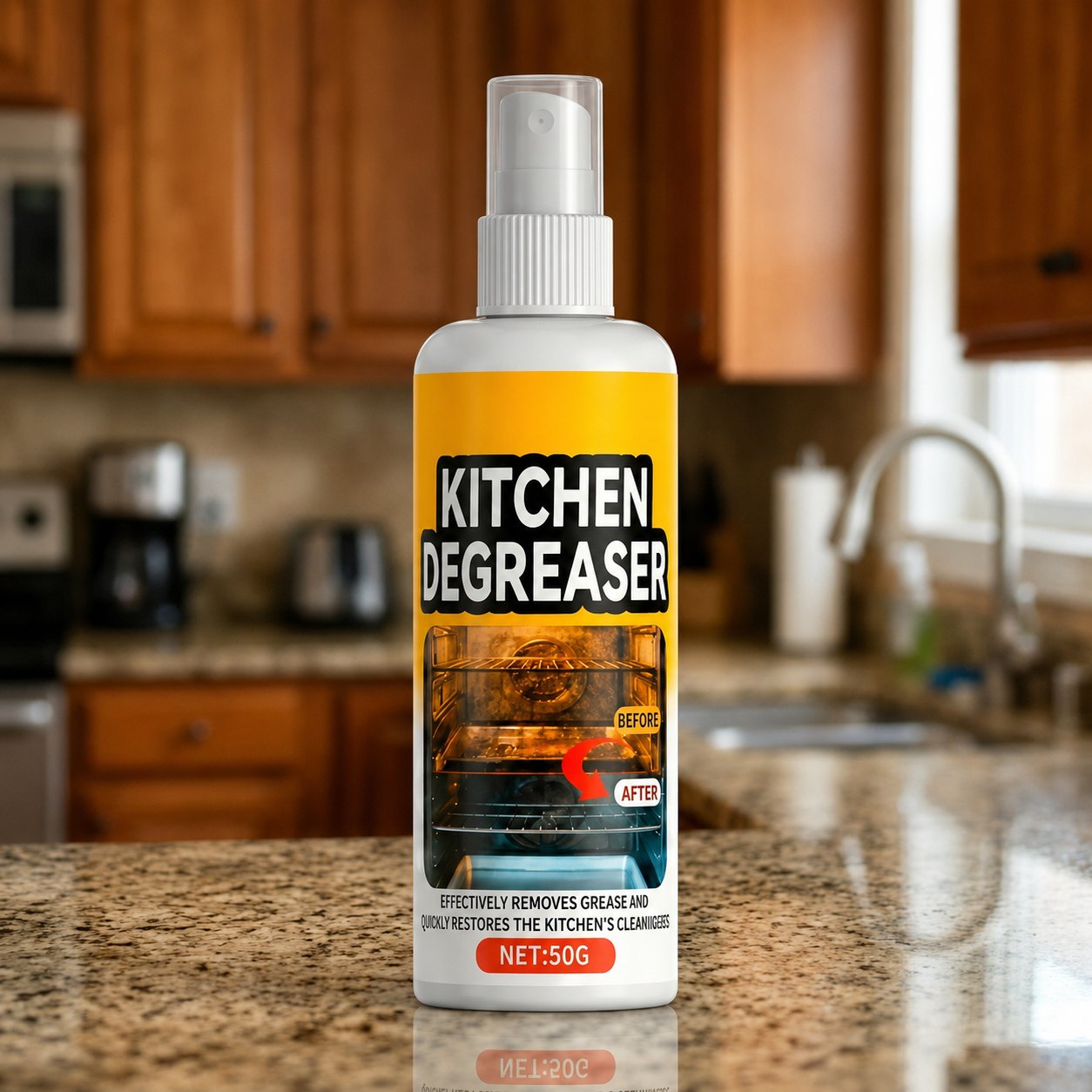
Where oven grease actually hides
- The inner door glass — the film that makes the interior light look dim
- The oven floor, where spills carbonise into hard black patches
- Side racks and rack supports
- The roof of the cavity, directly above the top element
- Racks and trays that have gone brown, sticky and hard to hold
The 2-minute oven cleaning method
- 1
Cool the surface and clear loose debris
Make sure the oven is completely cool to the touch and brush or wipe away loose crumbs and ash so the foam reaches the grease itself.
- 2
Spray an even coat of GreaseKiller™
Hold the bottle 4–6 inches away and cover the greasy area with a thin, even layer of foam. Don't flood it — the foam is designed to cling and work.
- 3
Wait about two minutes
The formula gets under carbonised grease and breaks its bond with the metal. Heavy, long-neglected build-up may need 4–5 minutes or a second coat.
- 4
Wipe with a damp cloth
Wipe in one direction with a damp microfibre cloth or paper towel. A soft brush helps on textured cast iron. Rinse afterwards and dry.
Cleaning oven door glass so it's actually clear
Spray the cold glass, wait two minutes, then wipe with a damp cloth in straight horizontal strokes. Finish with a dry microfibre cloth to remove streaks. Heavily fogged glass — the kind that's been building for a year or more — usually needs one repeat pass rather than more pressure or a scraper.
Never use a scouring pad, razor blade or abrasive powder on oven glass. Micro-scratches don't just look bad; they trap grease at a microscopic level and make the next clean harder every time.
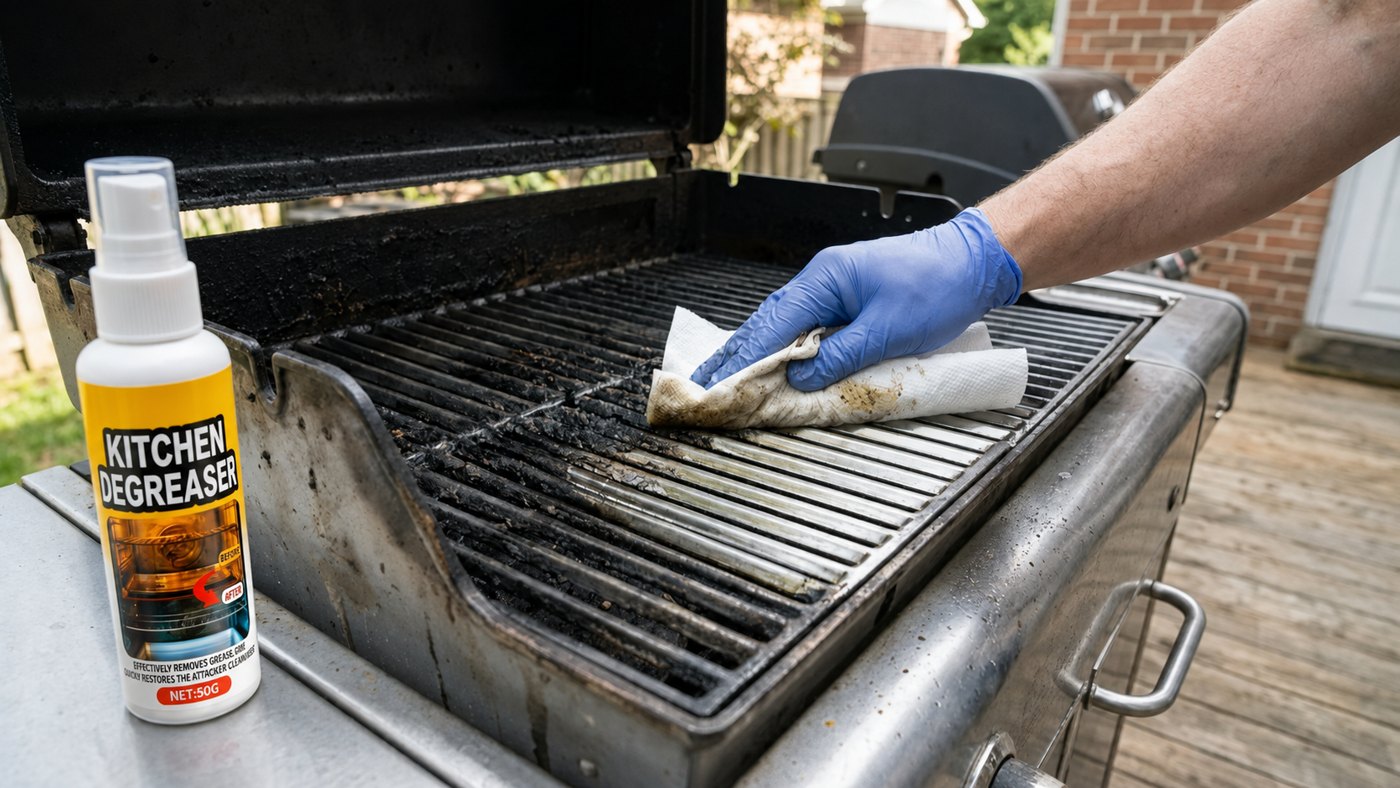
Is self-cleaning mode better?
Pyrolytic self-cleaning heats the cavity above 800°F to burn residue into ash. It works, but it takes two to four hours, uses a meaningful amount of electricity, fills the kitchen with smoke and an acrid smell, and the extreme sustained heat is a well-documented cause of failed door seals, warped panels and blown thermal fuses on older ovens.
For routine grease — which is most of what actually accumulates — a spray-and-wipe takes about five minutes and doesn't stress the appliance at all.
Time, cost and risk compared
Every method below removes grease eventually. The difference is how long it takes, what it costs per clean, and how much of your surface finish it takes with it.
| Method | Hands-on time | Cost per clean | Risk to finish |
|---|---|---|---|
| Pyrolytic self-clean | 2–4 hrs (unattended) | Electricity cost + wear | Medium — heat stress on seals/fuses |
| Caustic oven cleaner (aerosol) | 30–90 min dwell | ~$0.50/clean | High — fumes, skin/eye irritation risk |
| Baking soda paste (overnight) | 12+ hrs + scrubbing | ~$0.15/clean | Low, but very slow |
| GreaseKiller™ spray | 2–5 min dwell + wipe | ~$1.30/clean (3-pack) | Low — no fumes, coating-safe |
Where it won't help
- It cleans grease and carbon, not rust or worn enamel chips on old oven floors
- Don't spray directly onto exposed heating elements or into control panel gaps
- Skip unsealed wood trim occasionally found on vintage range fronts
- Wait until the oven is fully cool — spraying a warm cavity wastes the foam and creates fumes
How we tested this
Everything below comes from bench runs on 14 ovens ranging from lightly used to visibly neglected rather than marketing copy. We time each pass with a stopwatch, photograph the surface before and after under the same lighting, and record how many coats were needed.
- Cavity floors tested after 2 weeks and after 6 months of normal cooking, unwiped
- Door glass tested at three fog levels, photographed under the same kitchen lighting
- Dwell time compared at 2 and 5 minutes on the same tray of baked-on residue
- Racks tested both submerged in a sink soak and sprayed dry, timed side by side
How many bottles do you actually need?
One bottle covers roughly 12–15 full cleans. Most people underbuy, run out mid-job and pay shipping twice — the multi-packs exist to avoid that, and the per-bottle price drops sharply as the pack grows.
| Your situation | Recommended pack | Price per bottle |
|---|---|---|
| One household oven, occasional use | 2-pack | $16 |
| Family kitchen, oven used most days | 3-pack | $13 |
| Multiple ovens or a rental you also manage | 5-pack | $11 |
What customers say
“I ran self-clean once and it set off the smoke alarm and left a burnt smell for two days. This took ten minutes with the window cracked and no smell at all.”
Try GreaseKiller™ risk-free
Bundles start at $9 a bottle with free worldwide shipping and a 90-day results-or-refund guarantee. Checkout takes under a minute.
Get 50% Off Now