Guide library
Grease cleaning guides
33 tested, step-by-step guides for the grease problems people actually have — grills, ovens, hobs, hood filters, air fryers, fryers and workshop grime. Written to be useful whether or not you ever buy a bottle from us.
Written by the GreaseKiller™ product team · Last updated
90-Day Guarantee
Results or your money back
Free US & UK Shipping
On every bundle, no minimum
Secure Checkout
256-bit SSL, Shopify protected
Real Support
Answered within 24 hours
Most read this week
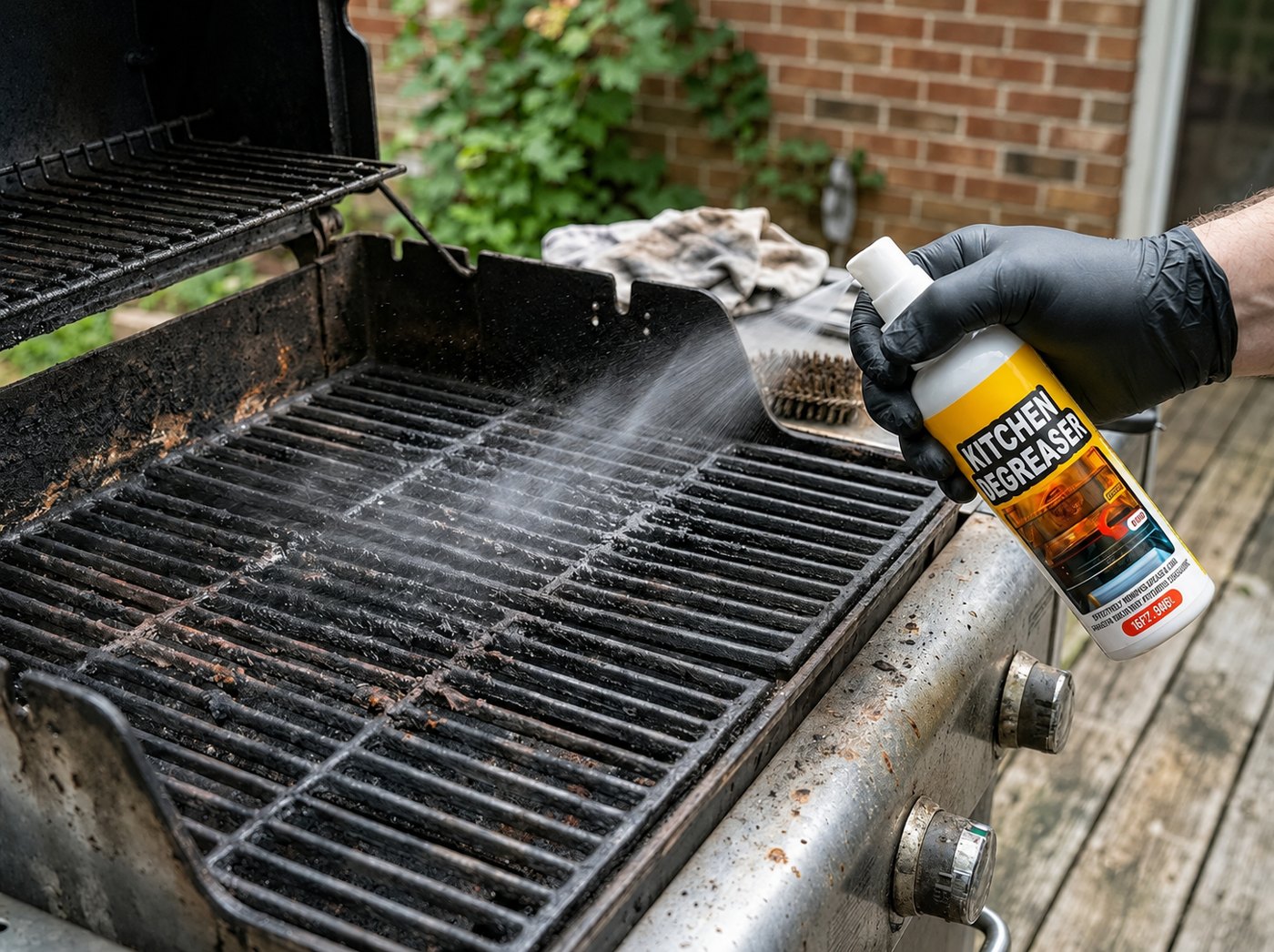
- 6 min readHow to remove burnt-on greaseWhy scrubbing fails on carbonised fat, and the dwell method that replaces it.Read the guide
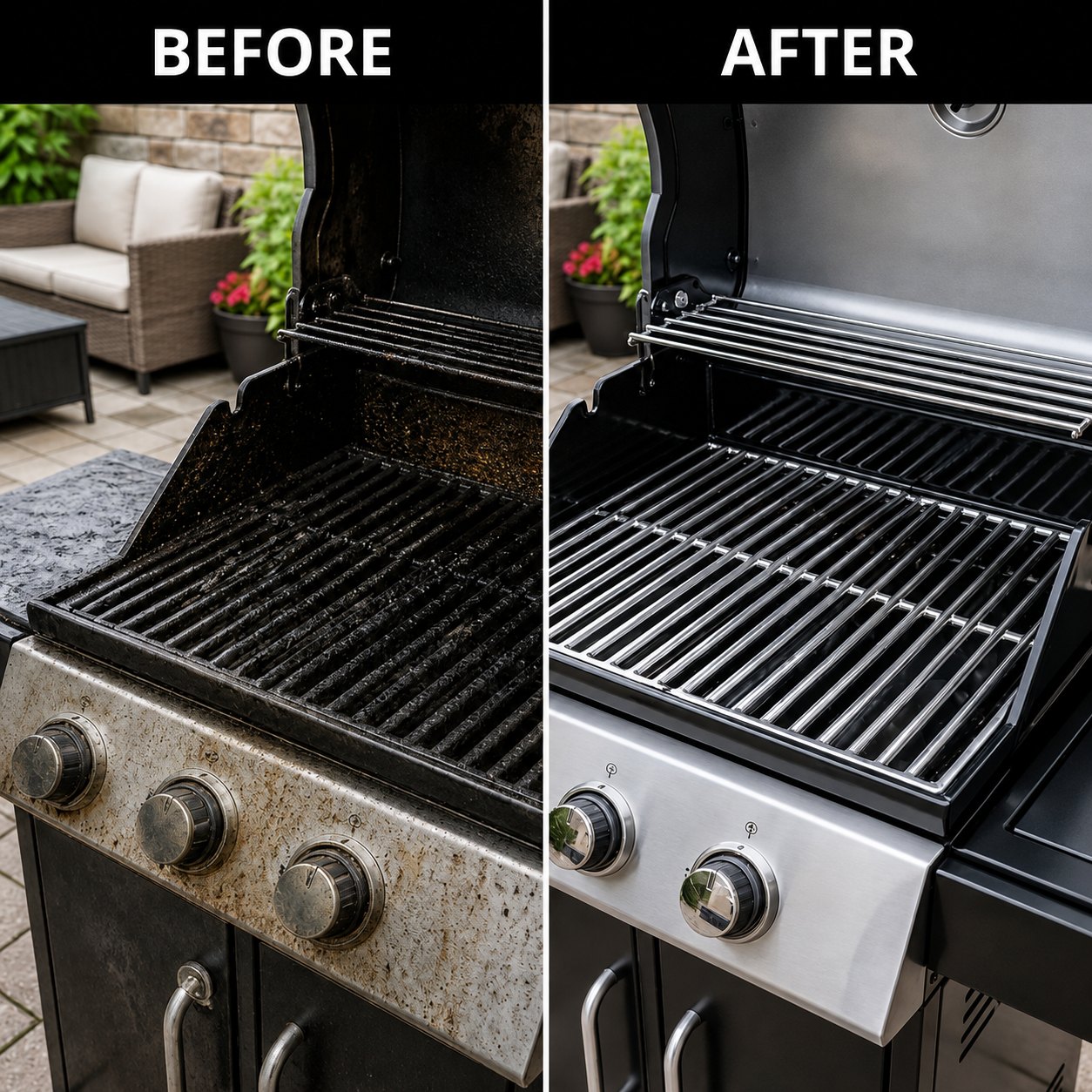
 8 min readHow to clean a BBQ grillThe full deep-clean order: grates, tamers, firebox, grease tray, lid.Read the guide
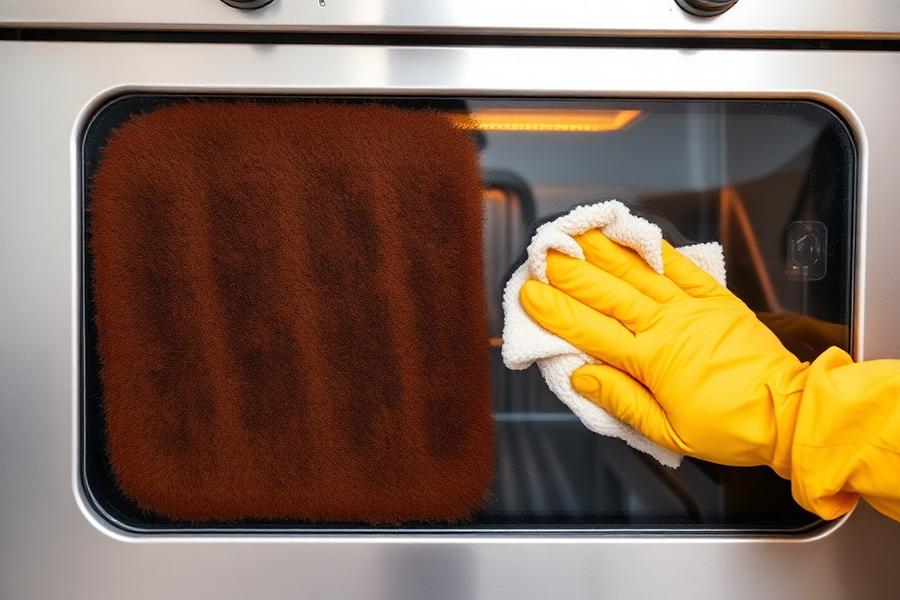 7 min readClean an oven without scrubbingDoor glass, racks and floor with no caustic fumes and no overnight soak.Read the guide
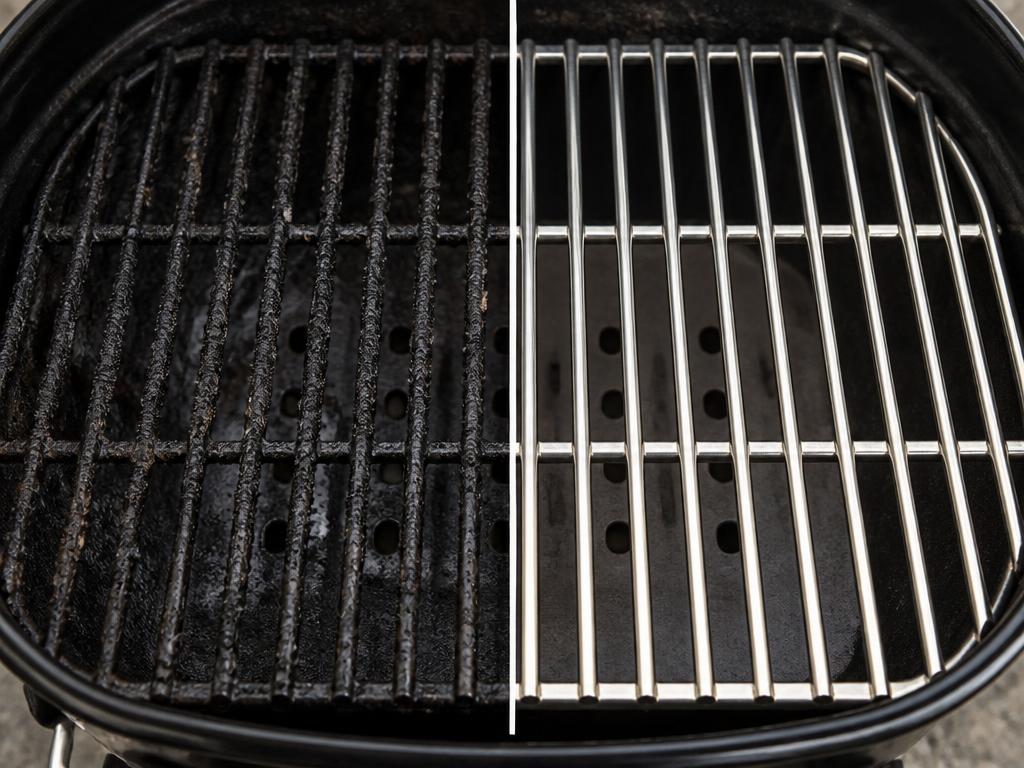 5 min readThe 2-minute weekly grate routineThe maintenance pass that stops build-up before it ever hardens.Read the guide
Why heated grease behaves differently
Fresh cooking fat is a liquid, and detergent handles liquids well: the surfactant grabs the oil at one end, the water at the other, and the whole thing rinses away. That is the entire job dish soap was designed for, and on a fresh splatter it does it in seconds.
Heat changes the material. Above roughly 400°F the light fractions of the fat boil off and the rest cross-links — the molecules bond to each other and to the metal underneath into a hard, insoluble polymer. The brown lacquer on oven door glass and the black glaze on a grill grate are the same substance at different stages. Detergent has nothing left to lift, which is why people conclude the grease is permanent and reach for a wire brush or a caustic cleaner instead.
There is a third option, and it is the one every guide here is built on: break the bond chemically, then let time do the work. An alkaline surfactant foam softens the polymer layer from the outside in. It needs to stay wet on the surface for two to five minutes to reach the metal — which is exactly why foam beats a runny liquid, and why the single most common mistake is wiping too early. Give it the dwell time and the crust lifts in sheets on a cloth. Rush it and you are back to scrubbing, blaming the product.
Three rules follow from this, and they hold on every surface in this library. Work on a completely cool surface, because hot metal flashes the foam dry before it can penetrate. Re-coat rather than wait longer, because a dry coat has stopped working. And rinse anything that touches food, then dry it — that final ten seconds is what separates a surface that is clean from one that is ready to cook on tonight.
Choose the right method
Not every job needs a degreaser. Match the build-up to the method — the rows marked below are the ones where a non-caustic foam is genuinely the best tool, and the ones that aren't marked are jobs a cheaper method does just as well.
| What you're facing | Best method | Time | Risk / downside |
|---|---|---|---|
| Fresh splatter, still soft | Hot water and dish soap | 2 min | None |
| Sticky amber film on cabinets and hoods | Non-caustic degreaser foam | 2 min dwell | Patch test lacquer |
| Baked-on brown layer in an oven | Non-caustic degreaser foam | 3–5 min dwell | Keep off self-clean liners |
| Baked-on brown layer in an oven | Caustic oven cleaner | 30–120 min | Fumes, gloves, burns, long airing |
| Black carbonised crust on grates | Degreaser foam, two coats | 5 min dwell | Surface must be cool |
| Black carbonised crust on grates | Wire brush and scraping | 20–40 min | Bristle loss, scratched enamel |
| Limescale and hard water marks | White vinegar or citric acid | 10 min | Not for stone |
| Odours and light residue | Baking soda paste | 10 min | Gritty, needs rinsing |
| Grease inside ducting and heavy commercial build-up | Degreaser foam, then steam | 5 min + steam | Hot equipment, use in order |
Start here: the fundamentals
The physics of baked-on grease and the method every other guide on this site is built on. Read these two and most of the rest becomes obvious.
- 6 min readHow to remove burnt-on greasePolymerised fat, why elbow grease loses, and the dwell-time fix.Read the guide
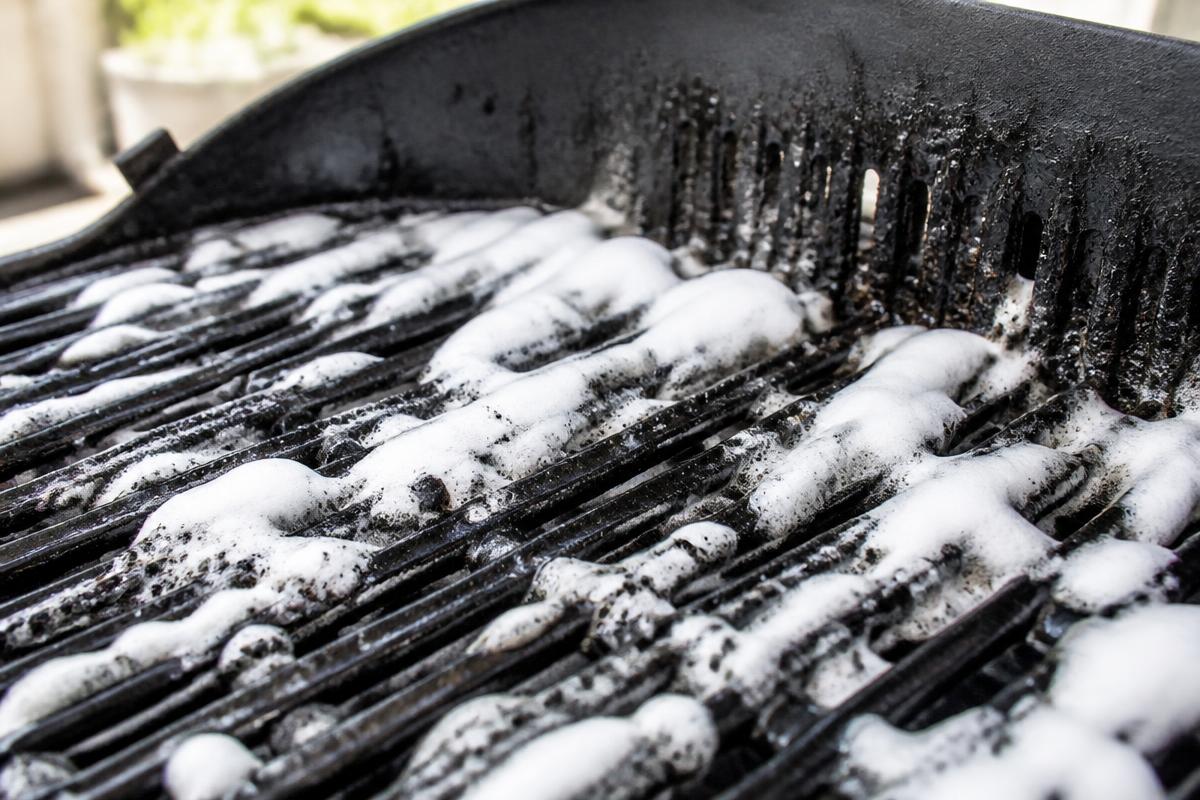 4 min readThe 3-step method, step by stepCoat, wait, wipe — with the timings that actually matter.Read the guide
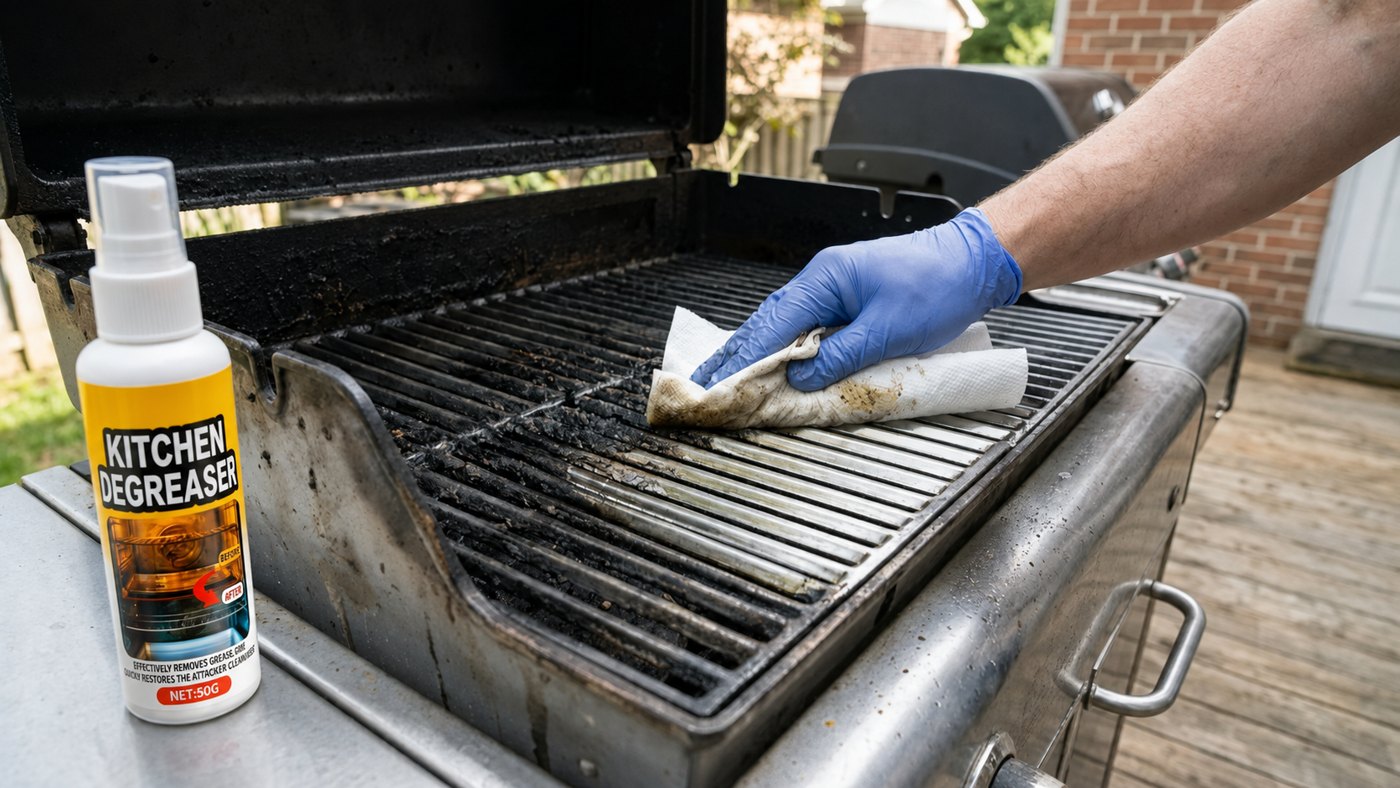 5 min readHow to clean grill gratesThe weekly two-minute pass versus the once-a-season deep clean.Read the guide
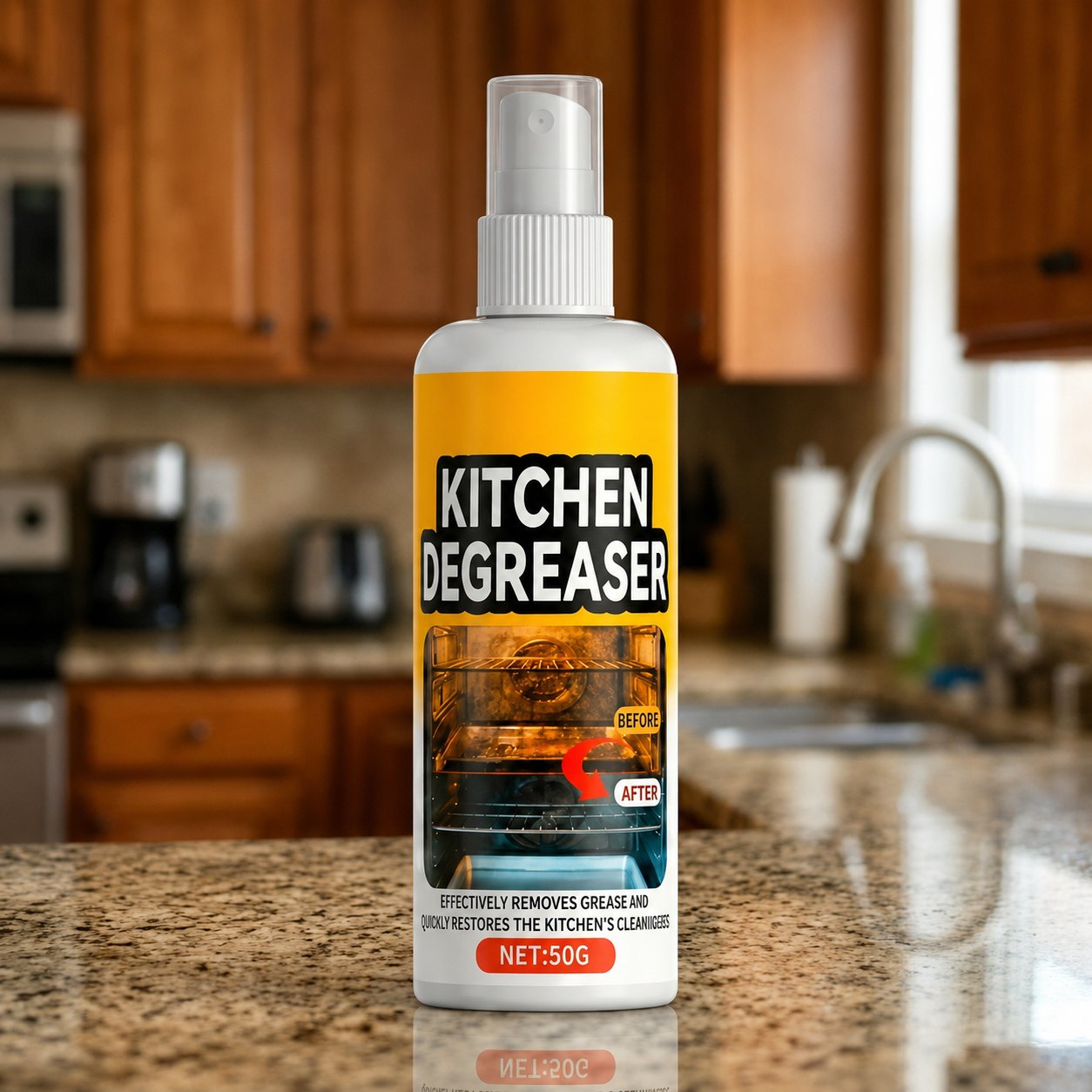 5 min readDegreaser safety basicsVentilation, gloves, food-contact rinsing and what to keep it off.Read the guide
By appliance and surface
Same principle, different constraints. Each guide covers the dwell time, the rinse step and the specific mistake people make on that appliance.
- 8 min readBBQ grills, start to finishEvery component in the right order so you only wipe once.Read the guide
- 6 min readCast iron gratesStrip the carbon, keep the seasoning, re-oil properly.Read the guide
- 7 min readOvens and door glassThe brown lacquer on the glass, and why heat makes it worse.Read the guide
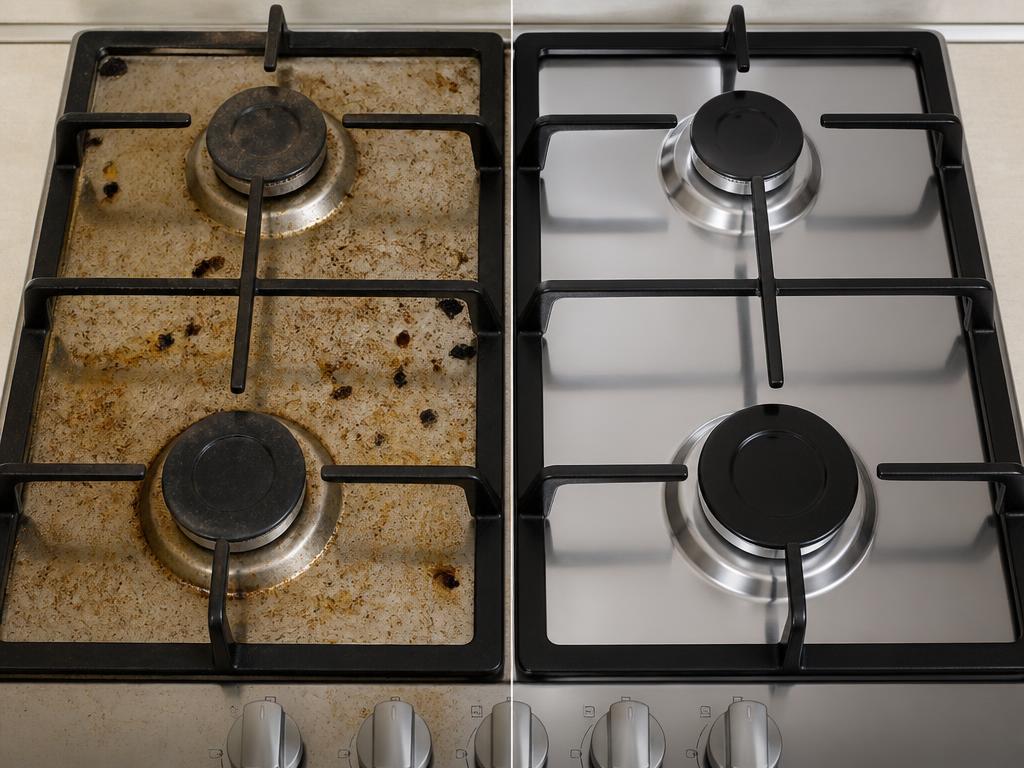 5 min readHobs, burners and splashbacksBoil-overs and burnt sugar on gas, glass and induction tops.Read the guide
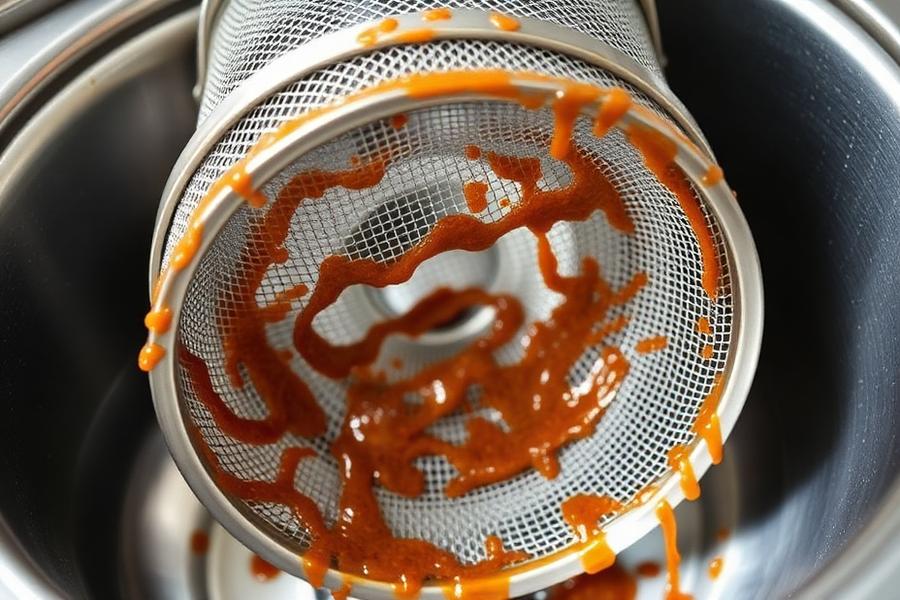 6 min readRange hoods and mesh filtersThe kitchen's biggest grease trap — and a genuine fire risk.Read the guide
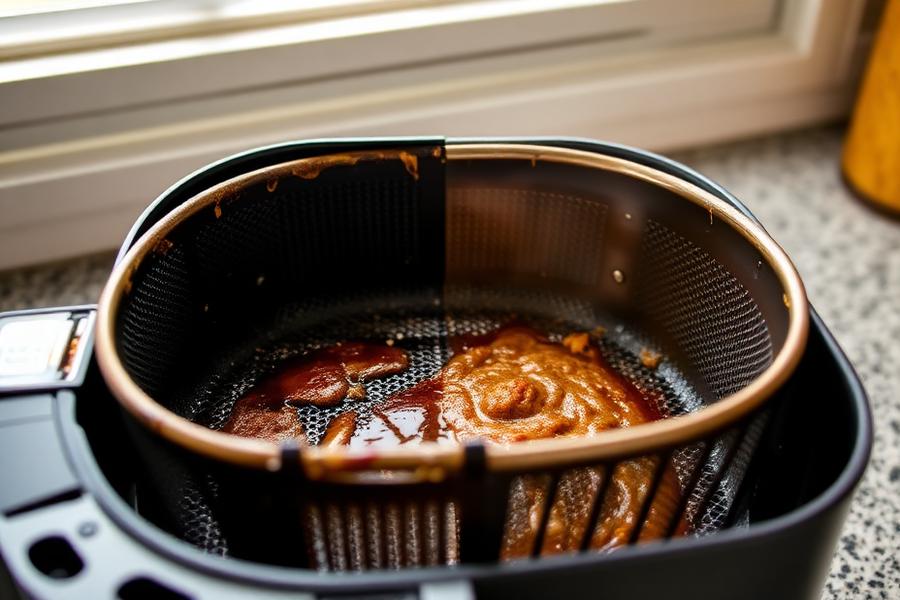 5 min readAir fryer baskets and drawersThe residue in the mesh nobody reaches until it starts to smoke.Read the guide
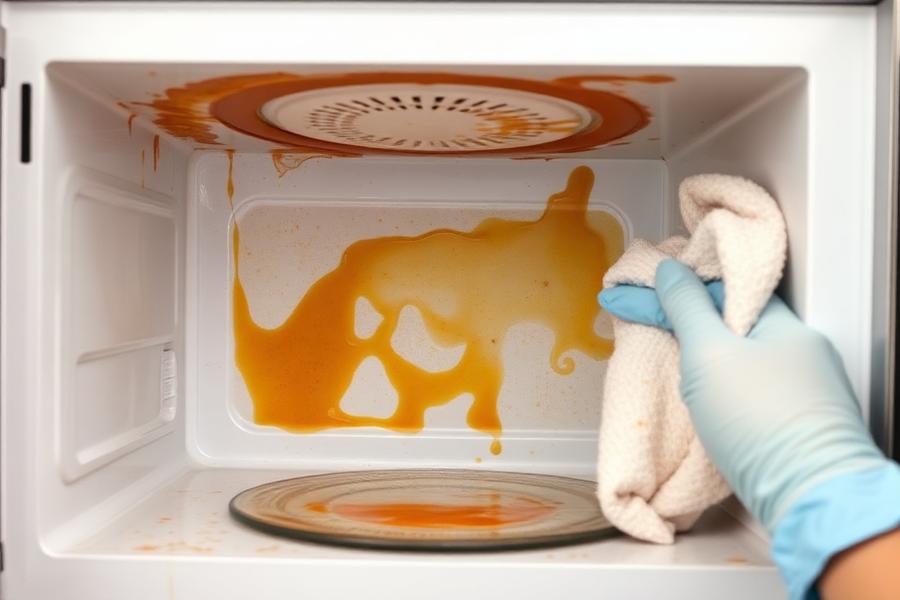 4 min readMicrowave interiorsCleaning safely around vents, seals and the waveguide cover.Read the guide
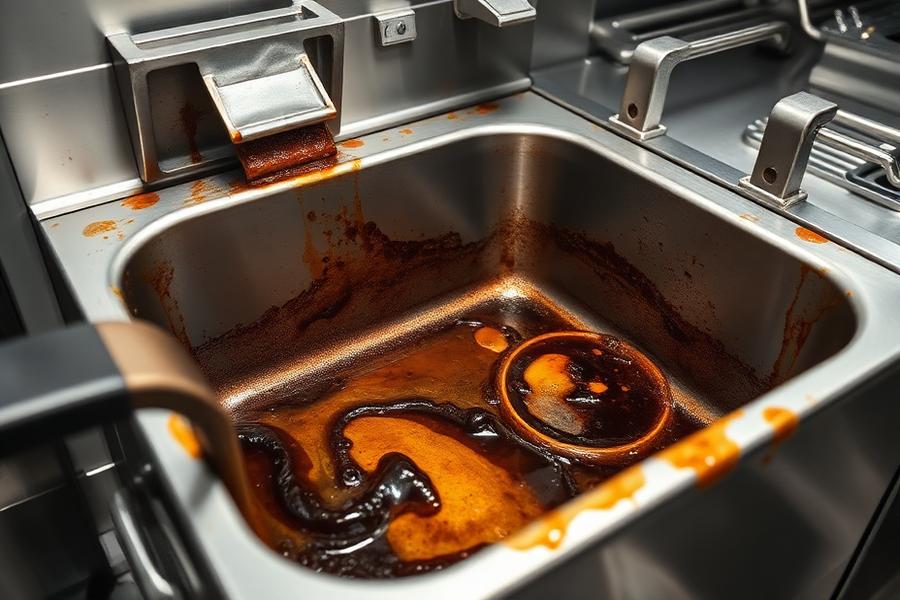 7 min readDeep fryers and basketsStripping oil varnish from the well, element and basket wire.Read the guide
- 5 min readStainless steel, streak-freeWorking with the grain so you do not trade grease for smears.Read the guide
- 6 min readThe rest of the kitchenCabinet fronts, worktops, splashbacks and small appliances.Read the guide
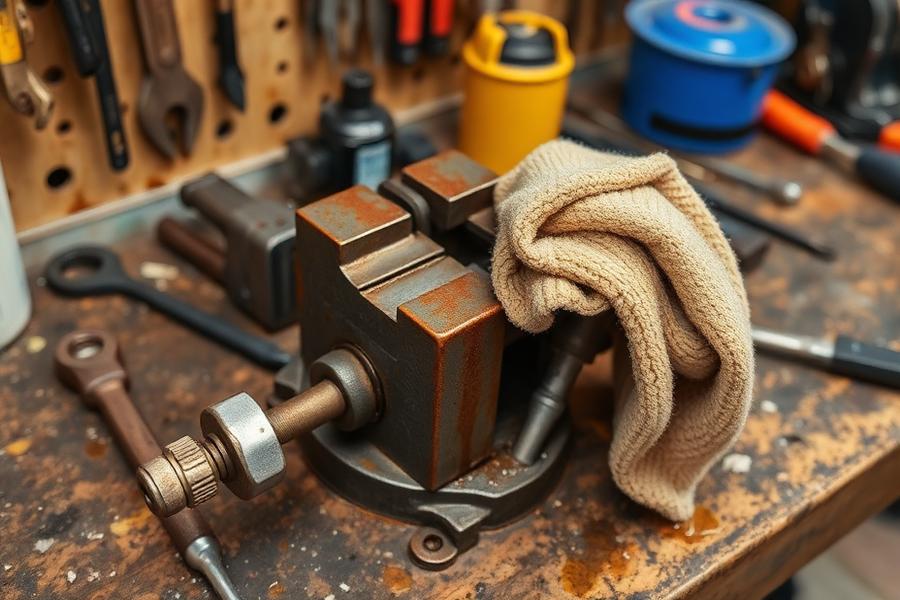 6 min readGarage, tools and engine grimeWhere kitchen chemistry doubles as workshop chemistry.Read the guide
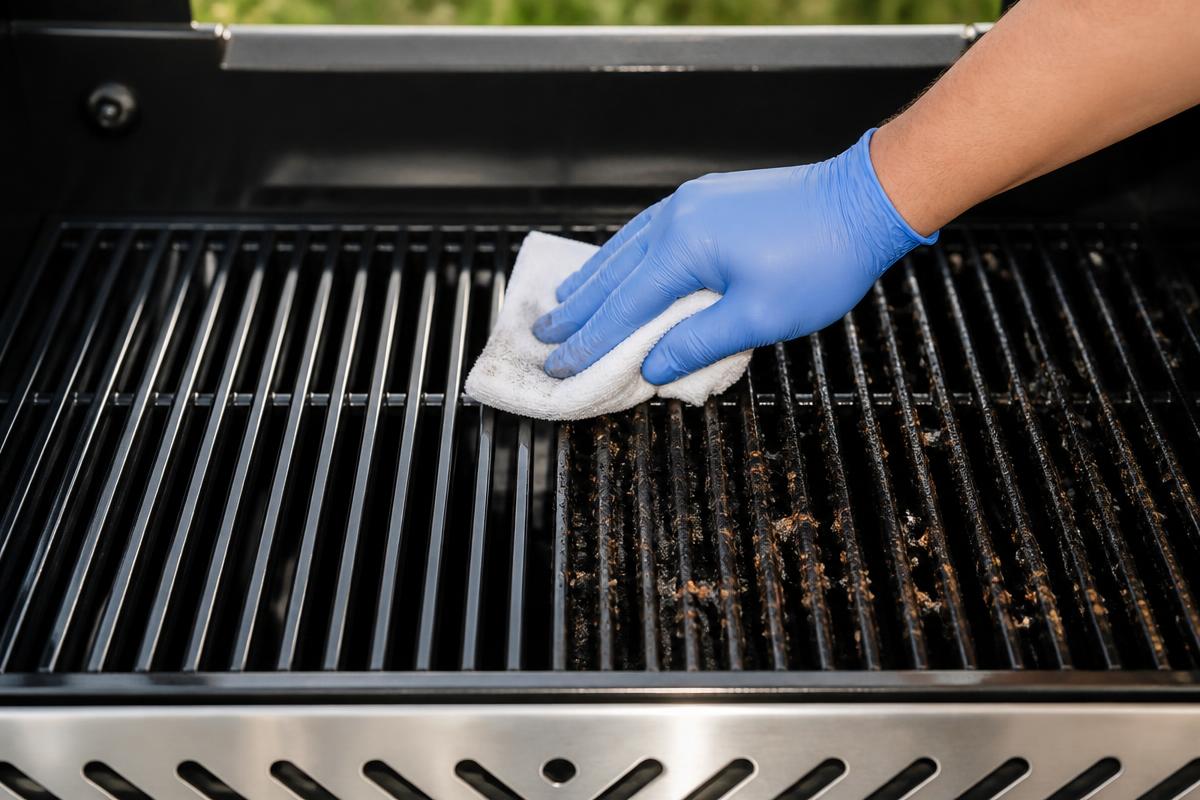 9 min readFull surface compatibility chartEvery material, its dwell time, and whether it needs a rinse.Read the guide
Honest comparisons
Written to be useful whether or not you buy from us. Sometimes the cheap pantry method genuinely wins — these say so.
- 7 min readOven cleaner vs degreaserCaustic chemistry, dwell time and surface risk, side by side.Read the guide
- 5 min readVinegar vs degreaserWhy acid is the wrong tool for fat — and what it is great at.Read the guide
- 5 min readBaking soda vs degreaserWhere the paste really helps and where it just makes a mess.Read the guide
- 6 min readDegreaser vs steam cleaningUsing both in the right order on the worst build-up.Read the guide
- 6 min readGrill cleaner vs pressure washingWhat blasting removes, and what it drives deeper into the metal.Read the guide
Buyer's guides
What to look for before you spend money — formats, active chemistry, coverage, shipping and refund terms.
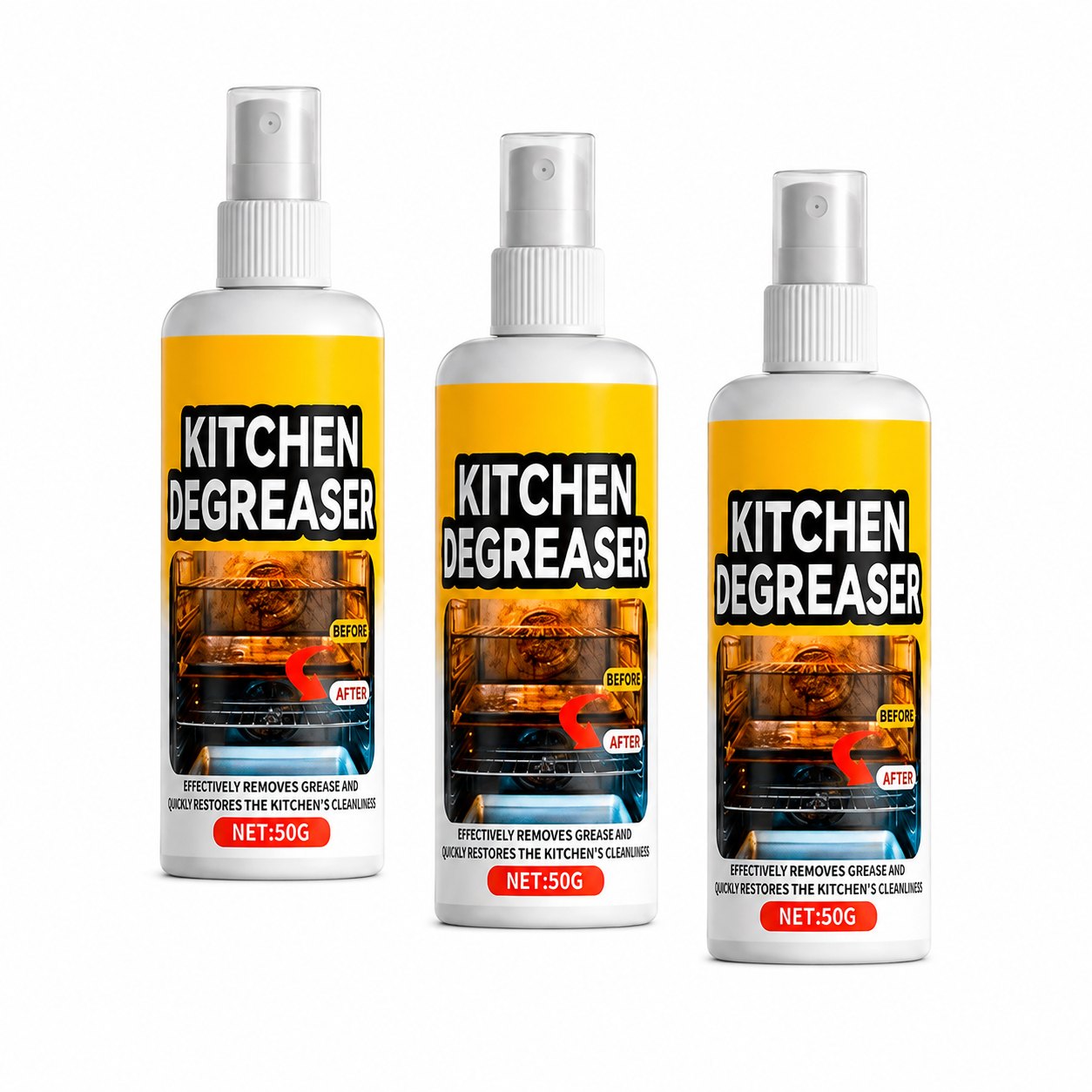 9 min readBest grill cleaner in 2026How aerosols, gels, foams and brushes really compare.Read the guide
- 8 min readBest oven cleaner in 2026Caustic, foaming and non-toxic options ranked on real criteria.Read the guide
- 5 min readBuying grill cleaner onlinePricing per bottle, delivery windows and refund terms to check.Read the guide
 7 min readDegreasers for commercial kitchensVolume, non-caustic handling and nightly close-down routines.Read the guide
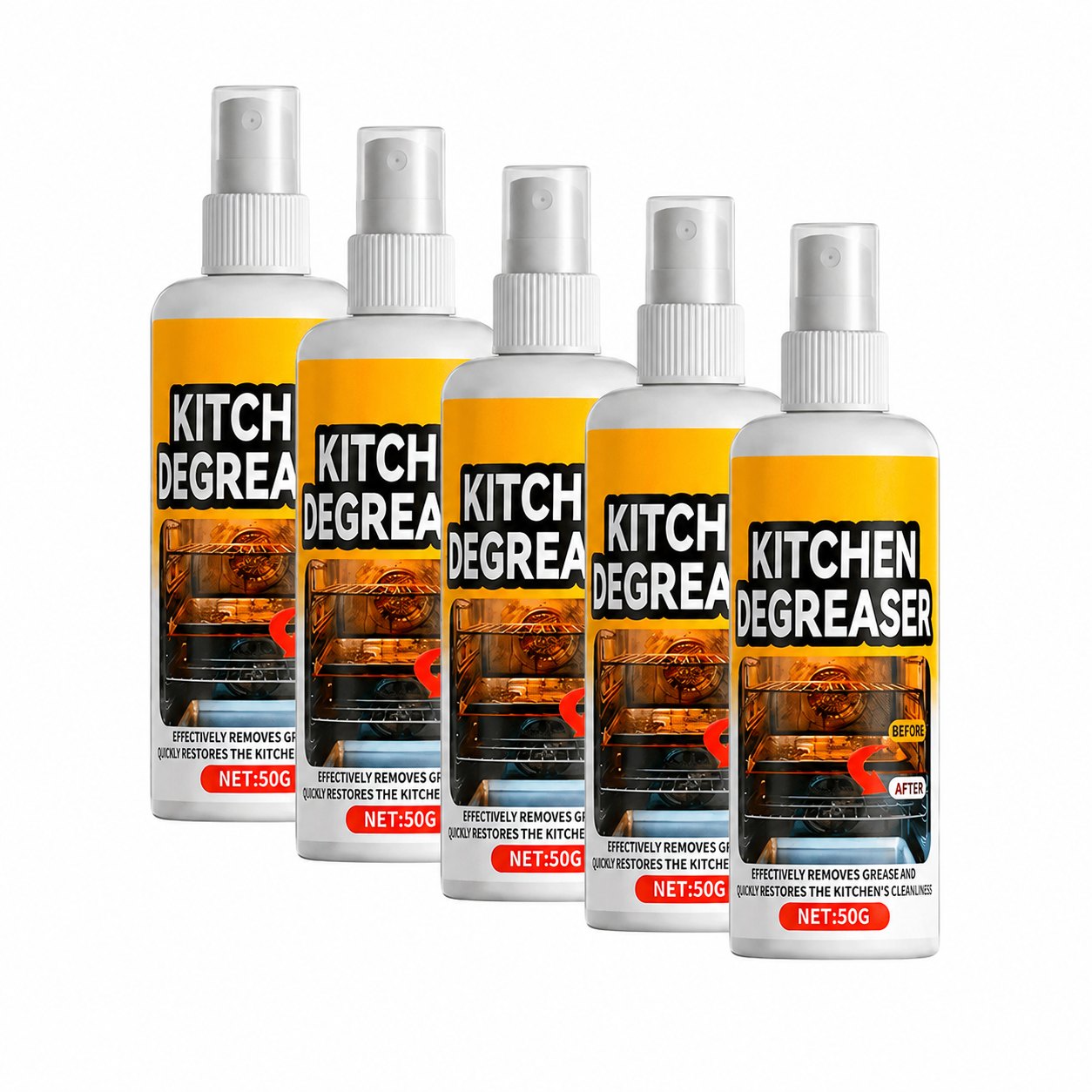 4 min readGreaseKiller™ pricing explainedCost per bottle at each pack size, and what shipping costs.Read the guide
- 4 min readWhere to buy itWhy it is direct-only, and how to avoid counterfeit listings.Read the guide
Product answers
The questions people ask before they order: does it work, what is in it, is it safe, and what happens if it doesn't perform.
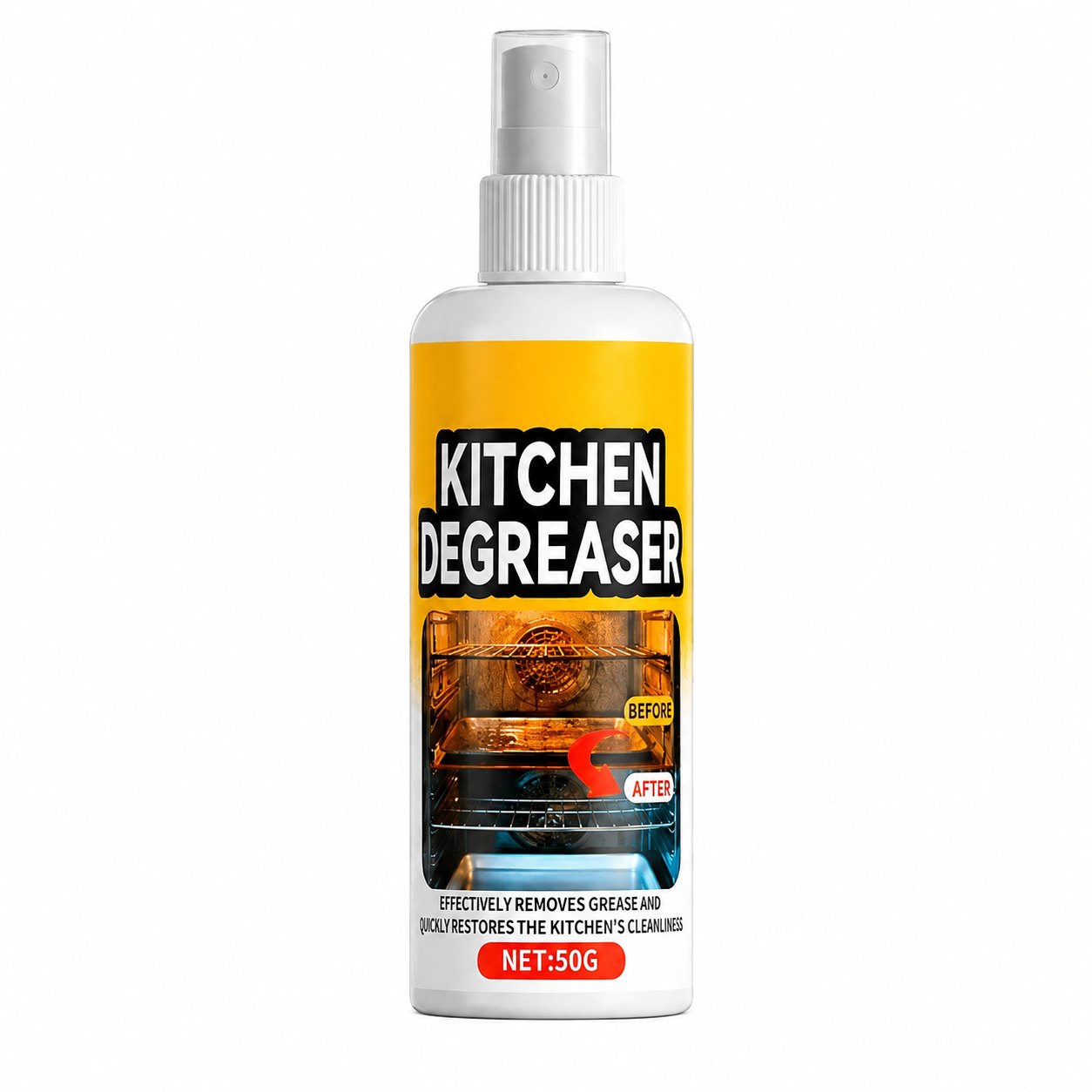 ProductGreaseKiller™ SprayFull product page: bundles, specs, gallery and checkout.Read the guide
- 6 min readDoes it actually work?What it clears fast, what needs two coats, and what it can't fix.Read the guide
- 5 min readWhat's in itThe surfactant system, pH and why it isn't caustic soda.Read the guide
- 6 min readCustomer reviewsVerified buyer feedback, including the critical ones.Read the guide
- 8 min readGrill master's secretThe long read on saving a grill everyone told you to replace.Read the guide
- 5 min readFrequently asked questionsShipping, refunds, safety and usage in one place.Read the guide
How often to clean what
Almost every "impossible" cleaning job is a maintenance job that was skipped for a year. This is the rhythm that keeps you out of deep-clean territory entirely.
| Appliance | Quick pass | Deep clean | If you skip it |
|---|---|---|---|
| Grill grates | After every 2–3 cookouts | Start and end of season | Carbon flakes onto food, uneven searing |
| Grease tray and firebox | Monthly in season | Twice a year | Flare-ups and grease fires |
| Oven interior and glass | Monthly | Every 3–4 months | Smoke on preheat, permanent brown glass |
| Hob and burner caps | Weekly | Monthly | Burnt sugar bonds and blocked burner ports |
| Range hood mesh filters | Monthly | Quarterly | Poor extraction and a real fire risk |
| Air fryer basket and drawer | After every 3–4 uses | Monthly | Smoking element and off flavours |
| Deep fryer | Weekly | Monthly | Rancid oil varnish that taints every batch |
How many bottles does your routine need?
One 50g bottle covers about one full grill clean, or two average ovens. Pick the routine that matches yours.
Limited 50% launch offer
Claim Your GreaseKiller™ Bundle
50% launch pricing — limited stock this week






- Quantity
- Add-ons
- 3Payment
Select your quantity
2Popular add-ons
3Secure payment
Card, Apple Pay, Google Pay, PayPal and Shop Pay are all accepted. You'll enter your shipping and payment details on Shopify's encrypted checkout — we never see your card number.
256-bit SSL secure checkout · 90-day money-back guarantee
90-day results-or-refund guarantee
Not impressed? Email us within 90 days for a full refund. No return shipping, no restocking fees, no questions.
Instant confirmation
Order email lands in your inbox within a minute.
Dispatch in 24h
Packed and shipped on the next business day.
Tracking link
Emailed the moment your parcel leaves the warehouse.
Melted years of baked-on grease
"GreaseKiller melted years of baked-on grease on my stovetop and oven in seconds. Now every meal prep starts with shiny, like-new surfaces."
No more scrubbing
"Stubborn burnt-on residue disappeared from my oven and stovetop, and the cabinets are spotless. Makes kitchen cleaning effortless."
Sold by GreaseKiller™ Spray · Miami, Florida, USA · Support: support@greasekillerspray.com
What if it doesn't work on my grease?
Use it on your worst surface. If it doesn't lift the grease, email us within 90 days and we refund in full — no photos, no restocking fee.
When will it arrive?
Orders placed on a business day ship within 24 hours. Free standard shipping worldwide; add Priority at checkout for the fastest delivery.
Is it safe on my grill and oven?
Yes — non-abrasive and low-odour. Use on a cool surface, wipe with a damp cloth, rinse and pre-heat 5 minutes before cooking.
3x GreaseKiller™ Spray
Total $39.00 · Free shipping
Rated 4.8/5 by 3,684 customers
Melted years of baked-on grease
GreaseKiller melted years of baked-on grease on my stovetop and oven in seconds. Now every meal prep starts with shiny, like-new surfaces.
Michael K. · Austin, TX · Verified buyer
No more scrubbing
Stubborn burnt-on residue disappeared from my oven and stovetop, and the cabinets are spotless. Makes kitchen cleaning effortless.
Sam F. · Manchester, UK · Verified buyer
Carbon buildup vanished
Grease and carbon buildup vanished from my grill grates, oven and range hood in moments. Cooking feels safe and enjoyable again.
Jerry B. · Columbus, OH · Verified buyer
Best kitchen purchase this year
Baked-on grime didn't stand a chance. GreaseKiller works faster than anything I've used before and it doesn't stink out the kitchen.
John R. · Hamburg, DE · Verified buyer
Works every single time
I've used GreaseKiller all month — it removes burnt-on grease and sticky residue every single time. No scrubbing, no waiting.
Anna A. · Denver, CO · Verified buyer
Saved my 6-year-old gas grill
I was about to buy a new grill. Two sprays, five minutes with a cloth, and the grates look factory-new. Cheapest grill upgrade ever.
Derek P. · Brisbane, AU · Verified buyer
90-day results-or-refund guarantee
Use GreaseKiller™ on your dirtiest grill, oven or hob. If it doesn't lift the grease you expected, email us within 90 days of delivery and we'll refund you in full — no photos, no restocking fee, no argument.
Try It Risk-FreeFrequently asked questions
Why doesn't dish soap remove burnt-on grease?+
Dish soap emulsifies liquid fat. Once fat has been heated past roughly 400°F it polymerises into a solid carbon layer that is bonded to the metal, so there is nothing left for soap to emulsify. You need a cleaner that breaks the bond and enough dwell time for it to work.
How long should a degreaser sit before wiping?+
Two minutes for everyday kitchen grease, three to five minutes for carbonised build-up on grates and oven floors. If a spot resists, apply a second coat rather than leaving the first one on longer — the foam has to stay wet to keep working.
Is a non-caustic degreaser strong enough for a grill?+
Yes, when it is given dwell time. Caustic cleaners work faster on paper but bring fumes, gloves, long airing and real risk to enamel, aluminium and skin. Two minutes of waiting buys you the same result without any of that.
Do I have to rinse after using a degreaser?+
On anything that touches food — grates, baskets, trays, oven racks — yes. Wipe the residue away, rinse with clean water and dry. On cabinet fronts, hoods and worktops a damp cloth pass is enough.
How often should I clean my grill and oven?+
A two-minute pass on grill grates after every two or three cookouts, a monthly wipe of the oven and hob, and a quarterly clean of hood filters. Maintenance at that rhythm means you never face a deep clean again.
Which surfaces should a degreaser never touch?+
Bare or anodised aluminium, unsealed natural stone, catalytic and self-cleaning oven liners, fabric, and any surface that is still hot. Patch test painted or lacquered finishes in a hidden spot first.