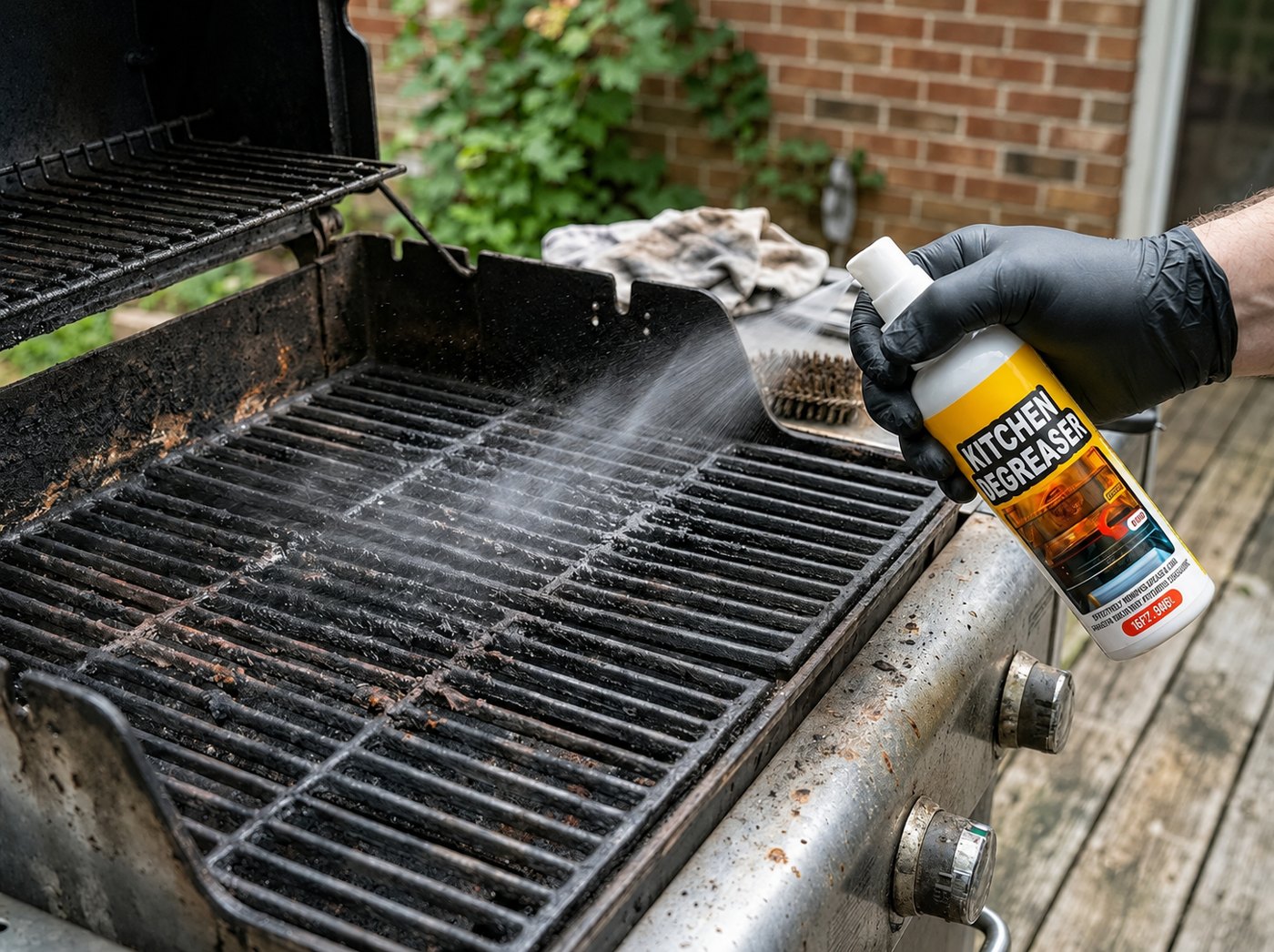
The verdict, up front
Steam is a genuinely good chemical-free option for sanitising and for fresh, soft grease — but on carbonised build-up it softens and re-wets the residue rather than actually breaking it down, so you're still scrubbing at the end. A degreaser does the chemistry that steam can't and finishes in a fraction of the time. If avoiding chemicals entirely matters more to you than speed, steam is a legitimate trade-off; for most kitchens, a degreaser is faster and more thorough.
How each one works
A steam cleaner delivers water vapor above 100°C, often at low pressure through a nozzle or brush head. The heat softens fat and lowers its viscosity, and the pressure and the brush attachment physically dislodge what's been softened — which is why steam shines on fresh, soft grease and on sanitising smooth, sealed surfaces like tile and glass. It works largely through heat and mechanical agitation rather than any chemical reaction.
A degreaser works chemically instead: surfactants lower the surface tension between the grease layer and the metal, and solvents or alkaline agents penetrate the carbon layer and break the molecular bond between the residue and the surface. The whole softened layer lifts away with a wipe, rather than melting in place and re-setting a few centimetres away once the steam's heat dissipates — which is the practical failure mode people run into with steam on baked-on carbon.
Time, cost and risk compared
Every method below removes grease eventually. The difference is how long it takes, what it costs per clean, and how much of your surface finish it takes with it.
| Method | Hands-on time | Cost per clean | Risk to finish |
|---|---|---|---|
| Steam cleaner (fresh grease) | 5–8 min + wipe | ~$0.15/clean (water/power) | Low — chemical-free, safe on sealed surfaces |
| Steam cleaner (baked-on carbon) | 10–15 min + heavy scrub | ~$0.15/clean | Low, but often doesn't finish the job |
| Foaming degreaser (GreaseKiller) | 2 min dwell + 1 wipe | ~$1.30/clean | Low — formulated for metal, enamel and glass |
| Steam then degreaser (combined) | 12–15 min total | ~$1.45/clean | Low — most thorough result, slightly higher cost |
Head to head
- Fresh grease — both work; steam is chemical-free, a degreaser is faster and needs no machine.
- Baked-on carbon — degreaser wins clearly; steam re-wets the surface and you still end up scrubbing.
- Hood filters — degreaser, by a wide margin; the mesh traps softened fat that steam pressure can't flush out.
- Setup — steam needs a machine, a water reservoir and 5–10 minutes of heat-up time before you even start. Degreaser needs a bottle.
- Residue — steam leaves the loosened fat somewhere in the appliance or on the floor beneath it; a degreaser carries it out on the cloth you wipe with.
- Chemical-free requirement — steam wins outright, and for households that need to avoid all cleaning chemicals, that's a completely legitimate reason to choose it.
- Sanitising — steam's heat kills bacteria on contact, which a degreaser doesn't claim to do; that's a genuine advantage for cutting boards, tile grout and high-touch surfaces.
Where steam is honestly the better call
Be fair to steam here: for households avoiding synthetic cleaning chemicals entirely, for sanitising sealed floors, tile and grout where bacteria matter more than grease, and for light weekly maintenance in an oven before residue has any chance to harden, steam is a legitimately better tool than a degreaser. It's also the right choice for fabric, upholstery and mattresses, surfaces where a chemical degreaser has no business being used at all.
Where a degreaser wins clearly
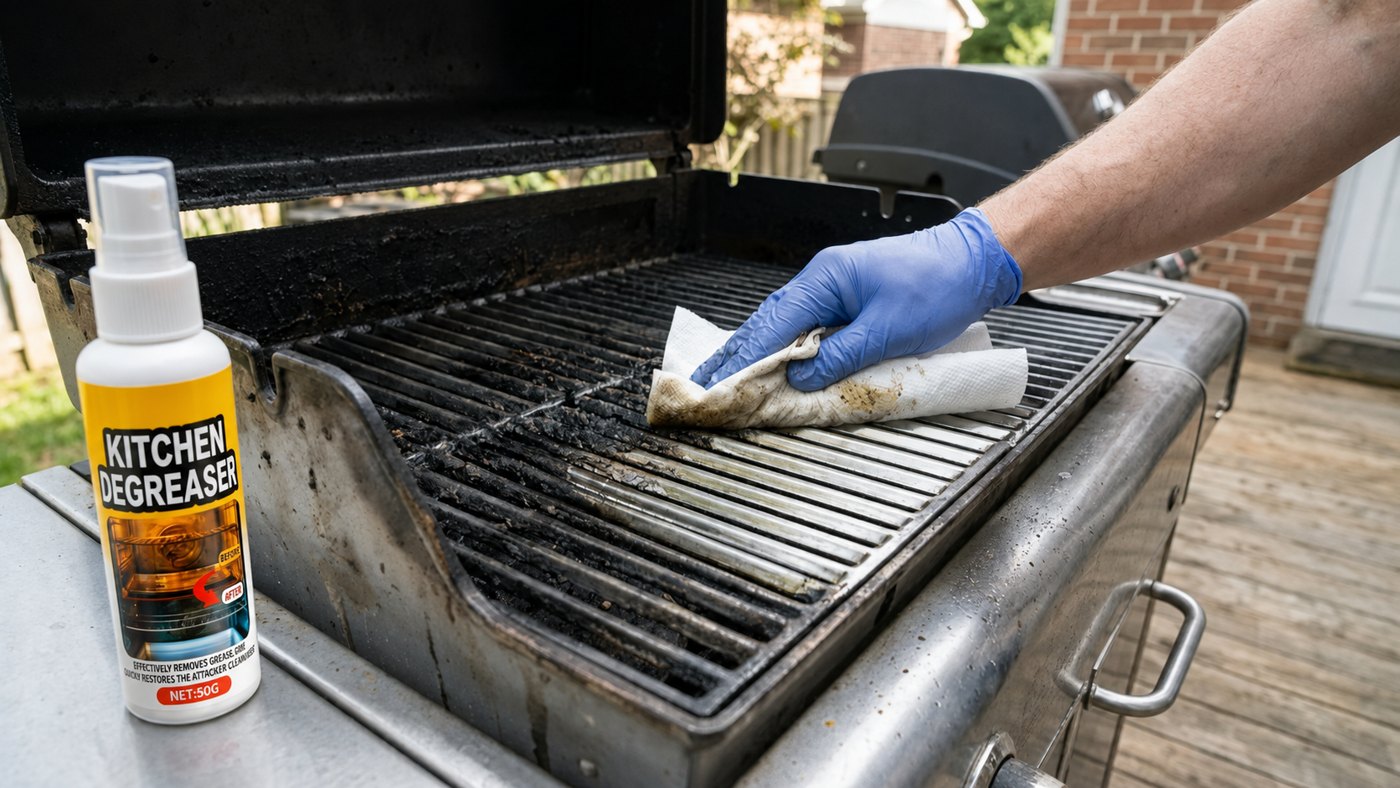
- Oven floors and grill grates with any real build-up — carbon that's been baking on for weeks or months.
- Hood filters, where mesh traps grease that steam simply can't dislodge without disassembly and heavy scrubbing.
- Any job where you need to be done in minutes, not a 20-minute machine setup plus cleaning cycle.
- Deep fryer interiors and other high-heat-exposure surfaces where the grease has fully polymerised.
Using them together
In a heavily used kitchen, the sequence that actually works is: degrease first to break down and remove the bonded carbon, then steam afterward to sanitise the now-clean surface. Doing it in the other order just heats grease that's still chemically attached to the metal, which softens it temporarily without removing it — you'll scrub the same spot twice for a worse result than degreasing alone.
Cost per clean, worked out
A decent handheld steam cleaner costs $50–150 upfront, plus a few cents of water and electricity per use — cheap per clean once you own one, but it still needs 5–10 minutes to heat up before you can start, and it frequently doesn't finish the job on real carbon build-up without additional scrubbing. GreaseKiller's 3-pack at $39 covers 36–45 cleans at roughly $1.00–1.30 each, with the machine cost and heat-up time both eliminated.
Mistakes that ruin the result
- Expecting a single steam pass to remove months of baked-on grill or oven carbon — it needs a chemical assist for anything beyond fresh residue.
- Steaming directly onto electrical components, igniters or unsealed wood — moisture intrusion causes problems well after the clean looks finished.
- Steaming then degreasing in that order; degrease first so you're not re-softening grease that's already been reheated and re-set.
- Using a steam cleaner on natural stone without checking the manufacturer's guidance — some stone is porous enough that steam drives moisture in rather than just cleaning the surface.
- Letting a hood filter air-dry after steaming instead of removing the loosened grease immediately — it re-hardens as it cools.
How we tested this
Everything below comes from bench runs on matched stainless hood filters and grill grates with 4–6 weeks of build-up rather than marketing copy. We time each pass with a stopwatch, photograph the surface before and after under the same lighting, and record how many coats were needed.
- Ran a domestic steam cleaner on one set for 10 minutes per manufacturer instructions, then attempted to wipe clean and photographed the result.
- Applied GreaseKiller to a matched set — 2-minute dwell, single wipe — and photographed under the same lighting.
- Timed total elapsed time for each method including machine heat-up and cooldown for steam.
- Repeated on a lightly used oven with only 2 weeks of light splatter to confirm steam performs well on fresh residue.
How many bottles do you actually need?
One bottle covers roughly 12–15 full cleans. Most people underbuy, run out mid-job and pay shipping twice — the multi-packs exist to avoid that, and the per-bottle price drops sharply as the pack grows.
| Your situation | Recommended pack | Price per bottle |
|---|---|---|
| Light maintenance, cleaning weekly | 2-pack | $16.00 |
| Full kitchen alongside occasional steam use | 3-pack | $13.00 |
| Heavy cooking households or a grill in regular rotation | 5-pack | $11.00 |
| Commercial kitchen or multiple appliances | 8-pack | $9.00 |
Explore more
What customers say
“Bought a steam cleaner specifically for the hood filters and it just pushed the grease around the mesh. GreaseKiller actually pulled it out. I still use the steamer for the tile floor though, it's great for that.”
Try GreaseKiller™ risk-free
Bundles start at $9 a bottle with free worldwide shipping and a 90-day results-or-refund guarantee. Checkout takes under a minute.
Get 50% Off Now