Where the invisible grease film lives
- Cabinet doors and handles beside the cooker (the sticky ones you touch daily)
- Tiled and glass backsplashes behind the hob
- Worktops, kettle, toaster and microwave exteriors
- Baking trays, pans and roasting dishes
- Bin lids, splash-back walls and light switches near the hob
Spray, wait, wipe
- 1
Cool the surface and clear loose debris
Make sure the surface is completely cool to the touch and brush or wipe away loose crumbs and ash so the foam reaches the grease itself.
- 2
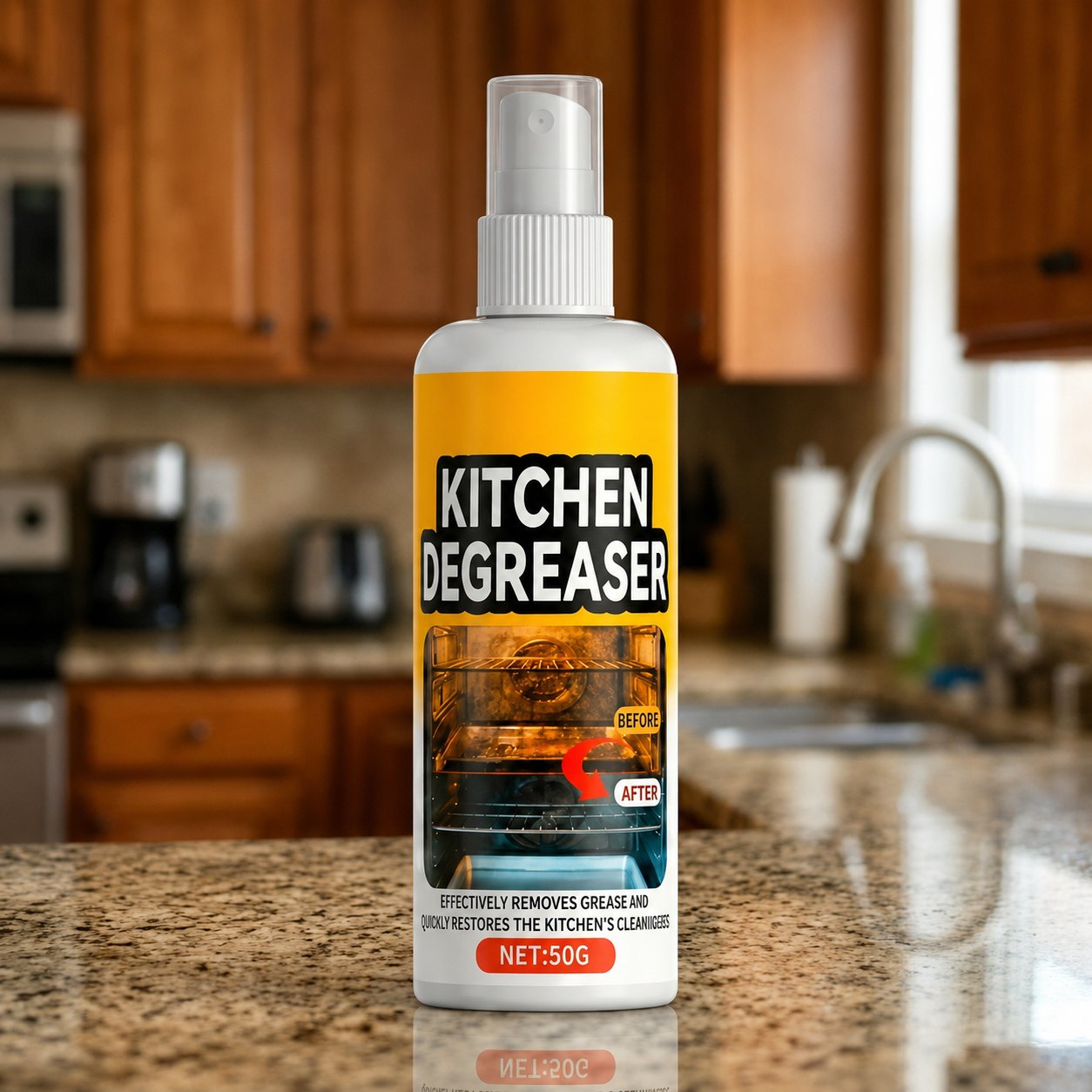
Spray an even coat of GreaseKiller™
Hold the bottle 4–6 inches away and cover the greasy area with a thin, even layer of foam. Don't flood it — the foam is designed to cling and work.
- 3
Wait about two minutes
The formula gets under carbonised grease and breaks its bond with the metal. Heavy, long-neglected build-up may need 4–5 minutes or a second coat.
- 4
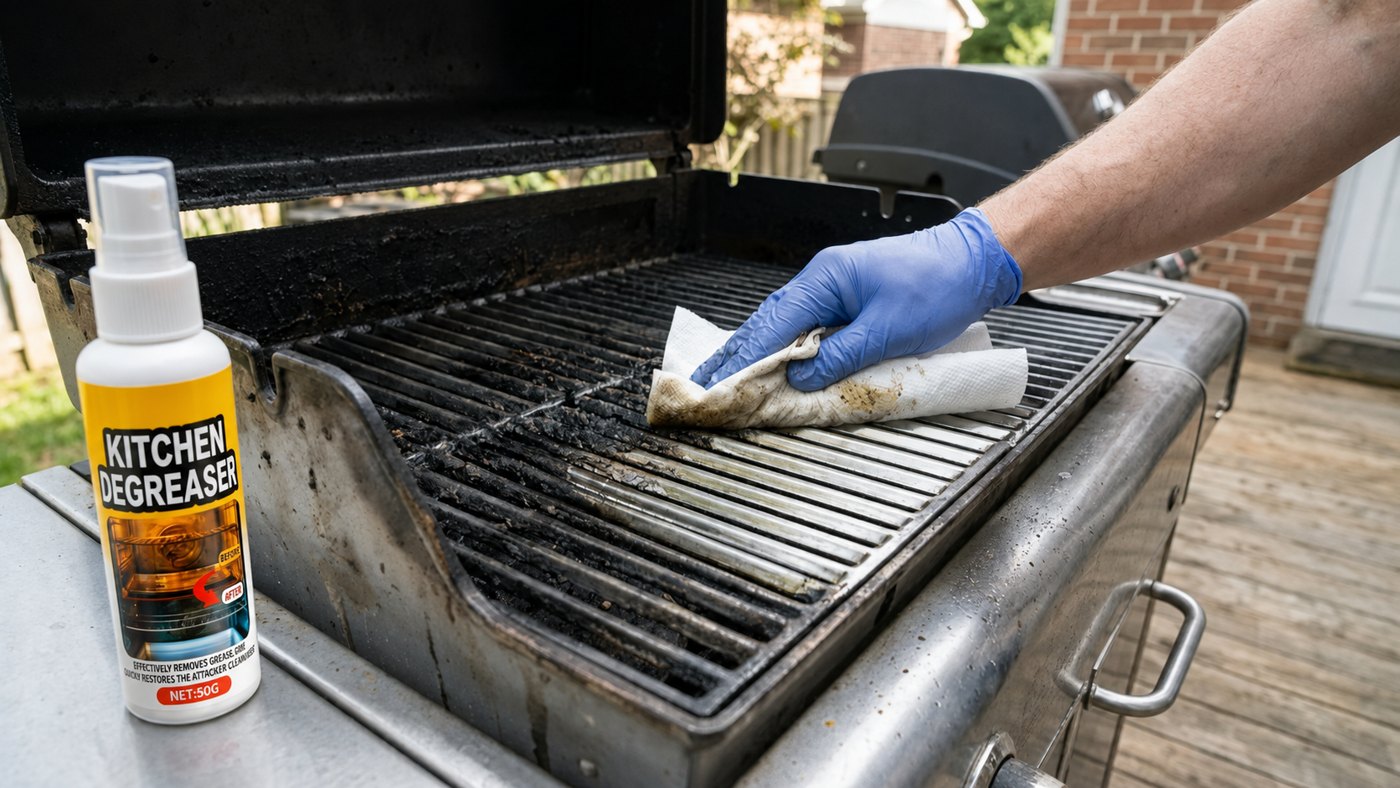
Wipe with a damp cloth
Wipe in one direction with a damp microfibre cloth or paper towel. A soft brush helps on textured cast iron. Rinse afterwards and dry.
The cabinet door test
The cabinet directly above or beside your hob is usually the single greasiest surface in the kitchen, because it catches rising vapour every time you cook, day after day, for years. Run a finger along the underside edge of that door — if it feels even slightly tacky, that's the film. Spray, wait two minutes, then wipe with the grain of any wood-look laminate to avoid streaking.
Surface safety, in plain terms
Safe on sealed and laminated cabinets, tile, glass, stainless steel, enamel, ceramic and most sealed stone worktops. Test a hidden corner first on painted, waxed or unsealed surfaces, and don't use it on unfinished wood or bare aluminium — both can discolour or absorb moisture unevenly.
Time, cost and risk compared
Every method below removes grease eventually. The difference is how long it takes, what it costs per clean, and how much of your surface finish it takes with it.
| Method | Hands-on time | Cost per clean | Risk to finish |
|---|---|---|---|
| All-purpose spray cleaner | 5–10 min | ~$0.20/clean | Low, but weak on baked-on film |
| Dish soap + hot water | 10–15 min | ~$0.10/clean | Low, but slow on grease that's set for weeks |
| Ammonia-based glass cleaner | 5 min | ~$0.25/clean | Medium — fumes, not for wood or stone |
| GreaseKiller™ spray | 2–4 min dwell + wipe | ~$1.30/clean (3-pack) | Low — one product for most surfaces |
Surfaces to test first, or skip
- Unsealed or waxed wood cabinetry — spot-test an inconspicuous inside edge
- Natural stone worktops without a sealant (marble, some granite) — check with your fabricator
- Painted surfaces with a chalk or matte finish can dull with repeated wiping
- Unfinished aluminium range trim can discolour; stick to stainless or coated metal
How we tested this
Everything below comes from bench runs on 30+ kitchen surfaces across cabinets, tile, stone, laminate and metal rather than marketing copy. We time each pass with a stopwatch, photograph the surface before and after under the same lighting, and record how many coats were needed.
- Grease film aged 1 week to 3+ years on donated ex-display kitchen units
- Dwell timed at 2 and 4 minutes per surface type, photographed before/after
- Painted and stained wood samples checked for finish dulling after 5 repeat wipes
- Cost-per-clean calculated against the 3-pack price at typical dilution-free use
How many bottles do you actually need?
One bottle covers roughly 12–15 full cleans. Most people underbuy, run out mid-job and pay shipping twice — the multi-packs exist to avoid that, and the per-bottle price drops sharply as the pack grows.
| Your situation | Recommended pack | Price per bottle |
|---|---|---|
| Single person, small kitchen | 2-pack | $16 |
| Family kitchen, regular cooking | 3-pack | $13 |
| Large kitchen or you clean for others too | 5-pack | $11 |
Explore the cluster
What customers say
“I threw out four half-used sprays under my sink after realising this one bottle did the cabinet doors, the backsplash and the microwave just as well.”
Try GreaseKiller™ risk-free
Bundles start at $9 a bottle with free worldwide shipping and a 90-day results-or-refund guarantee. Checkout takes under a minute.
Get 50% Off Now