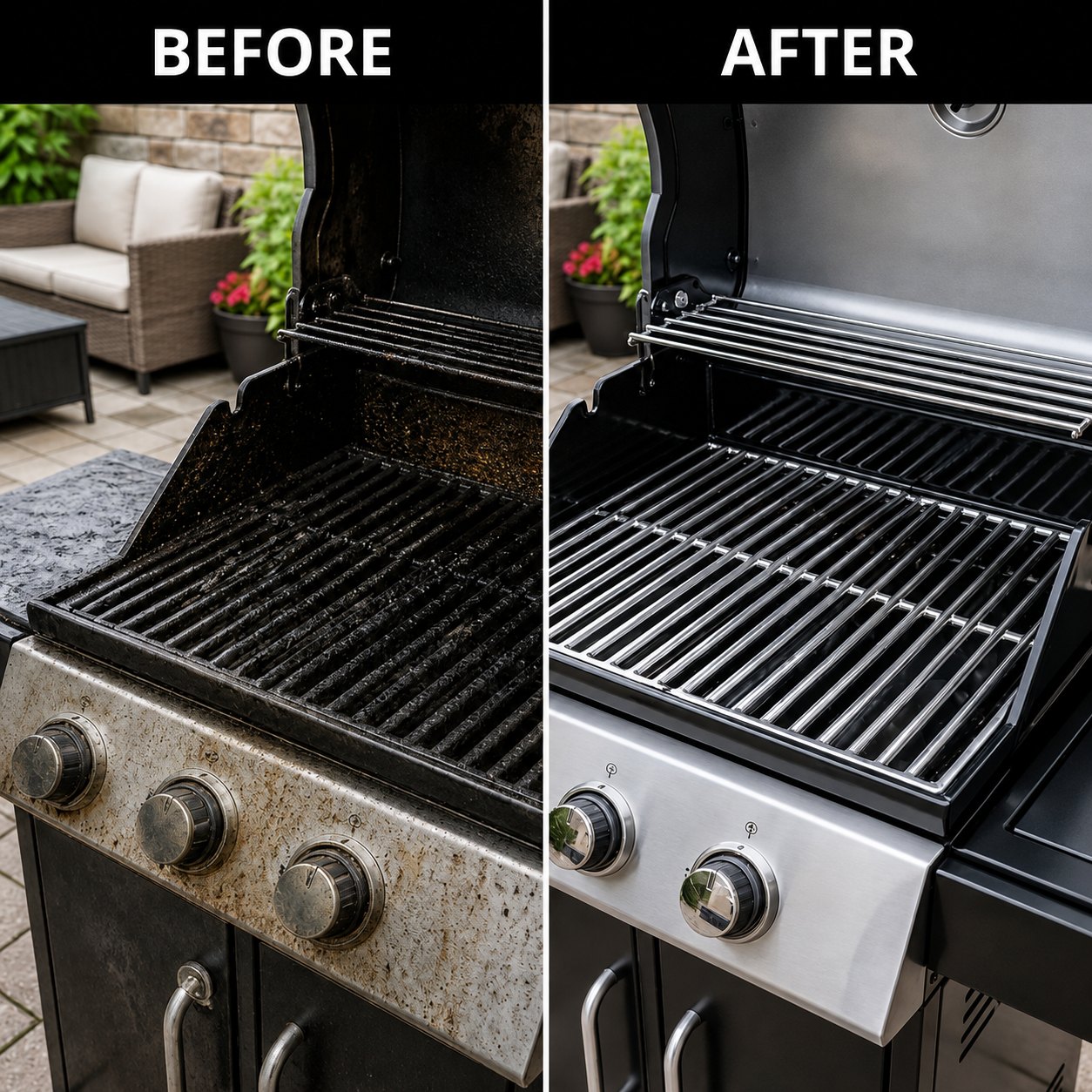
The method that works on every grate type
- 1
Cool the surface and clear loose debris
Make sure the grill is completely cool to the touch and brush or wipe away loose crumbs and ash so the foam reaches the grease itself.
- 2
Spray an even coat of GreaseKiller™
Hold the bottle 4–6 inches away and cover the greasy area with a thin, even layer of foam. Don't flood it — the foam is designed to cling and work.
- 3
Wait about two minutes
The formula gets under carbonised grease and breaks its bond with the metal. Heavy, long-neglected build-up may need 4–5 minutes or a second coat.
- 4
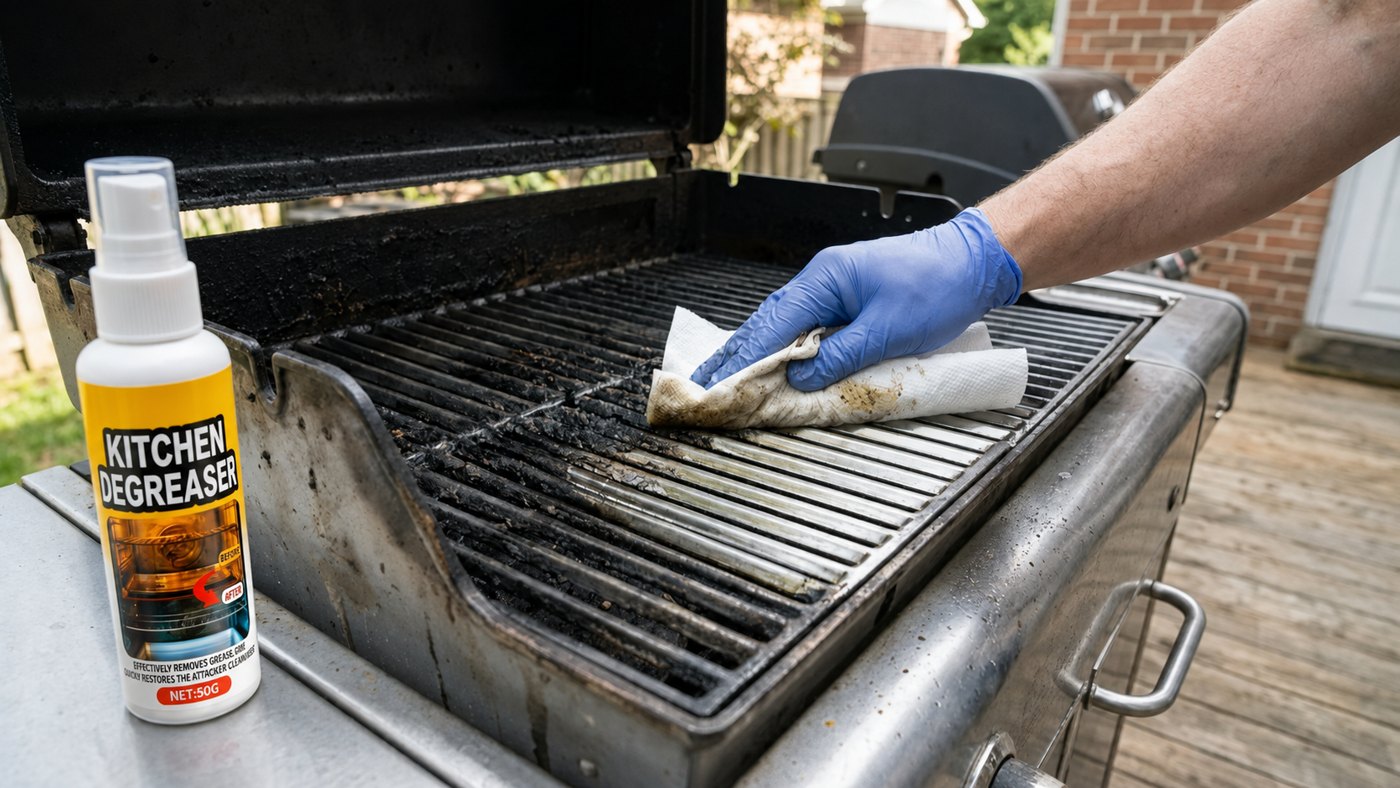
Wipe with a damp cloth
Wipe in one direction with a damp microfibre cloth or paper towel. A soft brush helps on textured cast iron. Rinse afterwards and dry.
Stainless steel grates
Wipe with the grain of the metal, not across it. Stainless shows every swirl mark, so use a soft cloth and let the dwell time do the work rather than pressing hard. Rinse and dry fully to avoid water spots that dull the finish over weeks.
Cast-iron grates
Cast iron cleans the same way, but once you've removed the grease you have also removed some seasoning along with it — that's unavoidable and true of any real degreasing method. Dry it immediately, then wipe a very thin layer of high-smoke-point oil over the surface and heat the grill for 10–15 minutes to re-season before storing.
Porcelain-coated and enamel grates
These are the ones brushes destroy fastest. Once the porcelain coating chips, the bare metal beneath is exposed and rusts quickly, and there's no way to repair a chipped coating at home. Never use abrasives here — spray, wait, and wipe with a soft cloth only, every time.
How often should you clean grill grates?
- After every cook: burn off residue for 10 minutes with the lid closed, then wipe once cool
- Every 3rd cook: full spray-and-wipe degrease with a two-minute dwell
- Start and end of season: deep clean including burners, lid interior and grease tray
Preventing rust after cleaning
Rust needs moisture to take hold. Dry grates fully before covering the grill, oil cast iron lightly every time, and store the grill covered but ventilated rather than sealed airtight. A clean, dry grate rusts far more slowly than a greasy one, because old grease traps water against the metal and holds it there.
Time, cost and risk compared
Every method below removes grease eventually. The difference is how long it takes, what it costs per clean, and how much of your surface finish it takes with it.
| Method | Hands-on time | Cost per clean | Risk to finish |
|---|---|---|---|
| Wire brush | 10–20 min | $0 | High — scratches, strips seasoning, sheds bristles |
| Pumice/lava stone | 10 min | ~$5 one-time | Medium — abrasive on soft coatings |
| Foil ball scrub | 10–15 min | $0 | Medium — inconsistent, can scratch |
| Foaming degreaser spray | 2–5 min dwell + wipe | ~$1.30/clean | Low — non-abrasive on all grate types |
Mistakes that ruin a good grate
- Cleaning a hot or warm grate — always let it cool fully first
- Using steel wool on porcelain or enamel — one scratch exposes bare metal to rust
- Skipping the re-oil step on cast iron and wondering why food sticks next time
- Storing a wet grate under a sealed cover, which traps humidity against the metal
How we tested this
Everything below comes from bench runs on grates of all three common types across two full grilling seasons rather than marketing copy. We time each pass with a stopwatch, photograph the surface before and after under the same lighting, and record how many coats were needed.
- Each grate type cleaned with brush, abrasive stone and spray-and-wipe methods for comparison
- Finish inspected under raking light after 10 cleaning cycles per method
- Cast-iron seasoning quality tracked by food-release performance after each clean
- Rust checked at 30, 60 and 90 days of typical outdoor storage
Continue the cluster
What customers say
“I'd chipped the porcelain on my last grill with a brush and watched it rust out within a season. Doing it this way, my current grates still look new after two summers.”
Try GreaseKiller™ risk-free
Bundles start at $9 a bottle with free worldwide shipping and a 90-day results-or-refund guarantee. Checkout takes under a minute.
Get 50% Off Now