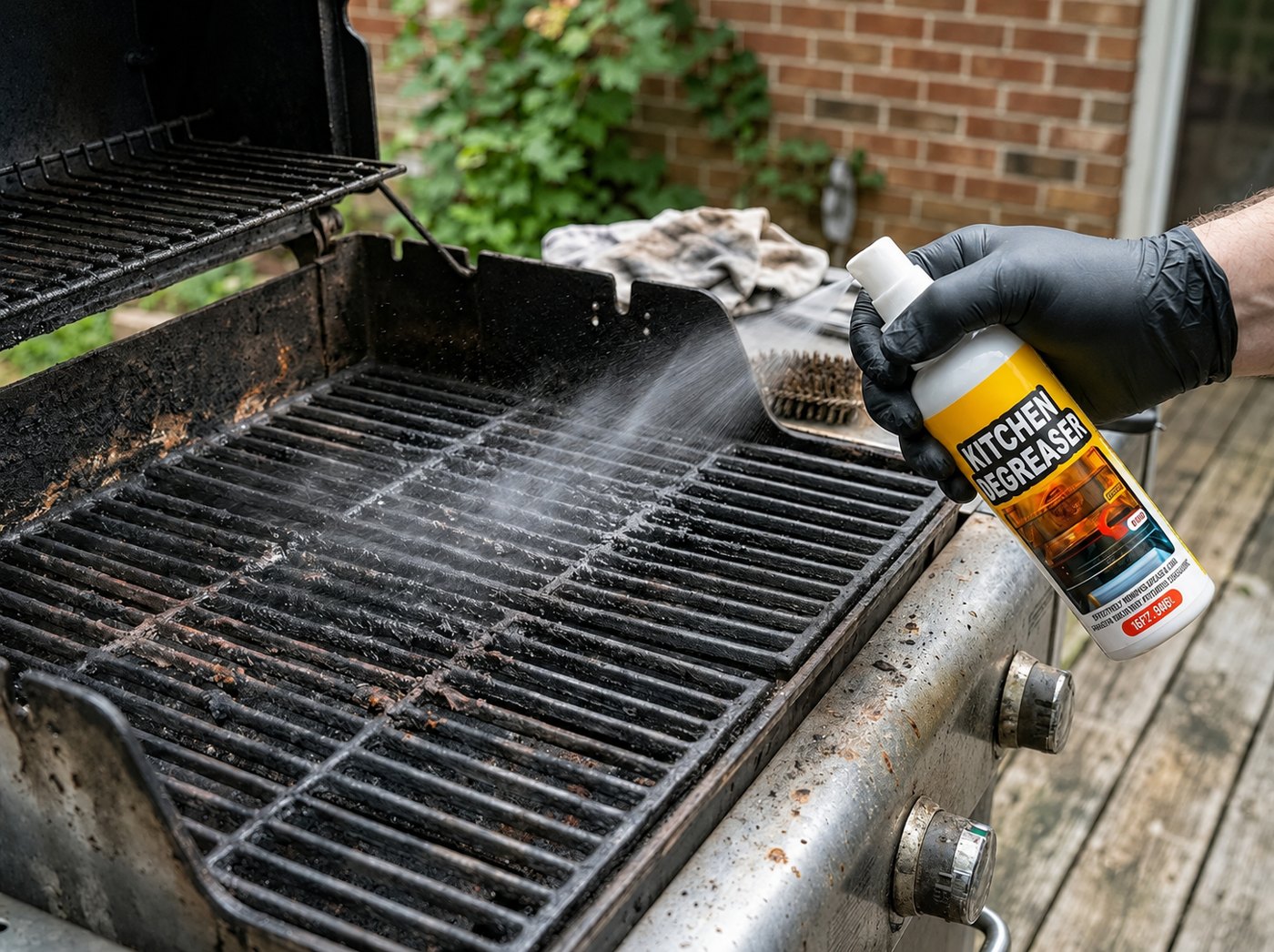
Seasoning versus build-up
Seasoning is a thin, smooth, evenly black layer of polymerised oil bonded to the iron — it is the non-stick surface and you want to keep it. Build-up is thick, uneven, flaky and often sticky or shiny in patches. It traps old fat, smokes, and tastes of last summer.
The goal of cleaning cast iron is to remove the second without stripping the first. Aggressive abrasion cannot tell them apart; a chemical degreaser plus a soft brush largely can, because it targets the loosely bonded carbon layer rather than grinding through everything indiscriminately.
The distinction matters because re-seasoning from bare metal takes several oiled bakes over days, while touching up a partial strip takes one pass with oil and heat. Getting the cleaning method right the first time saves a lot of downstream effort.
Step by step
- 1
Cool the grates completely
Cast iron holds heat far longer than it looks. Wait until it is genuinely cool to the touch, then brush off ash and loose flakes with a soft grill brush.
- 2
Foam both sides
Lift the grates out if you can and coat top and bottom. Grease collects underneath where you can't see it.
- 3
Let it dwell, then work the texture
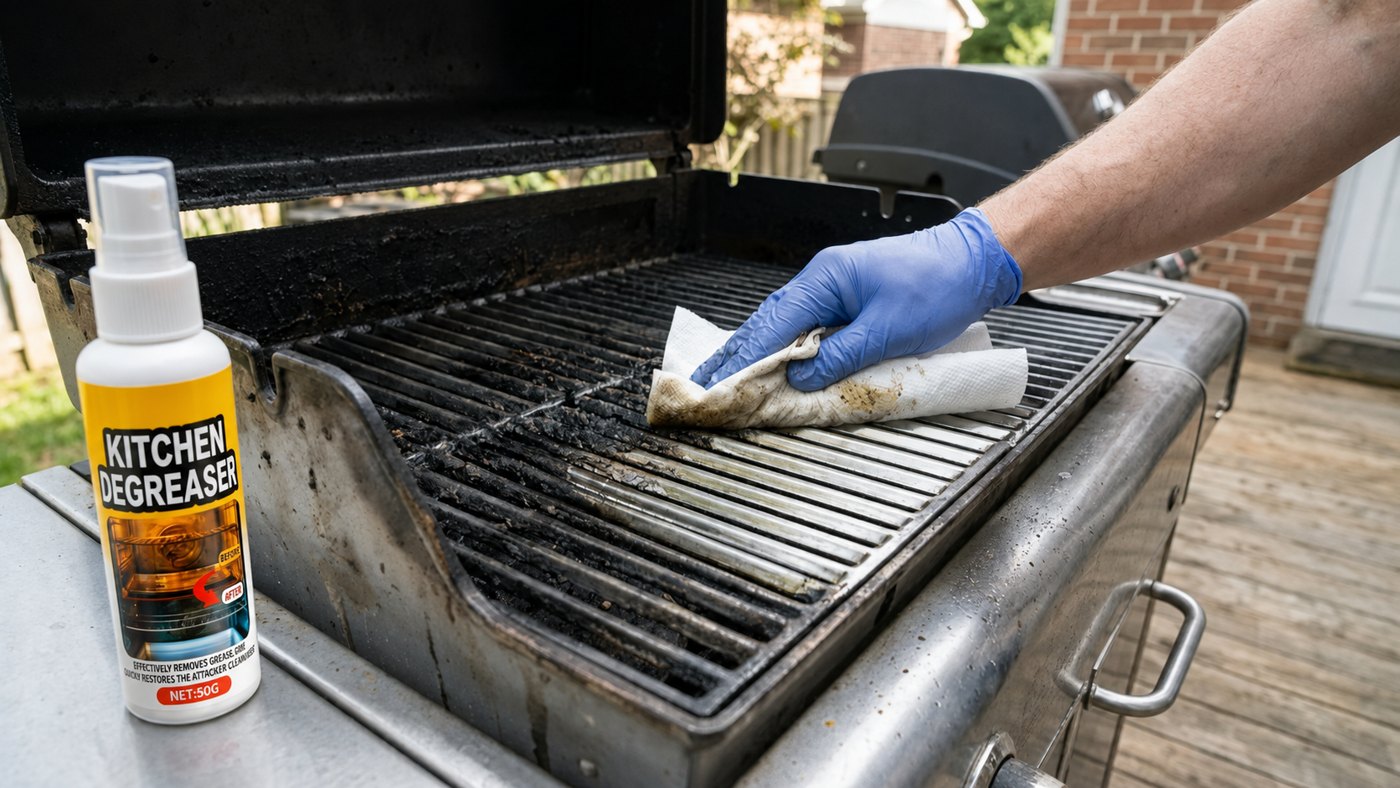
Two to five minutes depending on build-up, then use a soft-bristle or nylon brush along the bars — not a steel wire wheel.
- 4
Rinse, dry immediately, re-oil
Rinse with clean water, dry at once with a towel (bare iron rusts within minutes), then wipe a thin film of high-smoke-point oil over the surface and heat the grill for 10–15 minutes to set it.
What to avoid
- Soaking cast iron in water — it rusts, quickly and deeply.
- Dishwashers, which strip seasoning and leave the iron bare.
- Steel wire wheels and angle grinders, which remove seasoning and can leave bristle fragments behind.
- Putting grates away damp; always dry and oil first.
- Pressure washing, which strips seasoning and drives water into the grill body.
Keeping them clean between deep cleans
- Burn off at high heat for 10 minutes after cooking, then brush while warm.
- Wipe a light coat of oil onto the bars before each cook.
- Deep clean with degreaser once a month in season.
- Store the grill covered and dry through the off-season.
Time, cost and risk compared
Every method below removes grease eventually. The difference is how long it takes, what it costs per clean, and how much of your surface finish it takes with it.
| Method | Hands-on time | Cost per clean | Risk to finish |
|---|---|---|---|
| Foaming degreaser + soft brush | 6–10 min | ≈$1.50 | Low — seasoning preserved |
| Wire brush / steel wheel | 15–25 min | ≈$0.50 | High — strips seasoning, invites rust |
| Self-cleaning oven cycle | 3–4 hrs | electricity cost | High — over-dries and can crack iron |
| Vinegar soak | 30–60 min | ≈$0.30 | Medium — can etch iron if left too long |
| Salt scrub | 10–15 min | ≈$0.10 | Low but ineffective on heavy carbon |
Mistakes that ruin the result
- Letting grates air-dry instead of towel-drying immediately — this is the single biggest cause of rust.
- Using dish soap heavily, which can strip seasoning over repeated washes even though a single wash is fine.
- Skipping the re-oil step, leaving bare iron exposed to moisture.
- Storing grates in a closed cover while still slightly damp.
- Using a steel wire brush 'just this once' — it takes seasoning down to bare metal in seconds.
How we tested this
Everything below comes from bench runs on cast iron grill grates from three grill brands with 1–5 seasons of build-up rather than marketing copy. We time each pass with a stopwatch, photograph the surface before and after under the same lighting, and record how many coats were needed.
- Compared degreaser + soft brush against wire brush and vinegar soak on matched grates from the same grill.
- Measured seasoning loss by visual inspection and water-bead test after each method.
- Timed dwell at 2, 4 and 5 minutes on light, moderate and heavy carbon loads.
- Tracked rust onset over 48 hours for grates dried immediately vs left to air-dry.
How many bottles do you actually need?
One bottle covers roughly 12–15 full cleans. Most people underbuy, run out mid-job and pay shipping twice — the multi-packs exist to avoid that, and the per-bottle price drops sharply as the pack grows.
| Your situation | Recommended pack | Price per bottle |
|---|---|---|
| Single grill, seasonal use | 2-pack | $16.00 |
| Grill used weekly, cast iron + steel parts | 3-pack | $13.00 |
| Multiple grills or smokers | 5-pack | $11.00 |
Where this won't work
- Bare aluminium components on some grill carts — alkaline formulas can discolour them.
- Rusted-through iron with pitting; cleaning won't reverse structural rust, only surface build-up.
- Hot grates — always cool completely first.
- Enamel-coated grates with existing chips; check for bare metal before soaking.
What customers say
“My grates were flaky and sticky after a season of neglect. I was worried I'd have to re-season from scratch, but the degreaser lifted the crust without touching the black seasoning underneath.”
Related guides
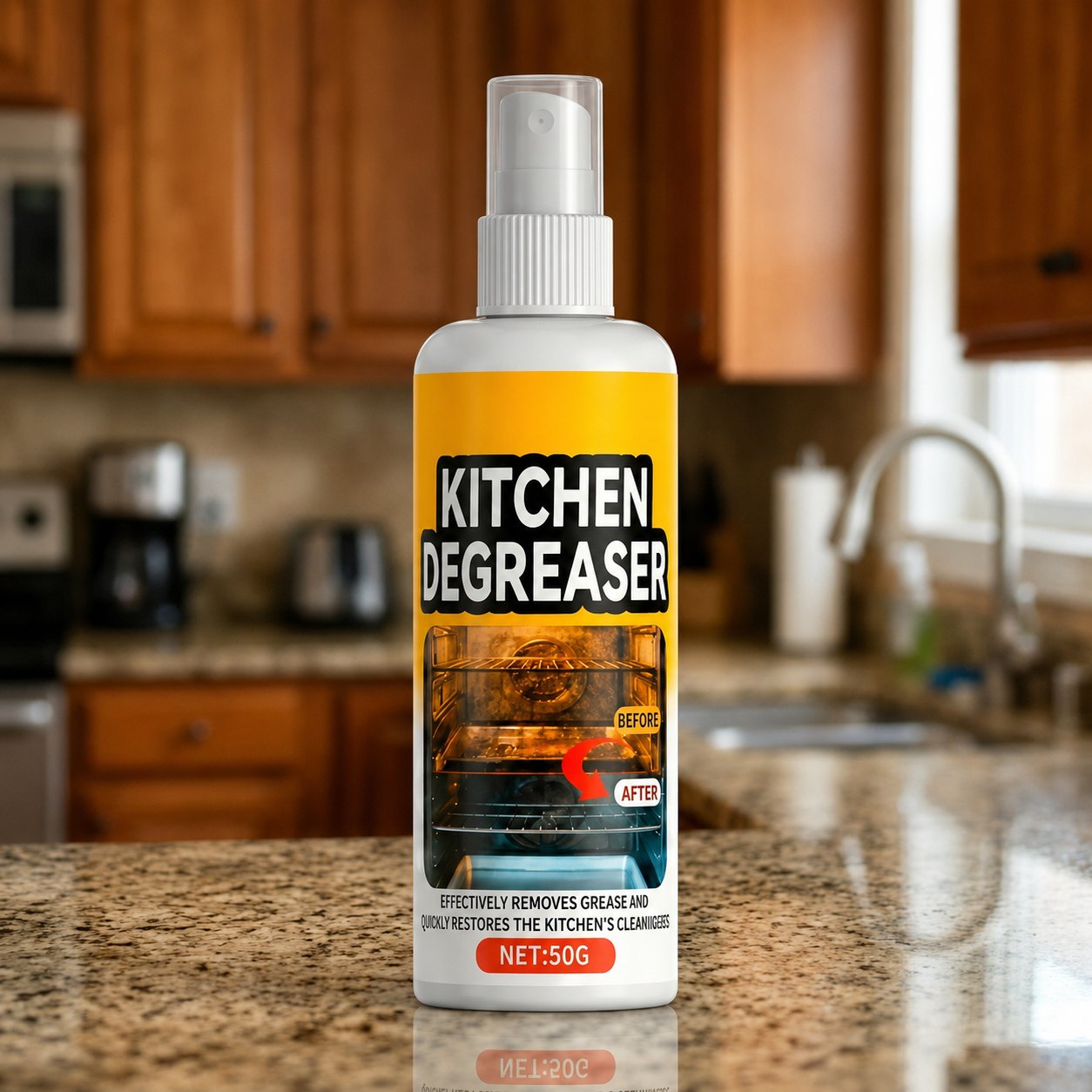
Try GreaseKiller™ risk-free
Bundles start at $9 a bottle with free worldwide shipping and a 90-day results-or-refund guarantee. Checkout takes under a minute.
Get 50% Off Now