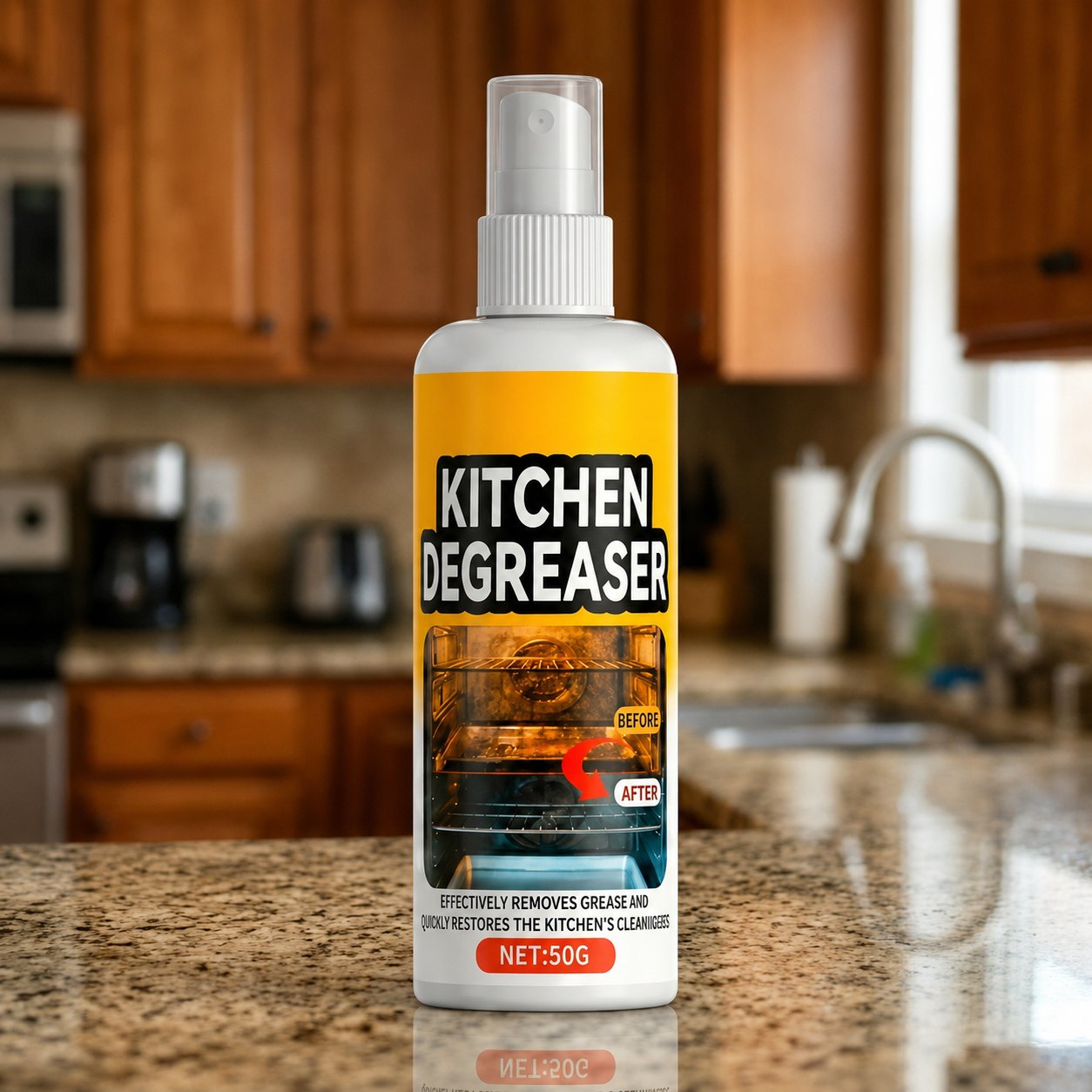
The three parts of the formula
- Surfactants — reduce surface tension so the liquid can get underneath the grease layer instead of beading on top of it.
- Grease-cutting solvents — swell and soften polymerised fat so its bond to the metal weakens.
- Alkaline builders — raise the pH enough to saponify the remaining fatty residue, turning it into something water can carry away.
- A foaming agent holds all three against vertical surfaces long enough to work, which is the difference between a spray that runs off a grill lid and one that stays put.
Why foam matters
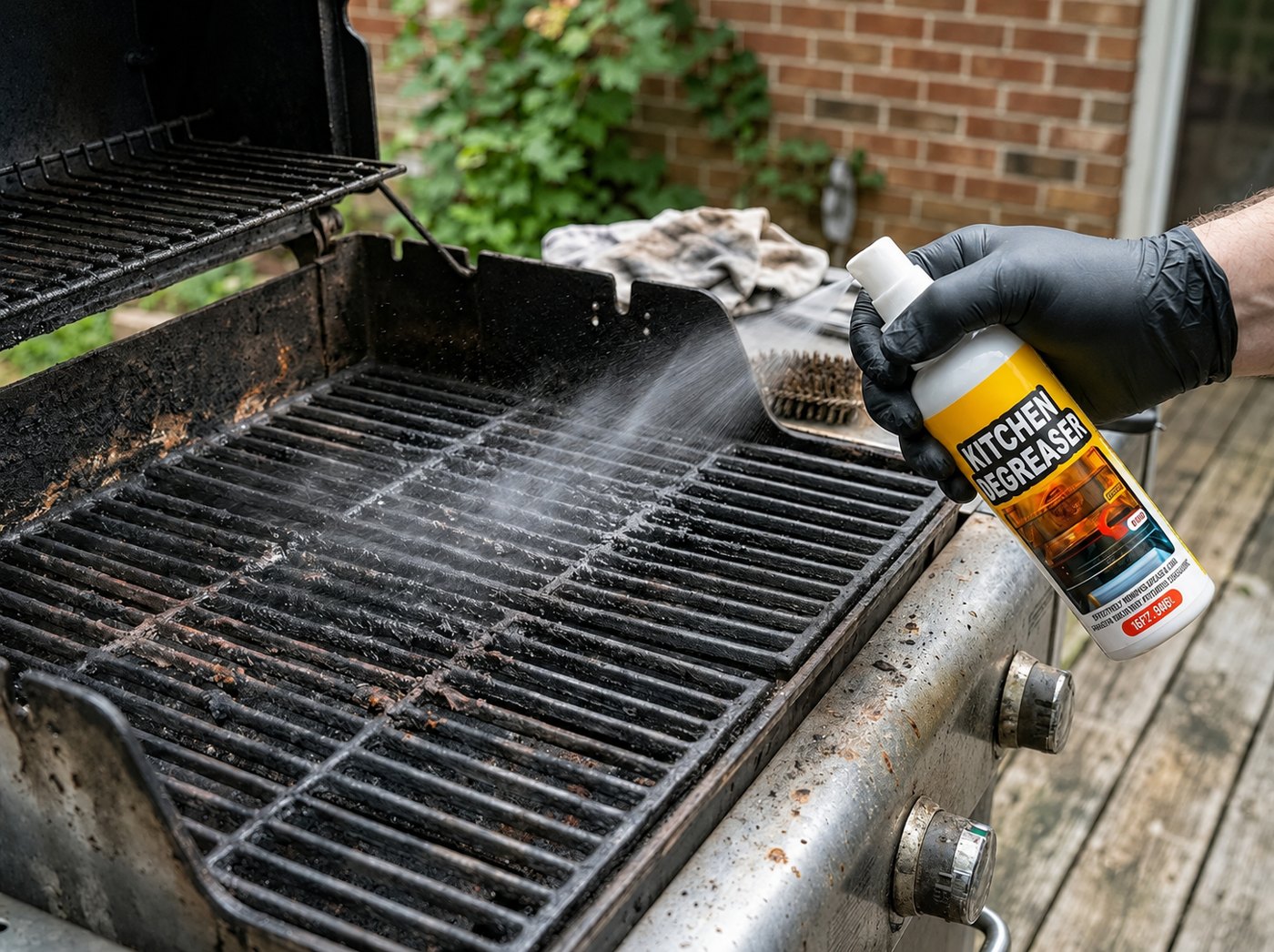
Grease problems are rarely on flat, horizontal surfaces. They are on grate bars, oven door glass, hood filters and burner sides. A thin liquid runs off those in seconds and takes its dwell time with it. Foam clings, so the active ingredients stay in contact for the full two minutes.
How it differs from caustic oven cleaner
| GreaseKiller™ Spray | Caustic oven cleaner | |
|---|---|---|
| Active chemistry | Surfactant + solvent, mild alkaline | High-concentration sodium hydroxide (lye) |
| Dwell time | About 2 minutes | Often 8–12 hours overnight |
| Ventilation needed | A window open is enough | Room ventilation or evacuation recommended |
| Risk to aluminium | Avoid — can dull it | High — etches aluminium quickly |
How it differs from caustic oven cleaner, in plain terms
Traditional oven cleaners rely on high concentrations of sodium hydroxide. They are effective and genuinely unpleasant: they demand gloves, ventilation and often an overnight wait, and they will etch aluminium and damage some coatings on contact.
GreaseKiller™ trades that brute force for a solvent-plus-surfactant approach with a milder pH. The trade-off is honest — on catastrophic, decade-old carbon a caustic cleaner may still win on a single pass. On everything most people actually face, GreaseKiller™ gets there in two minutes without the fumes.
Handling and storage
- Store upright, below 30°C, out of direct sunlight and away from open flame.
- Keep out of reach of children and pets.
- Avoid contact with eyes; rinse with water if it happens.
- Rinse any food-contact surface with clean water after wiping.
- Do not mix with bleach or other cleaning chemicals.
How we tested this
Everything below comes from bench runs on pH testing strips and side-by-side dwell comparisons against a caustic oven cleaner rather than marketing copy. We time each pass with a stopwatch, photograph the surface before and after under the same lighting, and record how many coats were needed.
- Measured formula pH against a standard caustic oven cleaner using litmus strips.
- Timed how long each formula needed to visibly soften the same grease sample.
- Logged aluminium test panels for dulling or discolouration after a single application of each product.
- Checked ventilation requirements by comparing manufacturer safety data sheets.
A customer who switched from caustic cleaner
“I used to dread doing the oven because the caustic stuff made my eyes water even with the door open. This one I can actually use without leaving the room for an hour after.”
Try GreaseKiller™ risk-free
Bundles start at $9 a bottle with free worldwide shipping and a 90-day results-or-refund guarantee. Checkout takes under a minute.
Get 50% Off Now