The verdict, up front
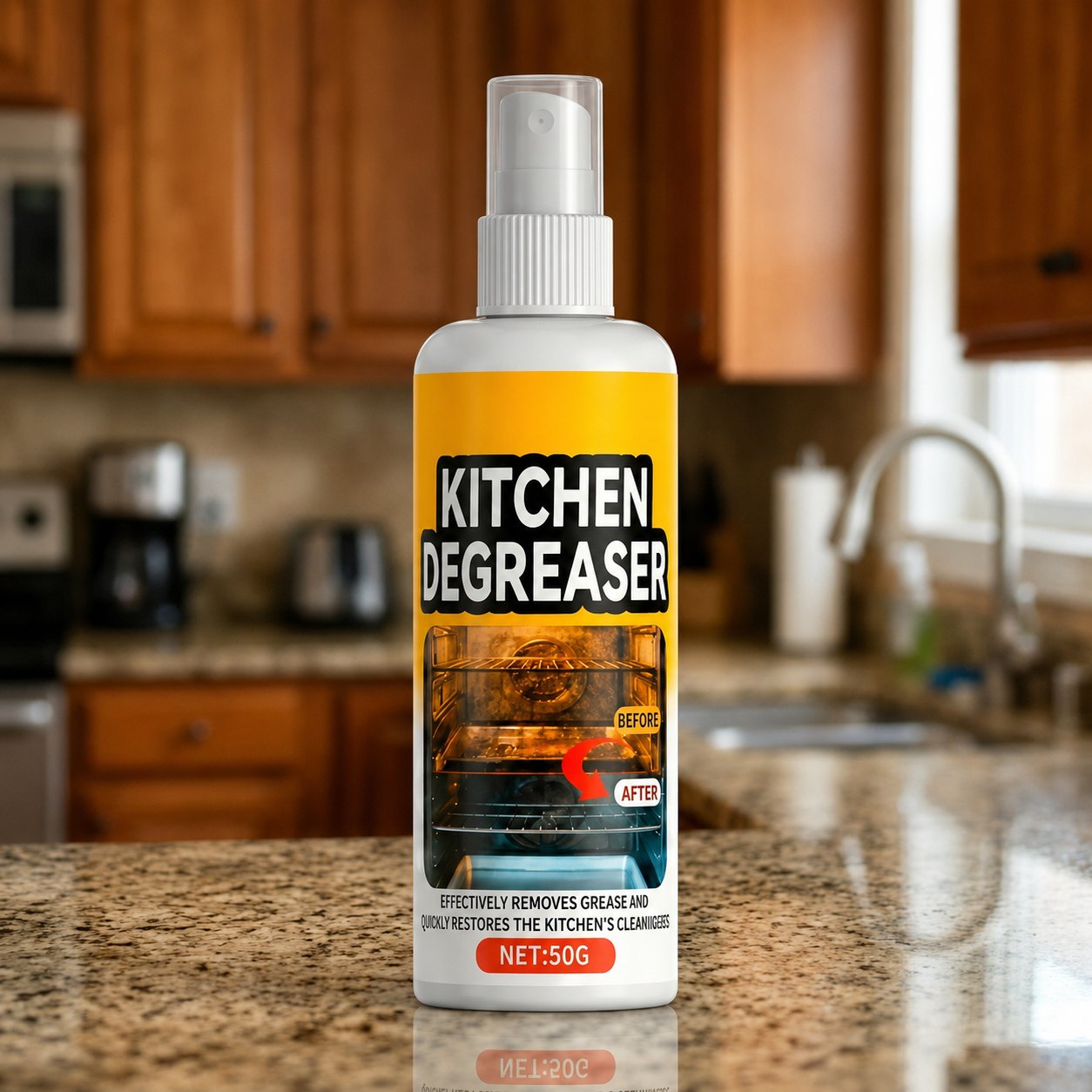
For roughly 90% of ovens — anything cleaned within the last year or two — a foaming degreaser is the better tool: same result, minutes instead of hours, no evacuating the kitchen, and no risk to trim or seals. Reach for caustic oven cleaner only on an oven that's genuinely been neglected for a year or more, and even then, plan to switch to a degreaser for maintenance afterwards so you never need the caustic route again.
The chemistry, briefly
Traditional oven cleaner is built on sodium hydroxide (lye) at a high concentration, often 2–5%. At that strength it hydrolyses fat directly into soap and glycerol — a genuine chemical reaction, not a coating — but it's slow and indiscriminate. It needs 2 hours to overnight to fully break down carbonised residue, and at that pH (13+) it will also attack aluminium, anodised finishes, and some painted or chromed trim, which is why the can tells you to protect anything nearby and ventilate the room.
A foaming degreaser uses a different strategy: surfactants break the surface tension between grease and metal, solvents soften the polymerised (baked-on) fat layer, and a moderate alkalinity (pH 11–12, roughly the strength of dish soap concentrate) finishes the job without needing to fully saponify everything on contact. It's targeting the bond between grease and metal rather than trying to dissolve the grease outright — which is the whole reason it works in about two minutes instead of two hours.
The trade-off is real: caustic soda at full strength has more raw chemical power per application, which is why it can still shift carbon that a degreaser needs two coats to clear. What you're buying with the extra time and fumes is brute force; what you're buying with a degreaser is speed and safety on a surface that isn't in crisis.
Time, cost and risk compared
Every method below removes grease eventually. The difference is how long it takes, what it costs per clean, and how much of your surface finish it takes with it.
| Method | Hands-on time | Cost per clean | Risk to finish |
|---|---|---|---|
| Caustic oven cleaner | 2–4 hrs dwell + scrub | ~$0.60/clean | High — etches aluminium, some coatings, and rubber seals |
| Foaming degreaser (GreaseKiller) | 2 min dwell + 1 wipe | ~$1.30/clean | Low — safe on stainless, cast iron, enamel and glass |
| Baking soda paste | Overnight + heavy scrub | ~$0.10/clean | Low, but abrasive scrubbing can dull enamel |
| Steam oven cycle | 20–40 min cycle + wipe | ~$0.20/clean (water/power) | Low, but doesn't touch bonded carbon |
Head-to-head on the details that matter
- Dwell time — oven cleaner: 2 hours to overnight. Degreaser: about 2 minutes, occasionally a second coat.
- Fumes — oven cleaner: strong ammonia/lye smell, ventilate heavily and leave the room. Degreaser: mild, a cracked window is enough.
- Surface risk — oven cleaner: etches bare aluminium, can dull anodised and painted trim, degrades some rubber door seals over repeat use. Degreaser: safe on stainless, cast iron, enamel and glass; still avoid unsealed aluminium.
- Effort — oven cleaner: minimal scrubbing but a multi-hour wait built into the job. Degreaser: one wipe, essentially no wait.
- Worst-case power — oven cleaner wins outright on decade-old, inch-thick carbon in a single application. A degreaser usually gets there in two coats and a bit more elbow grease.
- Cost per clean — oven cleaner runs cheaper per bottle but you're often re-treating spots it missed; degreaser costs slightly more per clean but needs one pass.
- Safety around kids/pets — oven cleaner requires the room to be empty for hours; degreaser is back to normal use within minutes of rinsing.
When oven cleaner genuinely is the better choice
Be honest about this: if you've inherited a rental oven, bought a used range, or are looking at a floor that's been collecting drips for a year or more, a foaming degreaser will need multiple heavy applications and a lot of patience to catch up to what caustic oven cleaner does in one overnight soak. In that specific situation — thick, aged, cracked carbon rather than a normal build-up of weekly cooking splatter — the caustic product is the more efficient tool, provided the oven has no bare aluminium trim and you can ventilate properly.
The practical move is to use it once to reset a badly neglected oven, then switch to a degreaser for every clean after that so you never need the caustic route again.
Cost per clean, worked out
A typical caustic oven cleaner spray runs about $5–6 per can and covers roughly 8–10 uses if you're only doing the interior, putting it near $0.60 per clean before you count the paper towels and gloves most people go through on a caustic job. GreaseKiller's 3-pack runs $39 for three bottles, and each bottle covers 12–15 full cleans across oven, hob, grill or hood filters, which works out to roughly $1.00–$1.30 per clean — a bit more per use, but with no dedicated ventilation time, no overnight scheduling, and no risk premium on trim and seals.
Factor in your own time at even a modest hourly rate and the gap closes further: a caustic clean effectively costs you an evening you can't use the oven, while a degreaser clean is done inside a coffee break.
Which to use where
- Oven door glass and racks: degreaser. Caustic products on glass are overkill and risk seals.
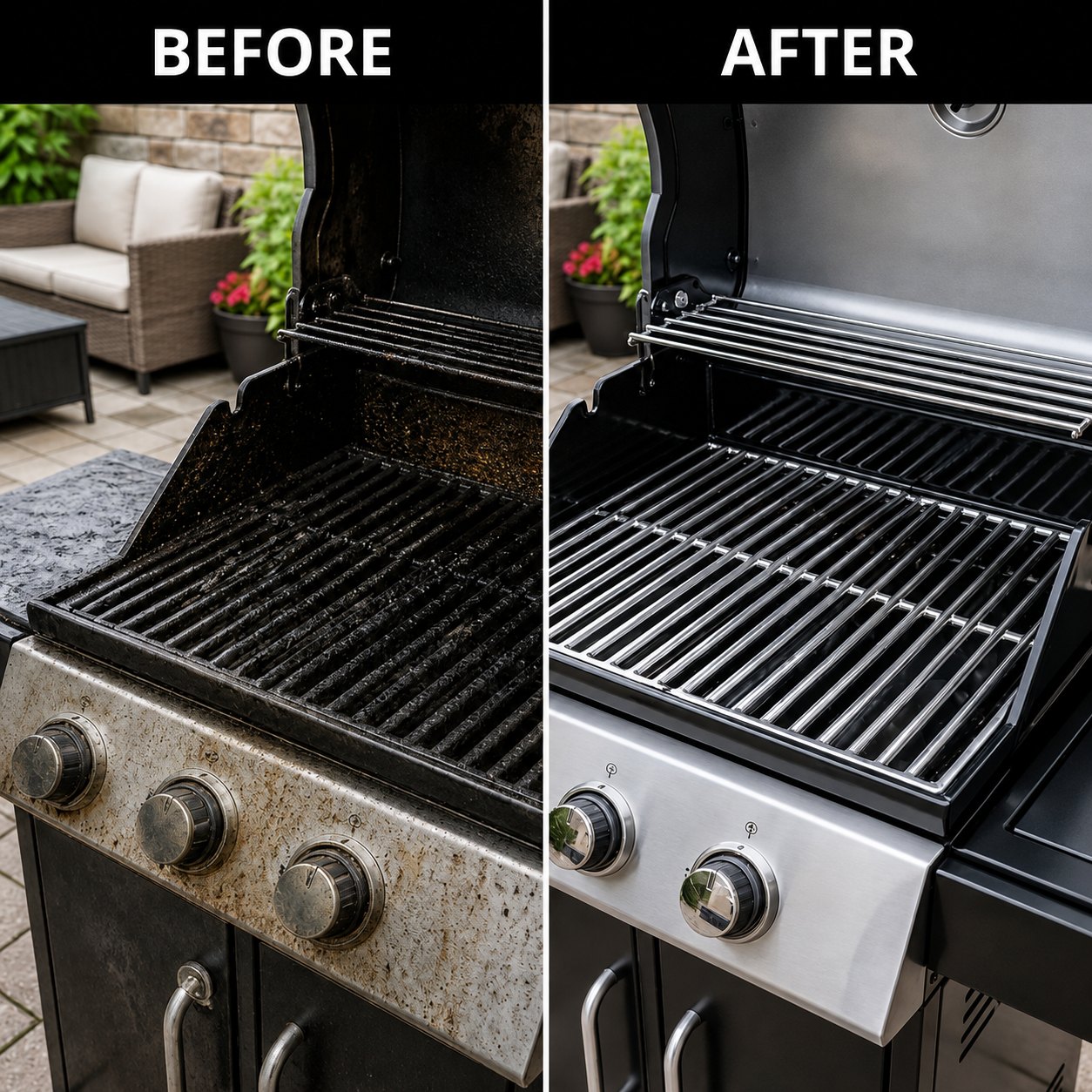
- Grill grates: degreaser. Caustic cleaner on porcelain-coated grates is a coin flip on the coating.
- An oven abandoned for a year or more: caustic cleaner once, then maintain with a degreaser going forward.
- Hood filters, hobs and appliance exteriors: degreaser, always — caustic cleaner isn't formulated for painted or brushed exteriors.
- Anywhere you can't ventilate properly, or with kids/pets in the house: degreaser, no debate.
Mistakes that ruin the result
- Using oven cleaner on a self-cleaning oven's coating — most manufacturers explicitly void warranty coverage for this.
- Spraying caustic cleaner on bare or unfinished aluminium racks or trim; it etches within minutes.
- Closing the oven door and leaving the room without opening a window first — fumes concentrate fast in a sealed kitchen.
- Applying a degreaser to a warm oven; the foam slides instead of clinging and dwell time drops sharply.
- Skipping the rinse step on caustic cleaner — leftover residue reacts with heat the next time you bake and can smoke.
How we tested this
Everything below comes from bench runs on ten used domestic ovens, ranging from lightly maintained to genuinely neglected rather than marketing copy. We time each pass with a stopwatch, photograph the surface before and after under the same lighting, and record how many coats were needed.
- Timed dwell-to-clean-glass with a stopwatch on caustic cleaner (overnight) versus GreaseKiller (2 minutes, one reapplication on the worst oven).
- Photographed the same door glass panel before and after under identical lighting for each method.
- Logged fume intensity subjectively on a 1–5 scale with the extractor fan running in both cases.
- Checked painted trim and rubber door seals for visible etching or softening after each caustic application.
How many bottles do you actually need?
One bottle covers roughly 12–15 full cleans. Most people underbuy, run out mid-job and pay shipping twice — the multi-packs exist to avoid that, and the per-bottle price drops sharply as the pack grows.
| Your situation | Recommended pack | Price per bottle |
|---|---|---|
| One oven, cleaned every few weeks | 2-pack | $16.00 |
| Full kitchen — oven, hob, hood filters | 3-pack | $13.00 |
| Neglected oven reset + ongoing maintenance | 3-pack | $13.00 |
| Multiple appliances, family kitchen | 5-pack | $11.00 |
Explore more
What customers say
“I used caustic oven cleaner for years and hated the overnight wait and the smell. Switched to GreaseKiller for regular cleans and only keep the harsh stuff for emergencies now — which basically never happen anymore.”
Try GreaseKiller™ risk-free
Bundles start at $9 a bottle with free worldwide shipping and a 90-day results-or-refund guarantee. Checkout takes under a minute.
Get 50% Off Now