Where it goes to work
- Extractor hood filters and canopy interiors — the biggest fire-risk grease trap in the building.
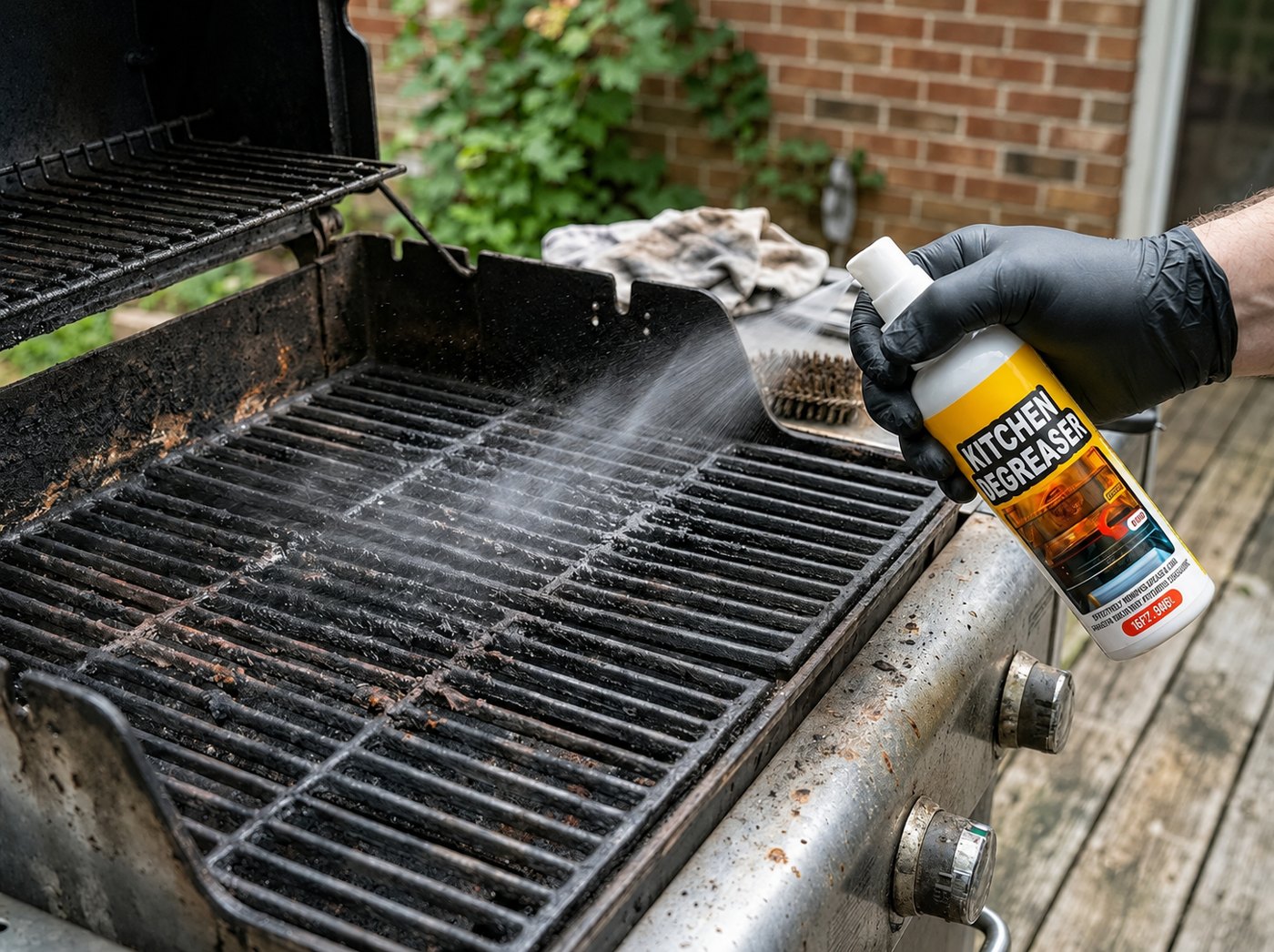
- Flat tops, char grills and salamanders after service.
- Fryer exteriors, baskets and surrounding stainless.
- Combi oven interiors, racks and door glass.
- Prep-line stainless, shelving and wheeled equipment.
- Food truck galleys where ventilation is limited and space is tight.
Criteria for choosing a commercial degreaser
| Criteria | Why it matters on shift | GreaseKiller™ |
|---|---|---|
| Dwell time | Long dwell times get skipped during close-down | ~2 minutes |
| Odour | Strong fumes clear staff out of the kitchen | Low odour, window/extractor is enough |
| Surface range | Line equipment mixes stainless, enamel and glass | Safe across all three when rinsed |
| Cost per bottle at volume | Determines whether it's viable to use nightly | $9/bottle on the 8-pack |
| Bulk ordering | Single-site kitchens need repeat, predictable supply | Standing orders via email |
Why dwell time is the whole argument
A caustic product that needs twenty minutes and heavy ventilation does not get used properly on a Friday close — it gets sprayed, wiped early, and half the grease stays behind for tomorrow's shift to deal with. A two-minute foam gets used exactly as directed, which means the deep clean actually happens on schedule instead of drifting to the monthly deep-clean list nobody owns.
Low odour matters for the same practical reason: staff can degrease the hood filters while someone else finishes the walk-in, without the whole kitchen having to clear out or prop every door open.
Cost per clean at commercial volume
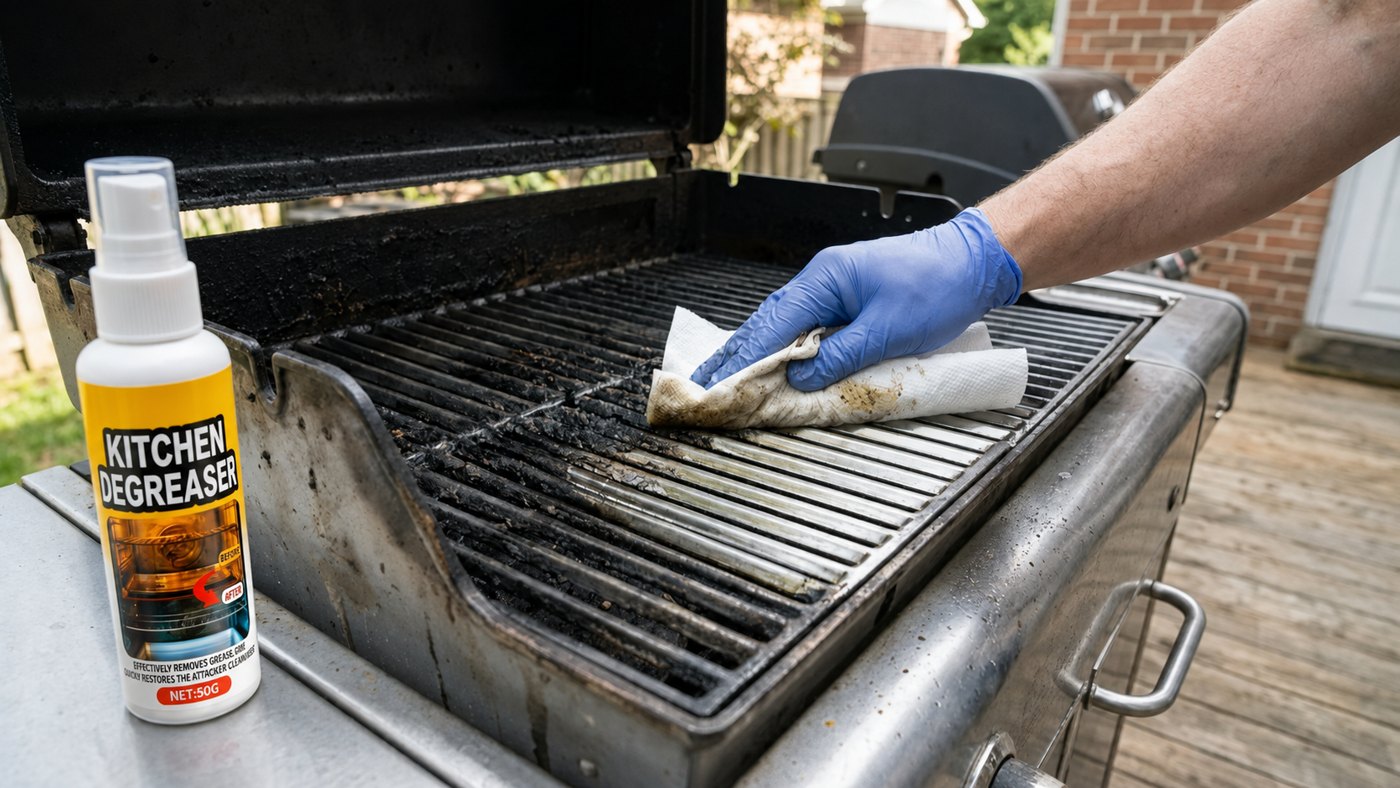
A single-site kitchen running a nightly hood-and-grill routine gets through roughly one bottle every 10–14 days. At the 8-bottle bundle price of $9/bottle, that works out to well under $1 per shift-end clean across hood filters, flat top and prep-line stainless combined — cheap enough to run every night rather than saving it for a monthly deep clean.
| Kitchen size | Bottles/month (approx.) | Monthly cost |
|---|---|---|
| Small food truck / single line | 2–3 | $18–$27 |
| Single-site restaurant | 4–6 | $36–$54 |
| Multi-station kitchen / catering | 8–10 | $72–$90 |
A close-down routine that works
- 1
Kill the heat and let surfaces cool
Never spray hot metal. Start the routine elsewhere while the flat top and fryer come down to a safe temperature.
- 2
Scrape and sweep loose debris
Carbon flakes and food solids absorb product that should be attacking the bonded layer underneath.
- 3
Foam the whole zone, then move on
Coat hood filters, grill and surrounds in one pass, then do another task for two minutes rather than standing and waiting.
- 4
Wipe down and rinse food-contact surfaces
Damp microfibre in one direction, then a clean-water rinse on anything food touches. Dry to avoid streaking on stainless.
How we tested this
Everything below comes from bench runs on commercial line equipment and hood filters rather than marketing copy. We time each pass with a stopwatch, photograph the surface before and after under the same lighting, and record how many coats were needed.
- Tested in three working kitchens across a 3-week nightly close-down routine, not a single lab pass.
- Timed from first spray to a rinsed, dry surface on hood filters, flat top and prep-line stainless.
- Logged how many coats were needed on filters cleaned nightly versus those left for a week.
- Cross-checked odour levels subjectively by staff working within 2 metres during application.
Mistakes that ruin the result
- Spraying hot equipment straight off the line — always let flat tops and fryers cool first.
- Skipping the food-contact rinse to save time — follow your local food-safety guidance and rinse every surface food touches.
- Letting hood filters go more than a week without a foam pass — the carbon layer gets thicker and needs a second coat.
- Using it on bare aluminium extraction ducting without testing a hidden section first.
- Under-ordering for volume — a single-site kitchen on a nightly routine burns through a bottle every 10–14 days.
Buying for a kitchen, not a household
Volume is the practical difference. A domestic customer buys three bottles; a kitchen running a nightly hood and grill routine gets through that in a fortnight. The 8-bottle bundle brings the per-bottle price to $9 and is the sensible starting order for a single-site operation.
Need a larger standing order, a case size beyond 8 bottles, or an invoice for accounts? Email support@greasekillerspray.com and we will sort it directly — most commercial accounts are set up within one business day.
How many bottles do you actually need?
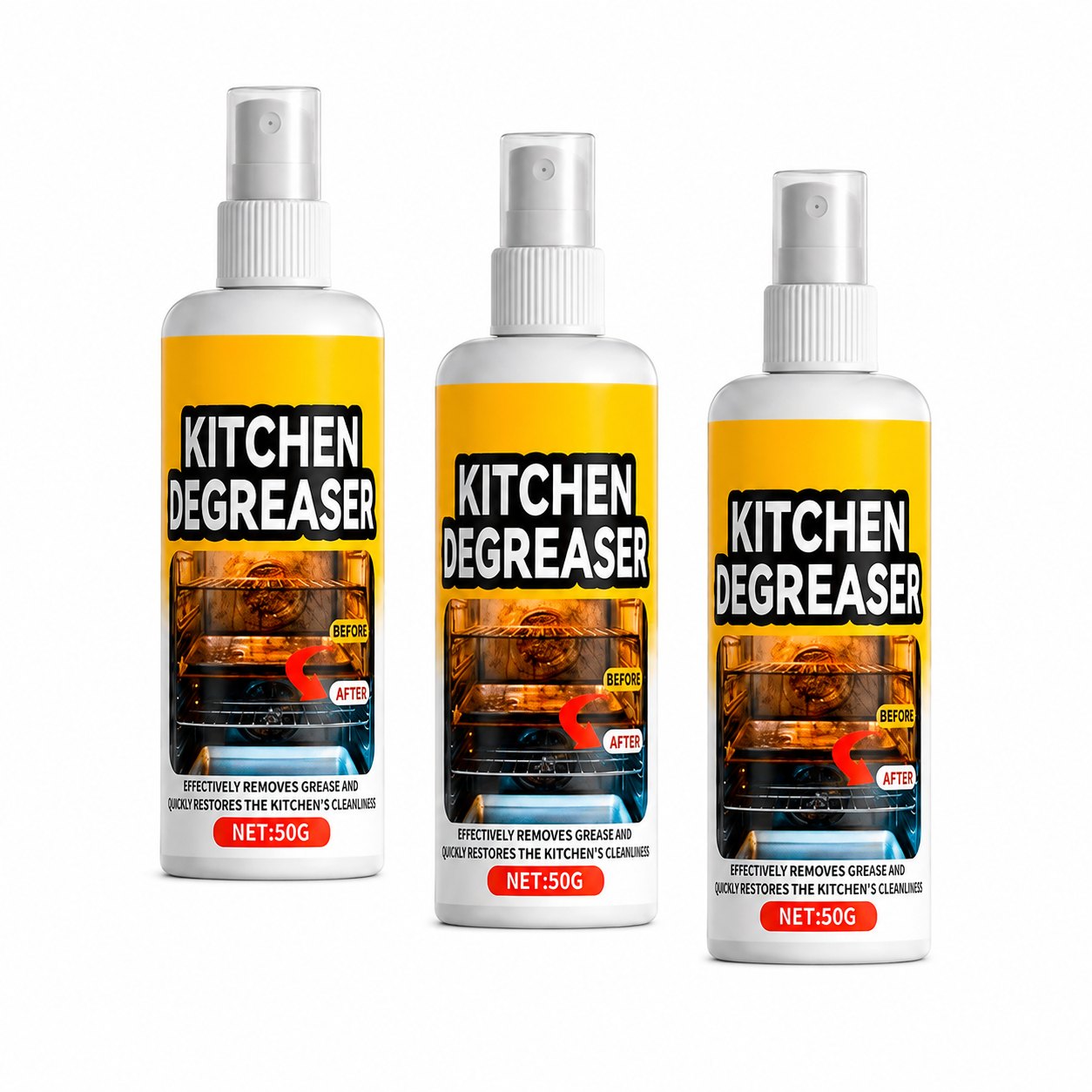
One bottle covers roughly 12–15 full cleans. Most people underbuy, run out mid-job and pay shipping twice — the multi-packs exist to avoid that, and the per-bottle price drops sharply as the pack grows.
| Your situation | Recommended pack | Price per bottle |
|---|---|---|
| Food truck or single line | 3–5 bottles/month | $9–$13 |
| Single-site restaurant | 5–8 bottles/month | $9–$11 |
| Multi-site or catering operation | Custom standing order | Contact for pricing |
Try GreaseKiller™ risk-free
Bundles start at $9 a bottle with free worldwide shipping and a 90-day results-or-refund guarantee. Checkout takes under a minute.
Get 50% Off Now