1. Caustic foam oven cleaners
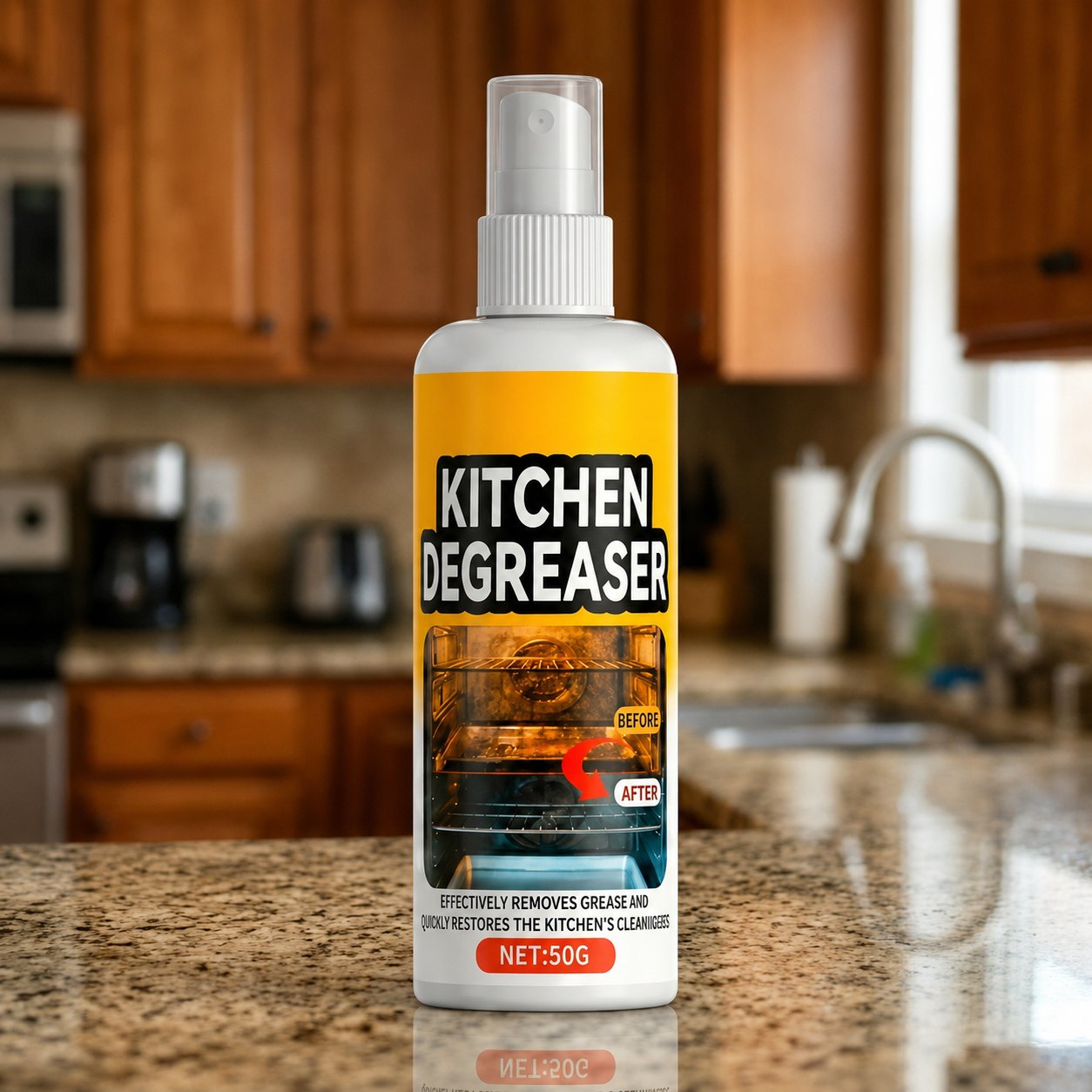
The classic supermarket option. Extremely effective on thick carbon, and extremely unpleasant to use: heavy fumes, gloves mandatory, kitchen often evacuated, and typically an overnight wait before you wipe it off. It will also etch bare aluminium trim and can damage some enamel coatings if you overshoot the dwell time.
Best for: catastrophic, decade-old build-up where you accept the trade-off and can leave the house for the evening.
2. Non-caustic foaming degreasers
The middle ground and, for most ovens, the right answer. A clinging foam built on solvents and surfactants softens the carbon in about two minutes so it wipes away, without the fume problem or the overnight wait of a caustic foam.
Best for: normal domestic build-up, oven door glass, racks, and anyone who wants the job done inside ten minutes rather than a whole evening.
3. Baking soda and vinegar paste
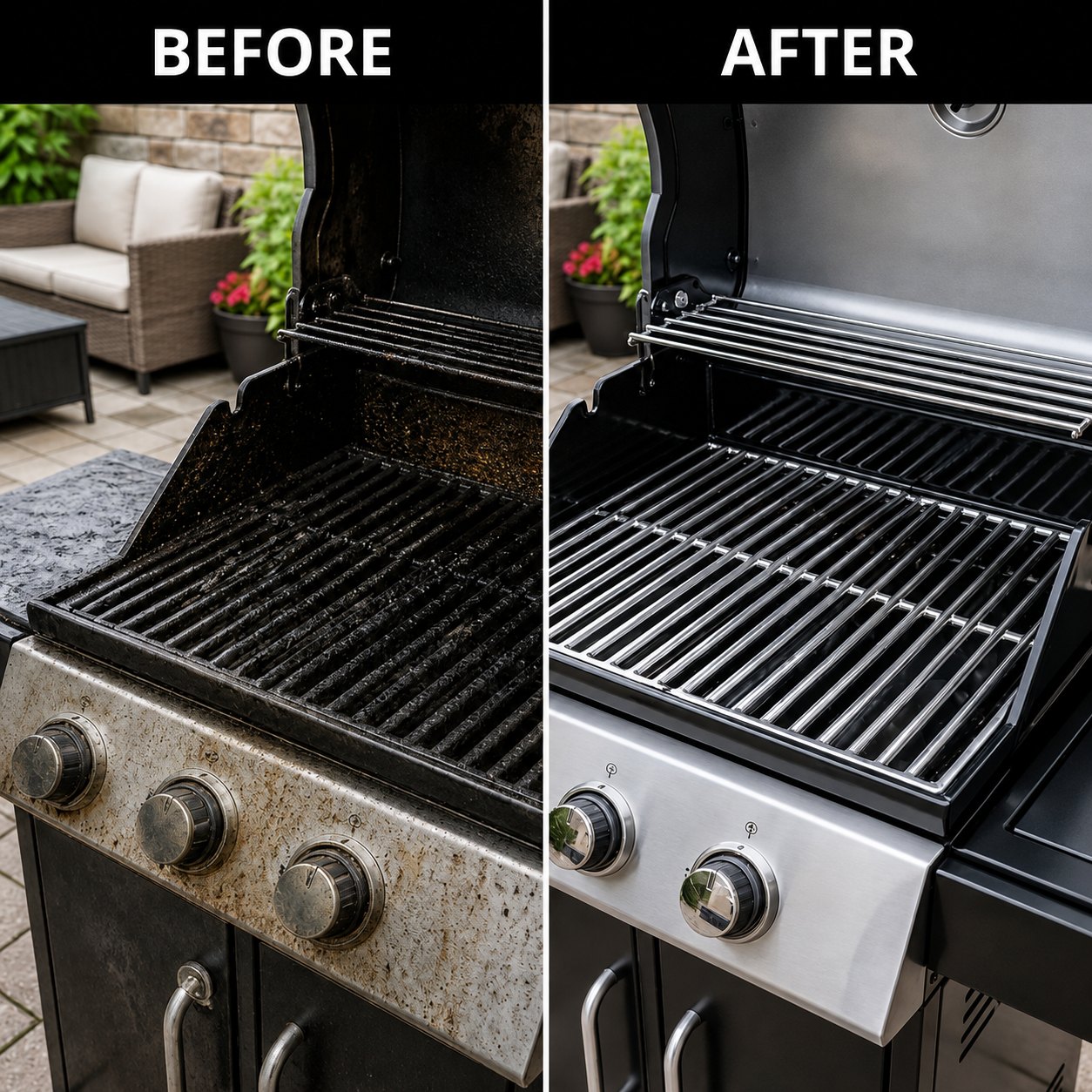
Cheap, non-toxic and genuinely useful on light residue. On polymerised carbon it is mostly a mild abrasive — you supply the energy with a scourer, over an hour or more, and the result is usually partial rather than complete.
Best for: light spills, households that won't have chemical sprays around, and maintenance cleaning between deeper sessions.
4. Pyrolytic self-clean cycles
If your oven has one, it incinerates residue at around 500°C and leaves a fine ash. It also runs for two to four hours, heats the whole kitchen, produces a strong burning smell, and is a documented cause of failed door seals, elements and thermal fuses on older machines.
Best for: modern pyrolytic ovens, used sparingly — a few times a year at most. Racks usually have to come out and be cleaned separately anyway.
5. Steam cleaning
Steam softens fresh grease well and is entirely chemical-free. On hardened carbon it re-wets the surface without dissolving the polymer bond, so you still end up scrubbing — and now the residue is hot, softened and smeary instead of dry and flaky.
Best for: regular light maintenance in an oven that's cleaned properly every few weeks.
Cost, time and risk compared
| Method | Hands-on time | Cost per clean | Appliance / surface risk |
|---|---|---|---|
| Caustic foam | 10 min apply + overnight wait | $3–$6 | High — fumes, can etch aluminium/coatings |
| Non-caustic degreaser (GreaseKiller™) | 5–10 min total | $0.87–$1.58 | Low — safe on enamel, glass, stainless |
| Baking soda paste | 45–90 min scrubbing | $0.20–$0.50 | Low, but often incomplete on hard carbon |
| Pyrolytic self-clean | 2–4 hr cycle, no scrubbing | $0.50–$1 (electricity) | Moderate-high — stresses seals and elements |
| Steam cleaning | 20–30 min + wiping | $0 (water/electricity only) | Low, but ineffective on hardened carbon |
Our recommendation
For most people, most of the time: a non-caustic foaming degreaser. It clears the door glass, the floor and the racks in one session without fumes, without an overnight wait, and without the appliance risk of a pyrolytic cycle. Keep baking soda for light maintenance and reserve caustic products for genuine disasters.
“I'd tried the caustic gel from the supermarket twice and hated the fumes both times. This did the door glass and both racks in under ten minutes with the window cracked open.”
How we tested this
Everything below comes from bench runs on oven interiors, door glass and racks rather than marketing copy. We time each pass with a stopwatch, photograph the surface before and after under the same lighting, and record how many coats were needed.
- Tested on 4 domestic ovens with carbon build-up ranging from 2 weeks to 6 months of regular roasting.
- Each method timed from first application to a visually clean surface, including any wait time.
- Photographed door glass before and after under the same lighting to compare haze and residue.
- Cost per clean calculated from typical retail pricing and product usage per session, not manufacturer claims.
Mistakes that ruin the result
- Running a pyrolytic cycle with racks still inside — most manufacturers say to remove them first.
- Using a caustic oven cleaner without gloves or ventilation — read the hazard label, not just the front of the bottle.
- Spraying any degreaser onto a hot oven interior — always let it cool completely first.
- Using baking soda paste on brushed or unsealed aluminium trim, where light scrubbing can dull the finish.
- Assuming steam alone will shift months-old carbon — it softens fresh grease, not polymerised build-up.
How many bottles do you actually need?
One bottle covers roughly 12–15 full cleans. Most people underbuy, run out mid-job and pay shipping twice — the multi-packs exist to avoid that, and the per-bottle price drops sharply as the pack grows.
| Your situation | Recommended pack | Price per bottle |
|---|---|---|
| Light home use, one oven | 1–3 bottles | $13–$19 |
| Family kitchen, regular roasting | 3 bottles | $13 |
| Multiple ovens or heavy use | 5 bottles | $11 |
Continue reading
Try GreaseKiller™ risk-free
Bundles start at $9 a bottle with free worldwide shipping and a 90-day results-or-refund guarantee. Checkout takes under a minute.
Get 50% Off Now