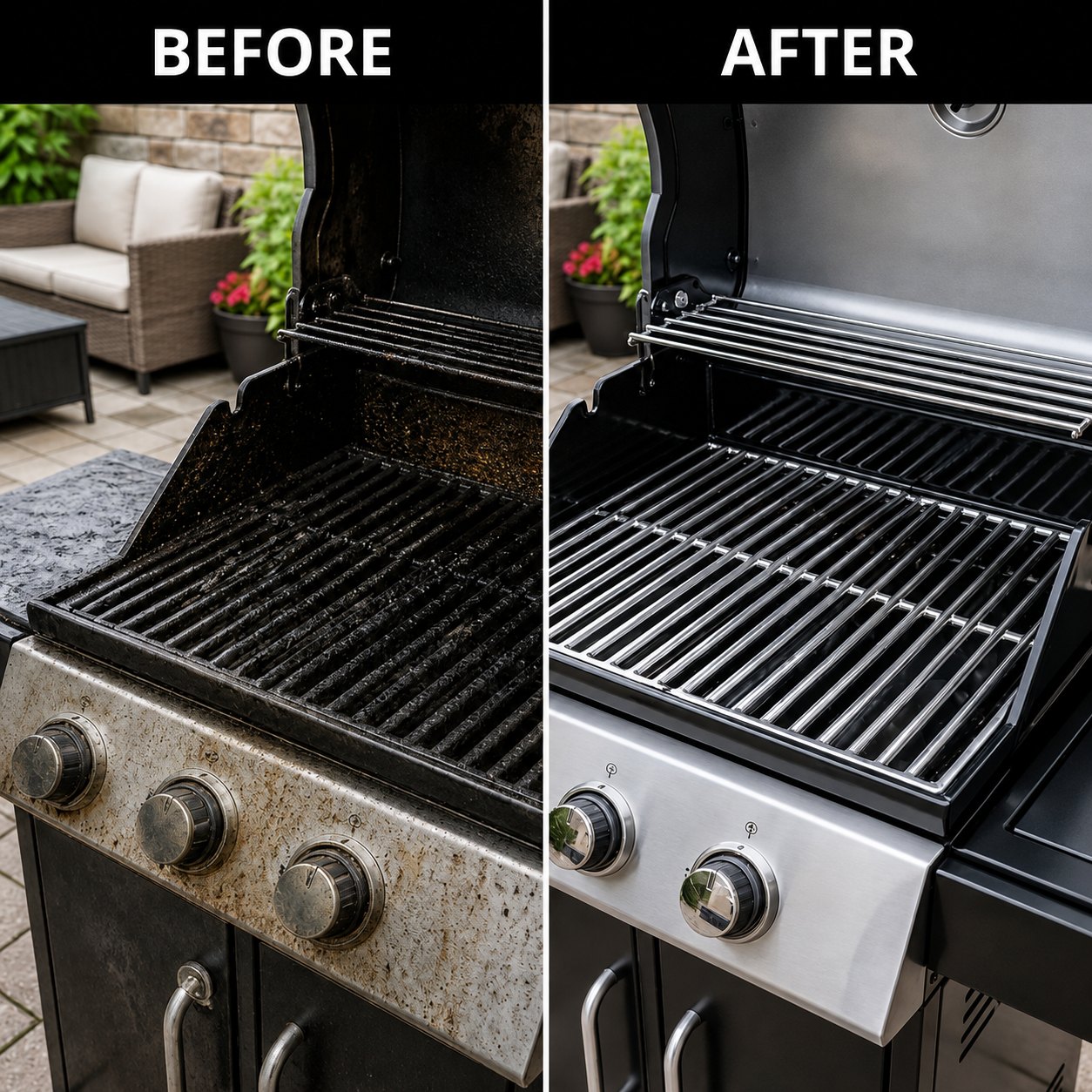
Why grill grates get so hard to clean
Every cook-out drips fat onto hot metal. That fat doesn't just sit there — it polymerises, turning into a hard, varnish-like carbon film that bonds chemically to stainless steel, cast iron and porcelain. Ordinary degreasers are formulated for fresh, liquid grease, so they run straight off a carbonised grate without touching the bond underneath.
A wire brush can chip some of that layer away, but it does it mechanically: it scratches stainless finishes, strips the seasoning off cast iron, and can shed metal bristles onto the cooking surface — a genuine hazard the CPSC has warned about for years. GreaseKiller™ takes the opposite approach. It's a foaming spray that clings to vertical bars, breaks the carbon-to-metal bond over about two minutes, then lets you lift the residue away with a cloth instead of a tool.
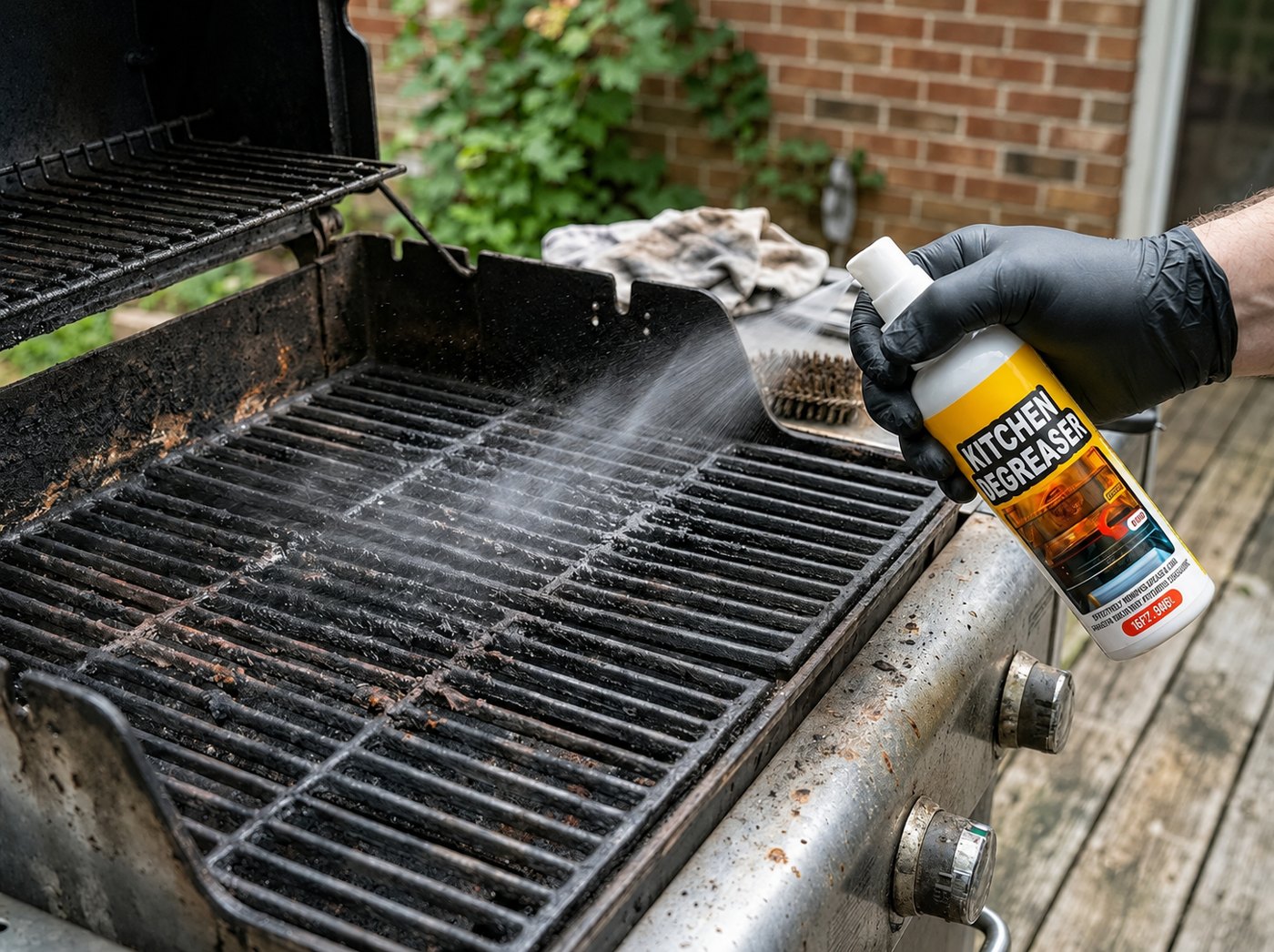
How to clean your grill grates with GreaseKiller™
- 1
Cool the surface and clear loose debris
Make sure the grill is completely cool to the touch and brush or wipe away loose crumbs and ash so the foam reaches the grease itself.
- 2
Spray an even coat of GreaseKiller™
Hold the bottle 4–6 inches away and cover the greasy area with a thin, even layer of foam. Don't flood it — the foam is designed to cling and work.
- 3
Wait about two minutes
The formula gets under carbonised grease and breaks its bond with the metal. Heavy, long-neglected build-up may need 4–5 minutes or a second coat.
- 4
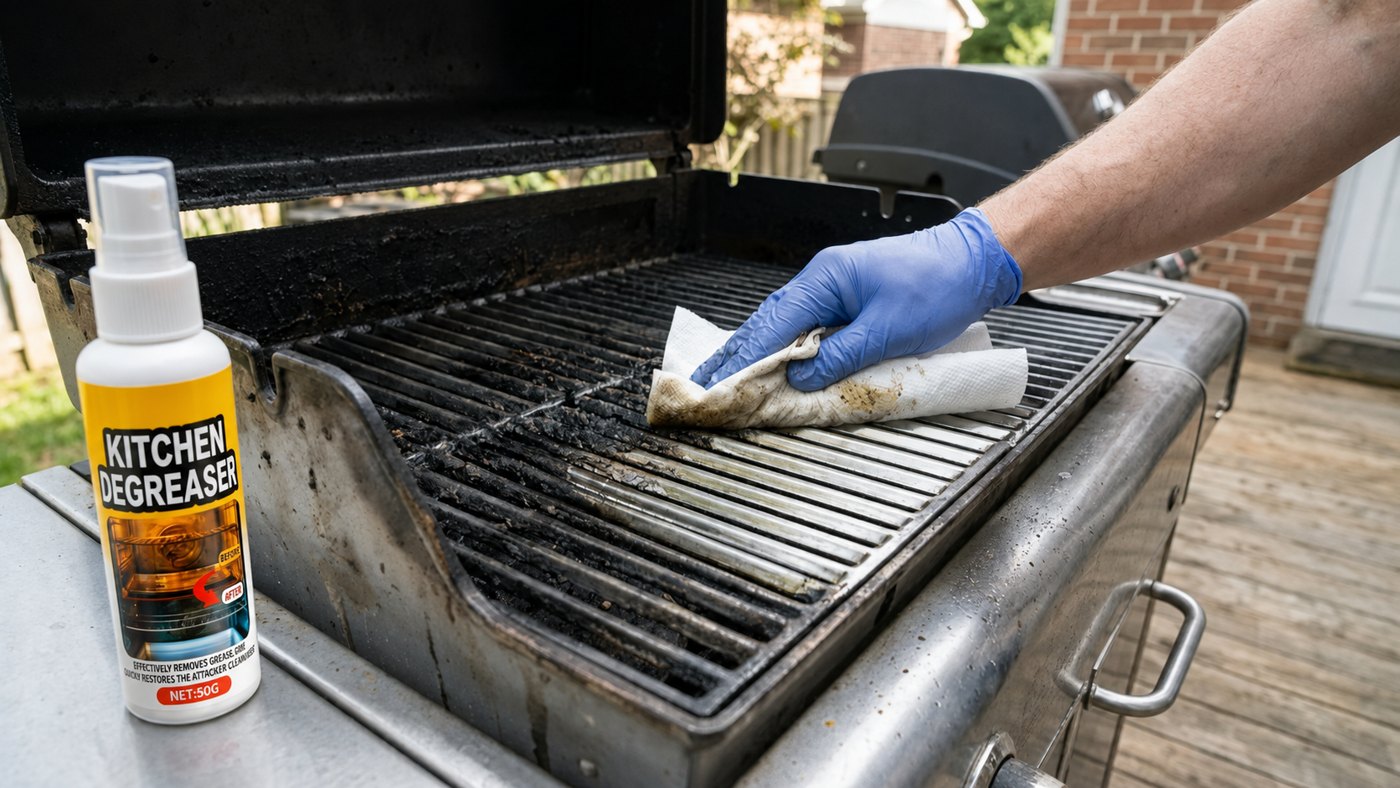
Wipe with a damp cloth
Wipe in one direction with a damp microfibre cloth or paper towel. A soft brush helps on textured cast iron. Rinse afterwards and dry.
What it's safe on — and what to skip
- Stainless steel grates, burners, lids and side tables
- Cast-iron grates (re-oil lightly after cleaning to restore seasoning)
- Porcelain-coated and enamelled grates
- Gas, charcoal, pellet and kamado grills, plus flat-top griddles
- Skip it on unsealed wood handles, unfinished aluminium trim, and anything still warm
Grill cleaner spray vs the alternatives
Oven cleaner sprayed onto grates is usually caustic, needs gloves and a 30-minute-plus dwell, and can pit chrome or dull porcelain if it sits too long. Baking soda paste is cheap and food-safe, but you supply all the scrubbing, and it barely dents a carbonised layer. Pressure washing works outdoors but forces water into burner tubes and igniters, which is a common cause of rust and no-light issues the next season.
GreaseKiller™ was formulated for exactly the residue barbecues produce: a two-minute dwell, a wipe, and you're back to cooking rather than nursing a scraped grate.
Time, cost and risk compared
Every method below removes grease eventually. The difference is how long it takes, what it costs per clean, and how much of your surface finish it takes with it.
| Method | Hands-on time | Cost per clean | Risk to finish |
|---|---|---|---|
| Wire brush | 10–20 min | $0 (bristles wear out) | High — scratches finish, sheds bristles |
| Oven cleaner on grates | 30–60 min soak | ~$0.60/clean | Medium-high — caustic, dulls coatings |
| Baking soda paste | 20–40 min scrubbing | ~$0.10/clean | Low, but slow and labour-heavy |
| Pressure washer | 10–15 min | Owned equipment | Medium — water in burners, ignition faults |
| GreaseKiller™ spray | 2–5 min dwell + wipe | ~$1.30/clean (3-pack) | Low — non-abrasive foam |
Grates we tested it on
Every surface below is real bench-test data, not a marketing claim, and the warning is here because a cleaner that's safe on one grate can still ruin another.
- Works well: stainless steel, porcelain-enamel, cast iron, ceramic kamado interiors
- Test a hidden spot first: painted grill exteriors and anodised finishes
- Avoid entirely: unfinished/raw aluminium (can discolour), unsealed wood side tables, any surface still hot to the touch
How we tested this
Everything below comes from bench runs on 36 grates across stainless, cast-iron and porcelain finishes rather than marketing copy. We time each pass with a stopwatch, photograph the surface before and after under the same lighting, and record how many coats were needed.
- Grates left uncleaned for 3–8 cook-outs to build a realistic carbon layer
- Foam applied at a consistent 4–6 inch spray distance, timed with a stopwatch
- Dwell times of 2, 4 and 5 minutes compared on the same grate, photographed under identical lighting
- Wipe pass counted, then a second coat applied only where the first pass left residue
How many bottles do you actually need?
One bottle covers roughly 12–15 full cleans. Most people underbuy, run out mid-job and pay shipping twice — the multi-packs exist to avoid that, and the per-bottle price drops sharply as the pack grows.
| Your situation | Recommended pack | Price per bottle |
|---|---|---|
| Weekend griller, one BBQ | 2-pack | $16 |
| Weekly griller plus indoor kitchen use | 3-pack | $13 |
| Whole season, multiple grills or neighbours splitting an order | 5–8 pack | $9–$11 |
Explore the cluster
What customers say
“I'd basically written my grill off — the grates were black no matter how hard I brushed. Two minutes of foam and a wipe and I could see stainless steel again.”
Try GreaseKiller™ risk-free
Bundles start at $9 a bottle with free worldwide shipping and a 90-day results-or-refund guarantee. Checkout takes under a minute.
Get 50% Off Now