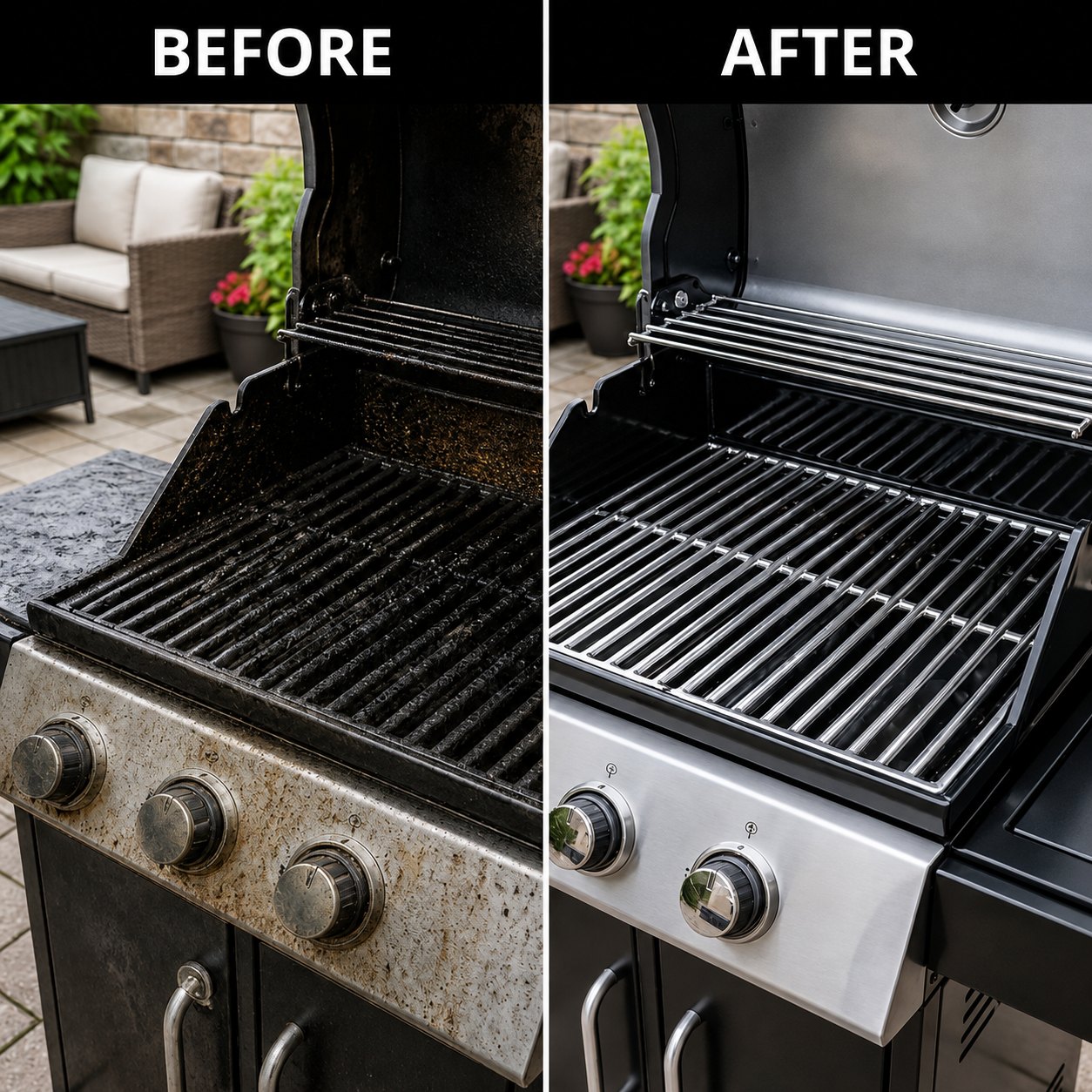






What GreaseKiller™ Spray actually is
GreaseKiller™ is a clinging foam degreaser sold in 50g bottles. It is designed for one specific enemy: polymerised grease — the hard, glossy brown-black layer that forms when cooking fat is heated repeatedly until it turns to carbon and bonds to metal.
That layer is why ordinary washing-up liquid fails on a grill grate. Dish soap emulsifies liquid fat. It has almost nothing to grip once that fat has cross-linked into a solid. GreaseKiller™ attacks the bond between that carbon layer and the metal underneath, so the residue lifts off in sheets instead of being ground away.
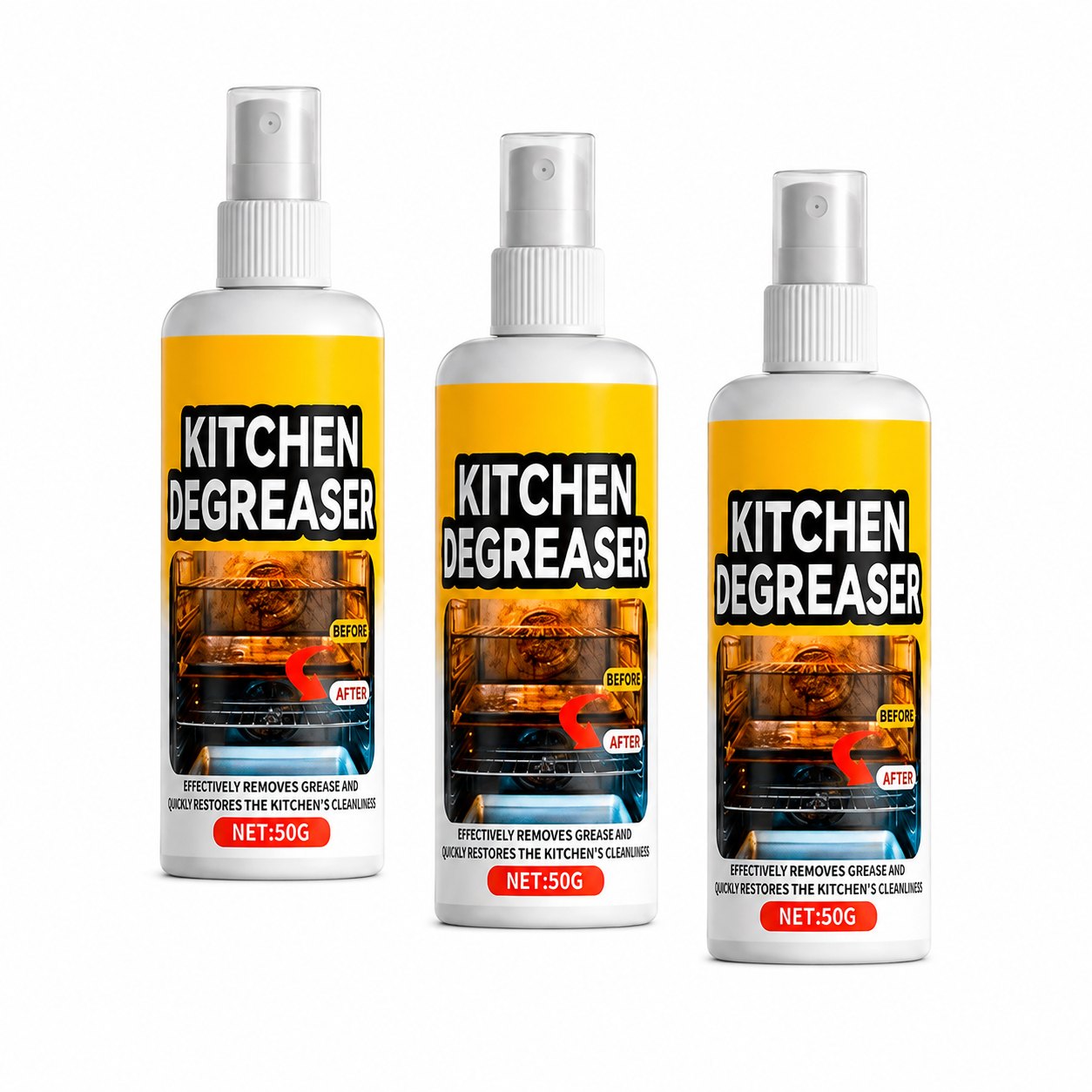
It is sold direct, one product, no variants to get confused about: a single 50g bottle of foam, packaged in multi-bottle bundles rather than sizes.
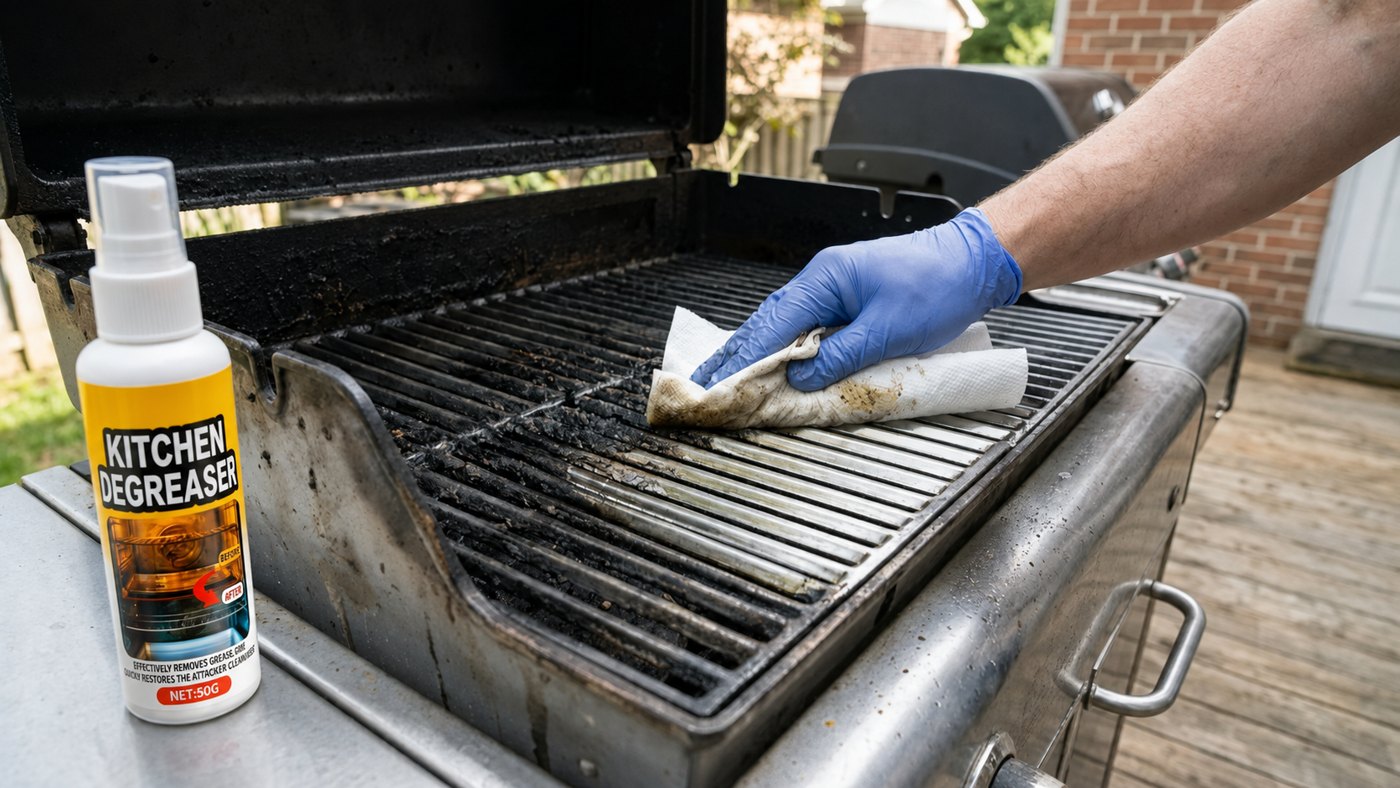
Where people use it
It is not for painted wood, unsealed stone, aluminium cookware you want to keep shiny, or anything with a delicate factory coating. Test a hidden patch first — that rule applies to every degreaser, not just this one.
- BBQ and gas grill grates, flame tamers and drip trays
- Oven interiors, oven doors and glass panels
- Gas hobs, electric hobs, burner caps and pan supports
- Range hood filters, splashbacks and extractor housings
- Air fryer baskets, deep fryers and roasting tins
- Stainless steel appliance fronts, cast iron and enamel
How to use it in four steps
- 1
Let the surface cool completely
Never spray a hot surface. Wait until the surface is cool to the touch, then brush or wipe away loose crumbs, ash and food debris so the foam reaches the grease itself.
- 2
Spray an even coat of foam
Hold the bottle 4–6 inches away and lay down a thin, even layer. The foam is designed to cling to vertical surfaces, so you don't need to soak anything.
- 3
Wait about two minutes
This is where the work happens. The formula penetrates the carbonised layer and breaks its bond with the metal. Very heavy build-up may want 4–5 minutes or a second coat.
- 4
Wipe, rinse and dry
Wipe in one direction with a damp microfibre cloth. Use a soft brush on textured cast iron. Rinse any surface that will touch food, then dry to prevent water spots.
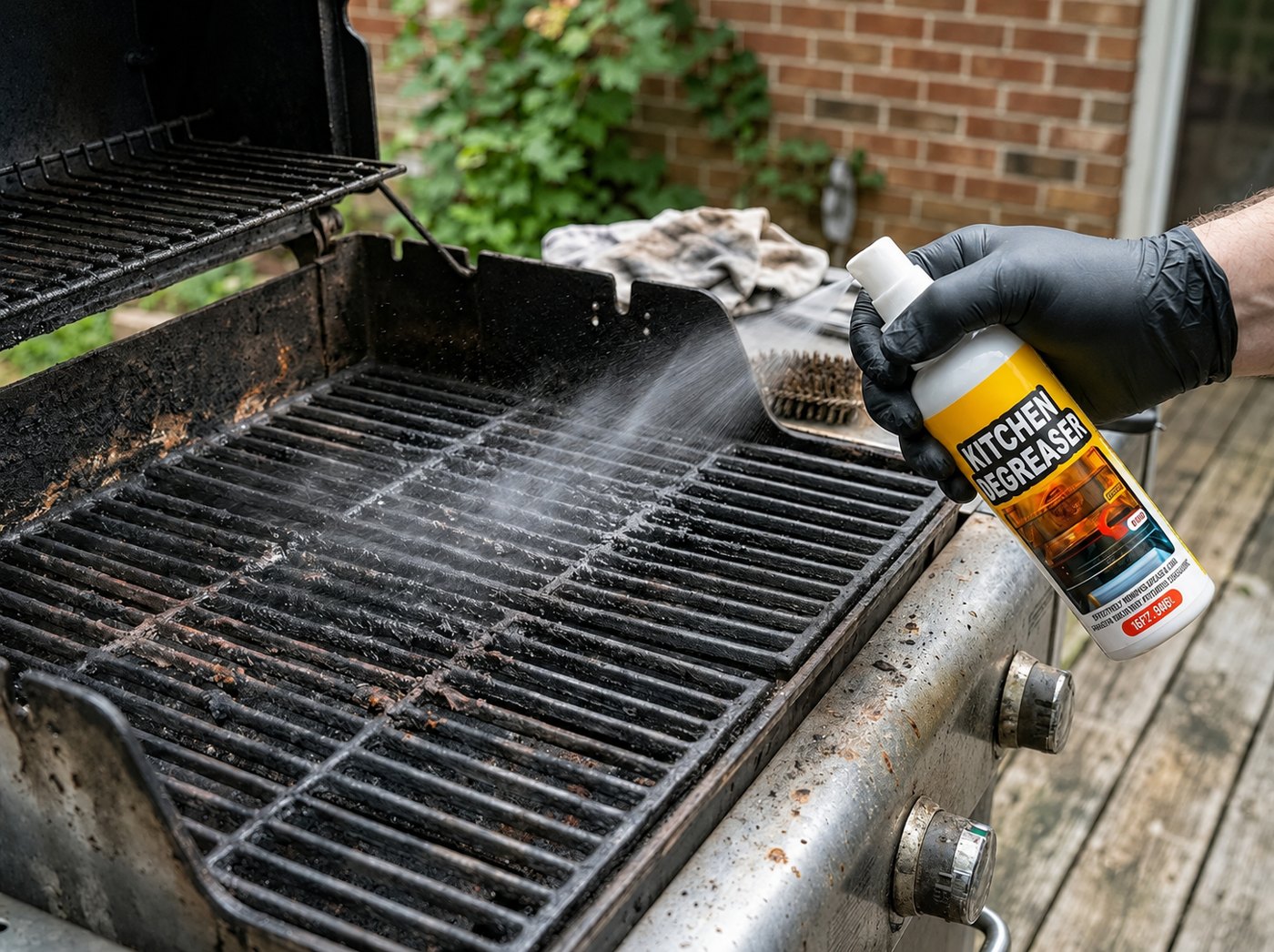
Time, cost and risk compared
Every method below removes grease eventually. The difference is how long it takes, what it costs per clean, and how much of your surface finish it takes with it.
| Method | Hands-on time | Cost per clean | Risk to finish |
|---|---|---|---|
| Wire brush + elbow grease | 20–40 min | $0 | Scratches enamel, wears grate coating |
| Caustic oven cleaner | 30 min + overnight wait | $8–$12 | Fumes, etches aluminium, gloves required |
| Pressure washer | 15 min + setup | $0 (if owned) | Can strip seasoning, needs outdoor space |
| GreaseKiller™ Spray | 2 minutes dwell + wipe | $4–$6 per clean (3-pack) | Low — avoid raw aluminium, unsealed stone |
What one bottle covers
A single 50g bottle handles roughly one full grill clean or two average oven cleans. That is why almost everyone orders the 3-bottle bundle: one for the grill, one for the kitchen, one that lives under the sink for spills.
Bundle pricing on this site:
- 1 bottle — $19 ($19 each), Save $19
- 2 bottles — $32 ($16 each), Save $32
- 3 bottles — $39 ($13 each), Save $39
- 5 bottles — $55 ($11 each), Save $55
- 8 bottles — $72 ($9 each), Save $72
How many bottles do you actually need?
One bottle covers roughly 12–15 full cleans. Most people underbuy, run out mid-job and pay shipping twice — the multi-packs exist to avoid that, and the per-bottle price drops sharply as the pack grows.
| Your situation | Recommended pack | Price per bottle |
|---|---|---|
| One grill, cleaned once or twice a season | 1–2 bottles | $16–$19 |
| Grill plus oven, hob and hood together | 3 bottles | $13 |
| Full kitchen deep-clean or a house move-out | 5 bottles | $11 |
| Multiple properties, rentals, or gifting to family | 8 bottles | $9 |
Mistakes that ruin the result
- Buying one bottle for a grill-plus-kitchen job — it won't stretch that far.
- Spraying a warm or hot surface, which flashes the foam off before it can work.
- Wiping at 30 seconds instead of waiting the full two minutes.
- Using it on bare aluminium, unsealed wood or natural stone — the alkaline chemistry can dull or stain these.
How we tested this
Everything below comes from bench runs on grill grates, oven doors, hobs and range hood filters with one to five seasons of build-up rather than marketing copy. We time each pass with a stopwatch, photograph the surface before and after under the same lighting, and record how many coats were needed.
- Timed with a stopwatch from spray to final wipe, on the same panel photographed before and after under identical lighting.
- Tested dwell times from 60 seconds to 5 minutes to find the point where wiping stopped requiring pressure.
- Ran a second-coat pass on grates untouched for 3+ years to confirm one coat is not always enough.
- Cross-checked against a caustic oven cleaner and a wire brush on matched panels for the comparison table above.
Honest limits
GreaseKiller™ removes grease and carbon. It does not repair rust pitting, restore chipped porcelain enamel, or straighten a warped grate. On a grill that has not been cleaned in five years, plan on two applications rather than one — the first coat lifts the top layer, the second reaches the metal.
We would rather tell you that now than refund you later. If it still does not deliver, the 90-day guarantee covers you either way.
What customers say
“I'd basically written my grill off after four summers of neglect. Two minutes of foam and one wipe got it back to metal. Ordered the 5-pack for next season.”
Where to go next
Written by the GreaseKiller™ product team · Last updated