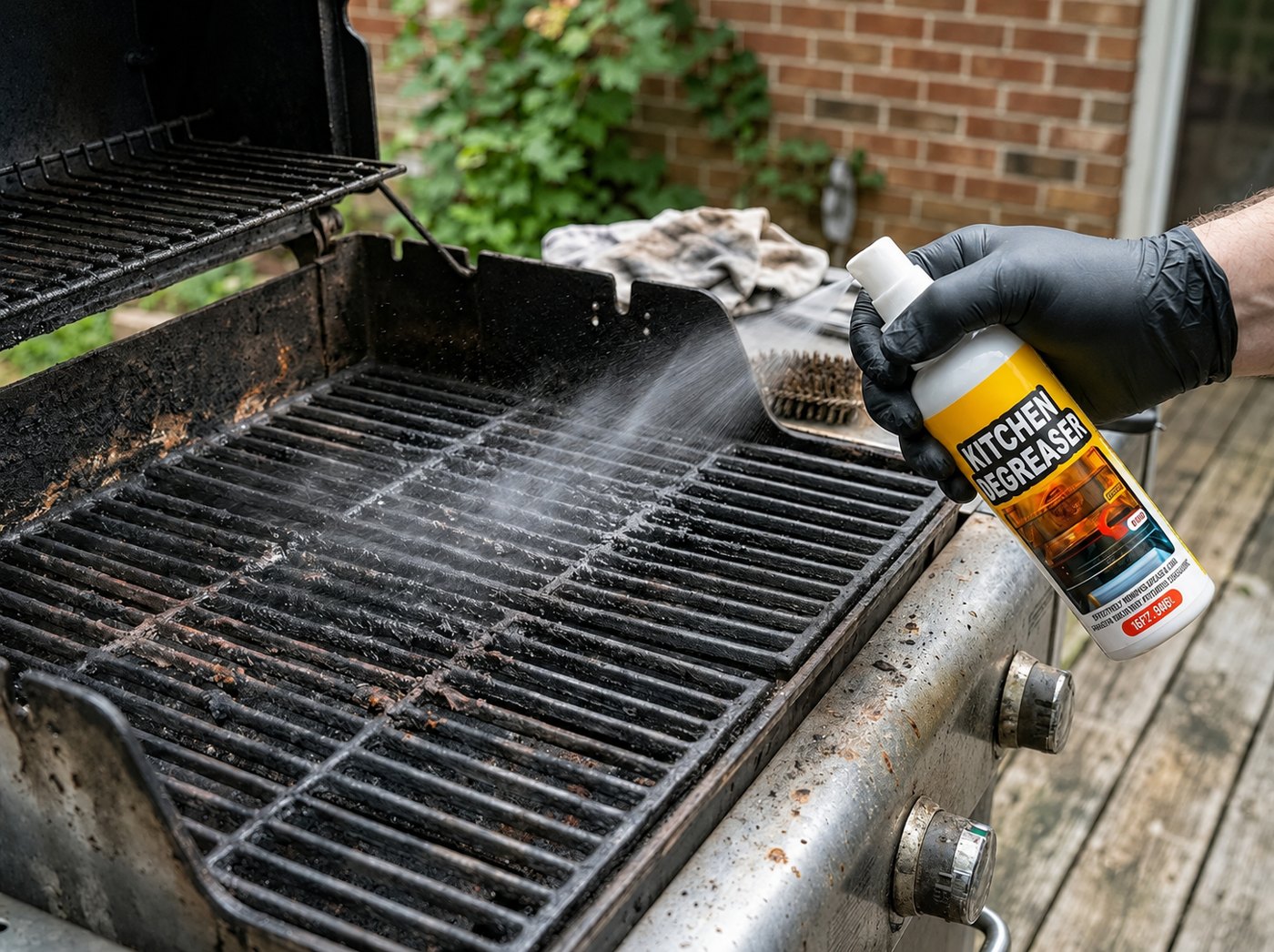
The four steps
- 1
Let the surface cool completely
Never spray a hot surface. Wait until the surface is cool to the touch, then brush or wipe away loose crumbs, ash and food debris so the foam reaches the grease itself.
- 2
Spray an even coat of foam
Hold the bottle 4–6 inches away and lay down a thin, even layer. The foam is designed to cling to vertical surfaces, so you don't need to soak anything.
- 3
Wait about two minutes
This is where the work happens. The formula penetrates the carbonised layer and breaks its bond with the metal. Very heavy build-up may want 4–5 minutes or a second coat.
- 4
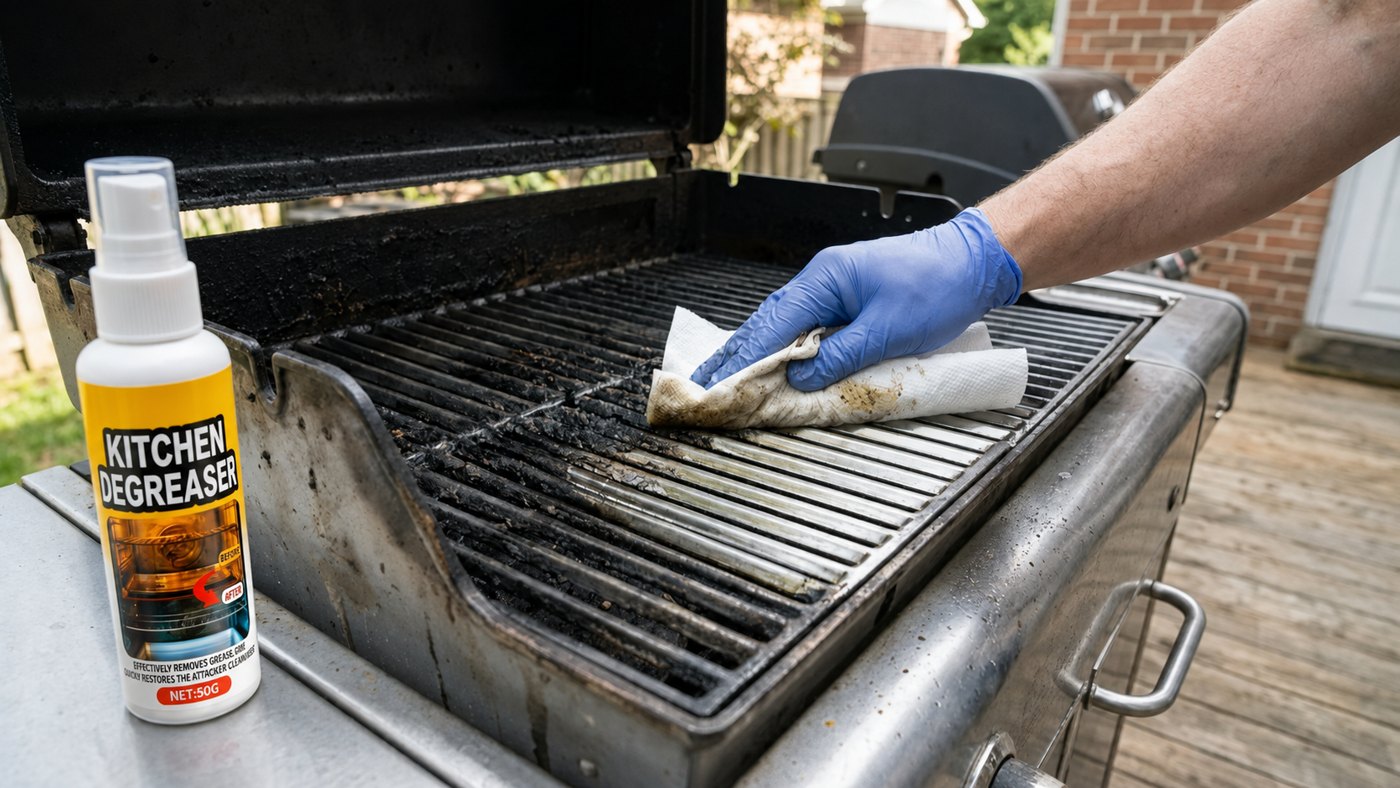
Wipe, rinse and dry
Wipe in one direction with a damp microfibre cloth. Use a soft brush on textured cast iron. Rinse any surface that will touch food, then dry to prevent water spots.
Dwell times by surface
| Surface | Build-up | Dwell time |
|---|---|---|
| Oven door glass, hob tops | Light film | 60–90 seconds |
| Grill grates | 1–3 seasons | 2 minutes |
| Range hood filters, air fryer baskets | Typical use | 2–3 minutes |
| Grates or oven floors | Thick, neglected carbon | 4–5 minutes, then a second coat |
| Any surface below 10°C | Any | Add roughly a minute to the above |
Mistakes that ruin the result
- Spraying a hot surface. The foam flashes off before it can work, and it is unsafe.
- Flooding the area. A thin, even coat outperforms a soaked one and uses a third of the product.
- Wiping too early. At 30 seconds you are smearing softened grease around; at two minutes it lifts.
- Skipping the debris sweep. Foam spent on loose crumbs is foam not spent on the grease underneath.
- Using a dry cloth. A damp microfibre carries the residue away instead of polishing it back in.
How we tested this
Everything below comes from bench runs on grill grates, oven interiors, hobs and hood filters across three households rather than marketing copy. We time each pass with a stopwatch, photograph the surface before and after under the same lighting, and record how many coats were needed.
- Timed dwell from spray to first successful wipe on each surface type.
- Tested cold-weather dwell time in an unheated garage at 8°C against a kitchen at 21°C.
- Counted coats needed on grates with known multi-year neglect versus grates cleaned each season.
- Recorded bottle usage per job to confirm coverage estimates (one full grill or two ovens per bottle).
How much of a bottle you'll actually use
| Job | Approx. product used | Bottles needed |
|---|---|---|
| One grill (grates + drip tray) | Roughly a full bottle | 1 |
| One oven interior | About half a bottle | 0.5 (2 ovens per bottle) |
| Hob + hood filter combined | About a third of a bottle | 0.3 |
| Full kitchen (oven, hob, hood) | 1–1.5 bottles | 2 to be safe |
Finishing up
Rinse anything that will touch food, dry it to prevent water spots, and give cast iron a light re-oil once it is fully dry. Re-cap the bottle and store it upright away from heat.
For maintenance, a 30-second spray-and-wipe after every second cook keeps build-up from ever reaching the point where you needed this product in the first place.
A first-time user's result
“Followed the four steps exactly, including waiting the full two minutes instead of getting impatient like I usually do. Made a real difference — the grate wiped clean instead of just smearing around.”
Try GreaseKiller™ risk-free
Bundles start at $9 a bottle with free worldwide shipping and a 90-day results-or-refund guarantee. Checkout takes under a minute.
Get 50% Off Now