The verdict, up front
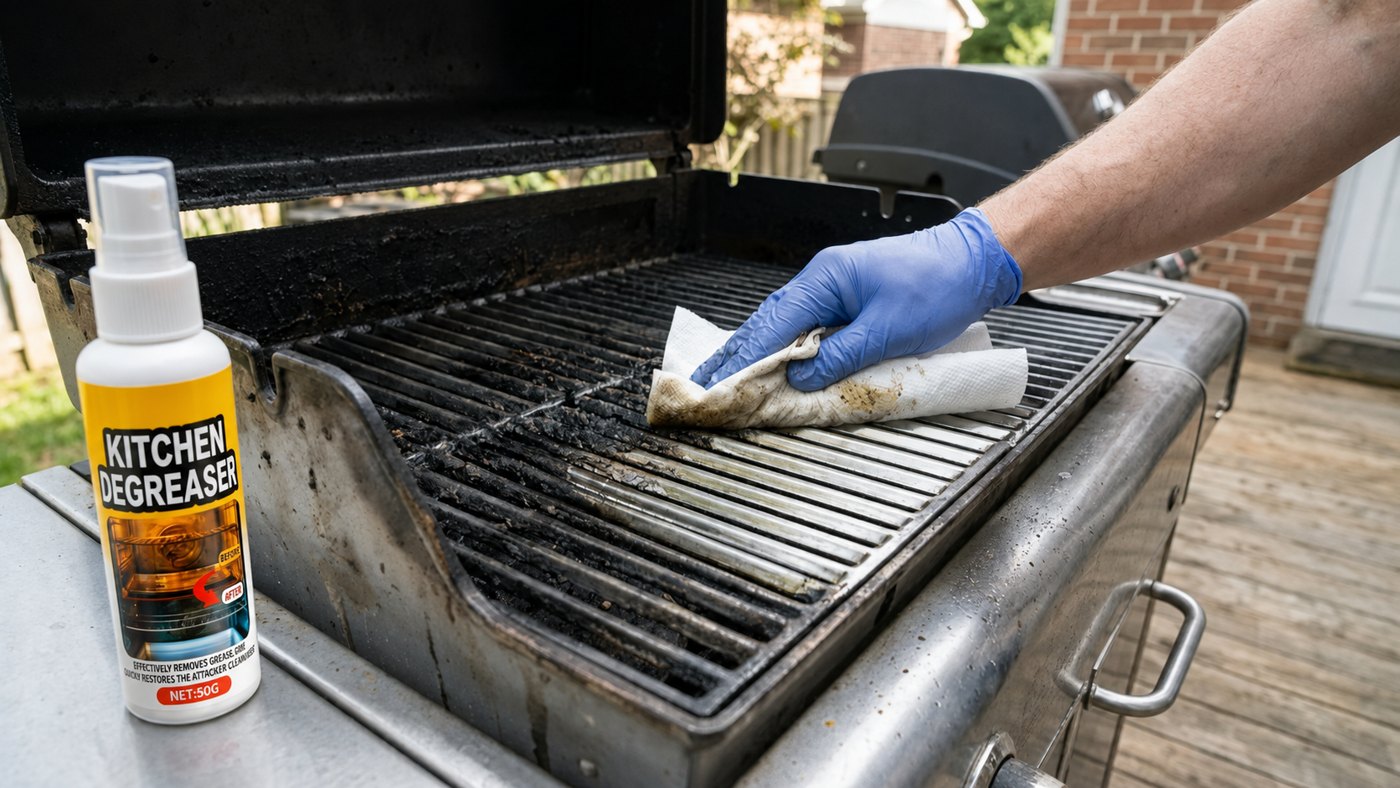
Vinegar is the right choice for limescale, hard-water spots and glass — and the wrong choice for anything baked or polymerised onto metal. If you're looking at a greasy oven door, grill grate or hood filter, vinegar will make it smell cleaner without actually lifting the residue. Keep a bottle of each: vinegar for scale, a degreaser for grease.
Why acid is the wrong tool for fat
Removing fat from a surface relies on two alkaline chemical processes: saponification, where alkali reacts with fat to form soap, and emulsification, where surfactants suspend fat droplets in water so they rinse away instead of resettling. Both need a pH well above neutral to work efficiently — most effective degreasers sit around pH 11–12.
Vinegar sits around pH 2.5–3, the opposite end of the scale entirely. It can dissolve mineral scale (which is alkaline and reacts readily with acid) and it can lift some fresh, light oil film through simple dilution and surfactant action if you're using a vinegar-based spray with added soap. But against polymerised, cross-linked carbon — the stuff that's actually baked onto an oven floor or grill grate — it has no useful chemical mechanism at all. You're essentially wiping an acid across a bond that only an alkali or a solvent can break.
The popular vinegar-plus-baking-soda combination makes this worse rather than better. Vinegar (acid) and baking soda (alkali) neutralise each other on contact in a visible fizzing reaction: you get carbon dioxide gas and are left with sodium acetate and water — essentially salty water — having spent both an acid and an alkali to produce something with close to zero cleaning power on grease.
Time, cost and risk compared
Every method below removes grease eventually. The difference is how long it takes, what it costs per clean, and how much of your surface finish it takes with it.
| Method | Hands-on time | Cost per clean | Risk to finish |
|---|---|---|---|
| Plain vinegar spray | 10–15 min soak + scrub | ~$0.15/clean | Low, but ineffective on baked-on grease |
| Foaming degreaser (GreaseKiller) | 2 min dwell + 1 wipe | ~$1.30/clean | Low — formulated for painted, enamel and metal surfaces |
| Vinegar + baking soda paste | 20+ min + heavy scrub | ~$0.20/clean | Low effectiveness — the two largely neutralise each other |
| Undiluted ammonia | 15–20 min in sealed bag | ~$0.25/clean | Medium — fumes are hazardous, must never mix with bleach |
What vinegar is genuinely good for
- Limescale on kettles, taps, shower screens and coffee machines — the acid dissolves calcium carbonate directly.
- Hard-water spots and cloudiness on glass and glass stovetops.
- Fresh, light oil film on worktops when it's diluted and wiped promptly, before it has any chance to oxidise and bond.
- Deodorising a fridge or microwave interior between deeper cleans.
- Cutting through soap scum on tile and glass, which is chemically closer to scale than to cooking grease.
What a degreaser does that vinegar cannot
- Softens polymerised, carbonised grease so it releases from metal rather than sitting on top being wiped around.
- Clings to vertical surfaces — grates, oven door interiors — long enough to actually act, thanks to a foaming formulation.
- Works in about two minutes rather than repeated soaks that still fall short.
- Handles hood filters and fryer interiors where a wipe of vinegar just spreads the residue thinner instead of removing it.
- Doesn't require pairing with an abrasive scrub to finish the job, reducing scratching on enamel and non-stick coatings.
When vinegar genuinely is the better choice
Be fair to vinegar: on a glass stovetop with hard-water spots and a light dusting of fresh splatter, straight vinegar with a microfibre cloth will outperform a degreaser, because there's no bonded carbon to break down and a degreaser's stronger surfactants aren't needed. It's also the better call for households avoiding all synthetic chemicals, and for anyone descaling a kettle or coffee machine, where a degreaser does essentially nothing (it's not formulated to dissolve mineral scale).
Use both, for different jobs
Keep vinegar for scale, hard water and glass. Use a degreaser for anything that's been cooked onto metal — oven interiors, grill grates, hood filters, stovetop grates. Do not mix them, and never mix vinegar with bleach or any chlorinated cleaner, since that combination releases toxic chlorine gas.
Cost per clean, worked out
A gallon of white vinegar costs about $3–4 and, diluted for cleaning, covers dozens of light cleans at pennies each — genuinely cheap, which is part of its appeal. The problem is that on baked-on grease, those cheap cleans don't work, so the real cost includes the time spent scrubbing and re-scrubbing, plus eventually buying a degreaser anyway. GreaseKiller's 3-pack at $39 covers 36–45 cleans at roughly $1.00 each, and each one actually finishes the job in a single pass.
Mistakes that ruin the result
- Mixing vinegar with baking soda expecting extra cleaning power — the reaction neutralises both, leaving little more than fizzy salt water.
- Ever mixing vinegar with bleach or any chlorine-based cleaner; this releases hazardous chlorine gas.
- Using vinegar on natural stone like marble or limestone — the acid etches the surface permanently.
- Expecting vinegar to shift a baked-on oven or grill residue with a single wipe; it needs a long soak at best and often still fails.
- Leaving vinegar undiluted on rubber gaskets or seals for extended periods, which can dry them out over repeated use.
How we tested this
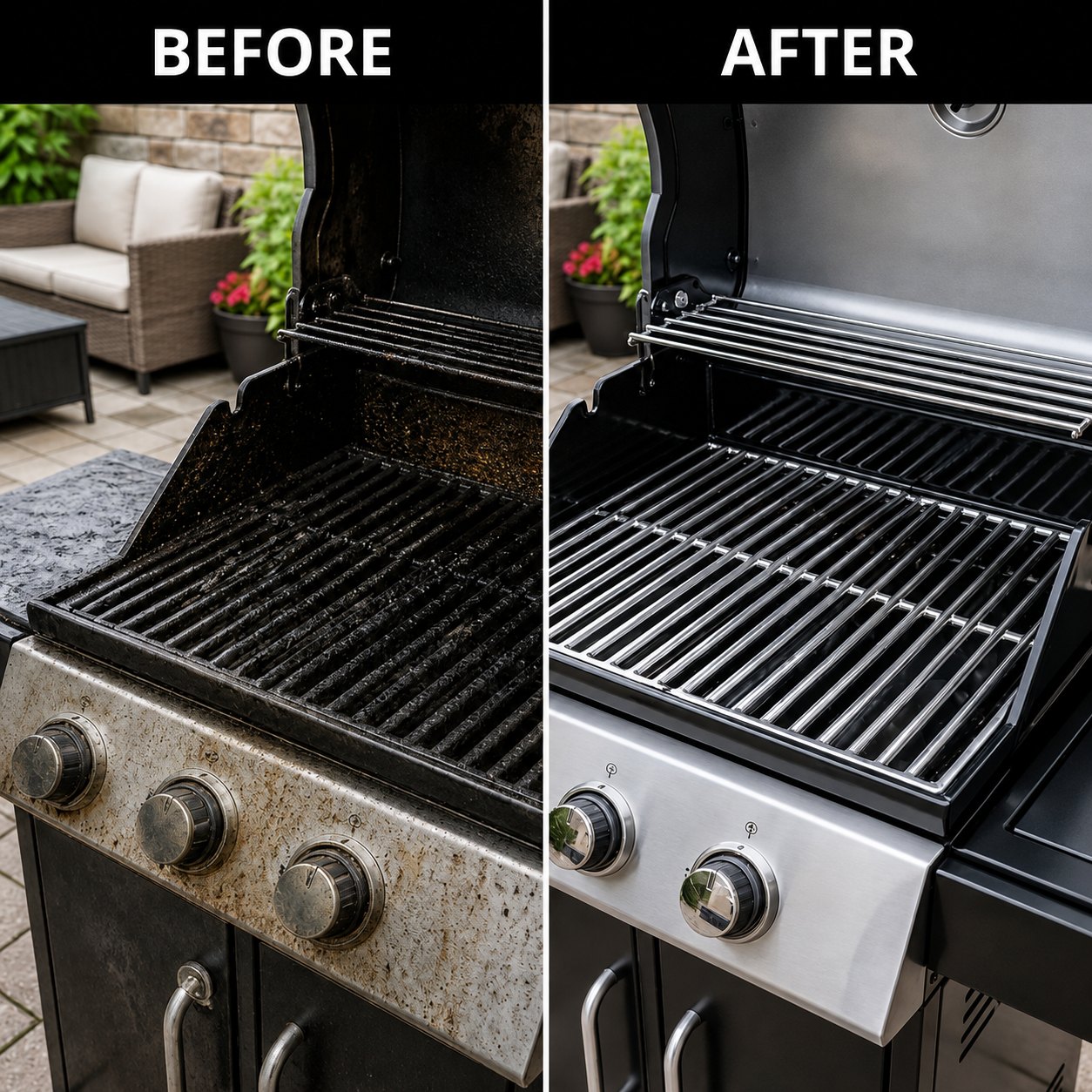
Everything below comes from bench runs on matched pairs of greasy stovetop grates and glass panels with mineral scale rather than marketing copy. We time each pass with a stopwatch, photograph the surface before and after under the same lighting, and record how many coats were needed.
- Applied undiluted white vinegar to one grate and GreaseKiller to a matched grate with the same visible carbon level, both with a 10-minute dwell for vinegar and 2-minute dwell for degreaser.
- Weighed and photographed residue before and after each method under identical lighting.
- Tested vinegar separately on limescale-coated glass to confirm it performed as expected there.
- Recorded the vinegar-and-baking-soda reaction on video to document the fizz-and-neutralise result on a greasy pan.
How many bottles do you actually need?
One bottle covers roughly 12–15 full cleans. Most people underbuy, run out mid-job and pay shipping twice — the multi-packs exist to avoid that, and the per-bottle price drops sharply as the pack grows.
| Your situation | Recommended pack | Price per bottle |
|---|---|---|
| Occasional grease, mostly light maintenance | 2-pack | $16.00 |
| Full kitchen — oven, hob, grates, filters | 3-pack | $13.00 |
| Heavy home cooking or a grill in regular use | 5-pack | $11.00 |
| Multiple kitchens or a small food business | 8-pack | $9.00 |
Explore more
What customers say
“I'm a vinegar-for-everything person normally, but it did nothing on my grill grates after a summer of cookouts. GreaseKiller cleared them in one go. Still use vinegar on the glass stovetop though — that part actually works.”
Try GreaseKiller™ risk-free
Bundles start at $9 a bottle with free worldwide shipping and a 90-day results-or-refund guarantee. Checkout takes under a minute.
Get 50% Off Now