How baking soda works
Sodium bicarbonate is a mild alkali and a mild abrasive at the same time. The alkalinity helps saponify fresh fats — turning them into a soap-like compound that rinses away — and the crystal structure gives gentle mechanical scrubbing. It's cheap, food-safe and genuinely good for fresh spills, fridge odours and light surface film.
Mixing it with vinegar mostly neutralises both into salty water and CO₂ — the fizz looks satisfying and impressive, but the reaction itself does very little actual cleaning once the bubbling stops.
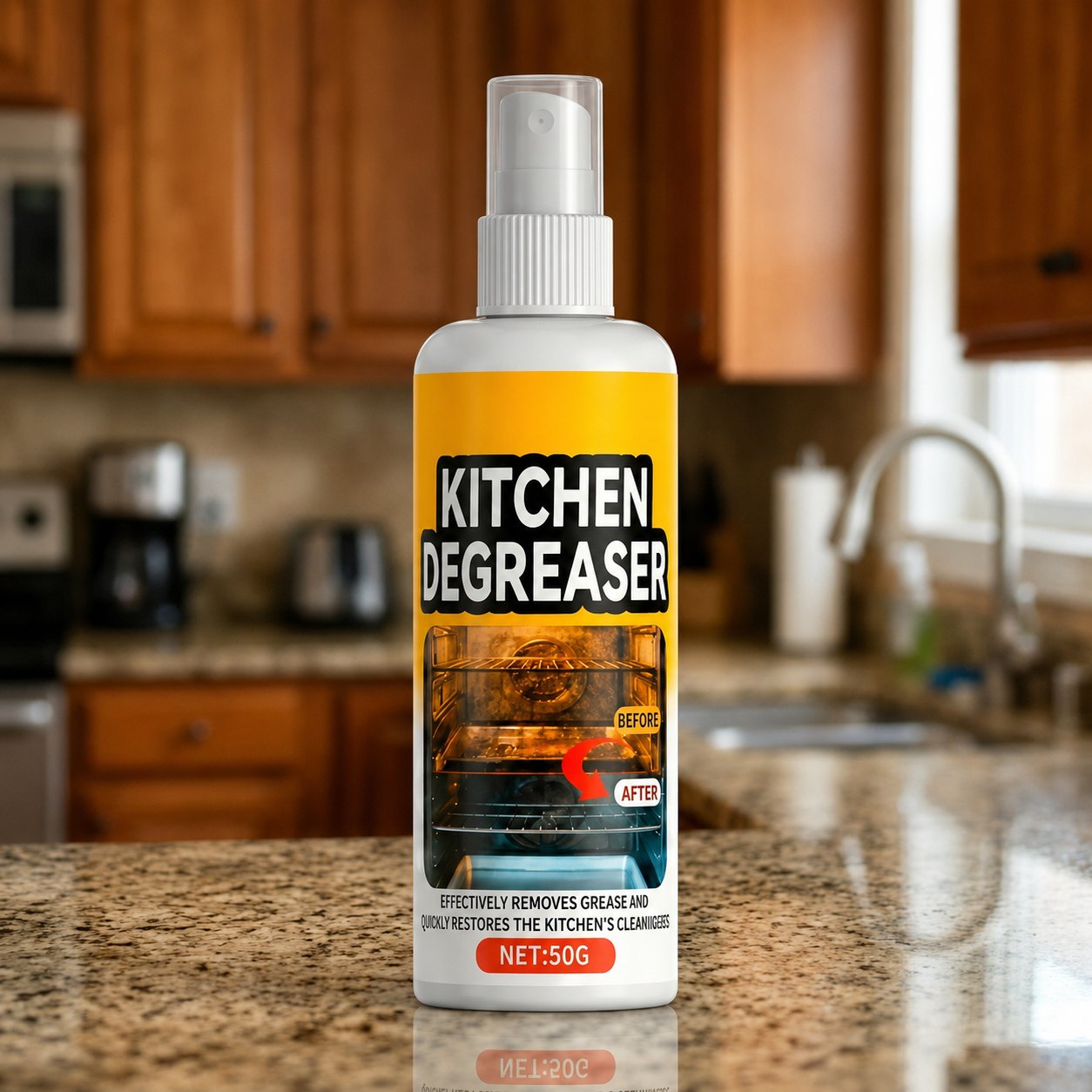
How a degreaser spray works
A formulated degreaser combines surfactants and solvents that penetrate a hardened carbon layer, lift it away from the substrate underneath and hold it in suspension so it wipes off cleanly rather than reattaching. It's designed specifically for residue that has already changed chemically under sustained heat — which baking soda's mild alkalinity simply isn't strong enough to break down on its own.
Which to use, and when
- Fresh grease, odours, sinks, worktops: baking soda is fine and cheap for these
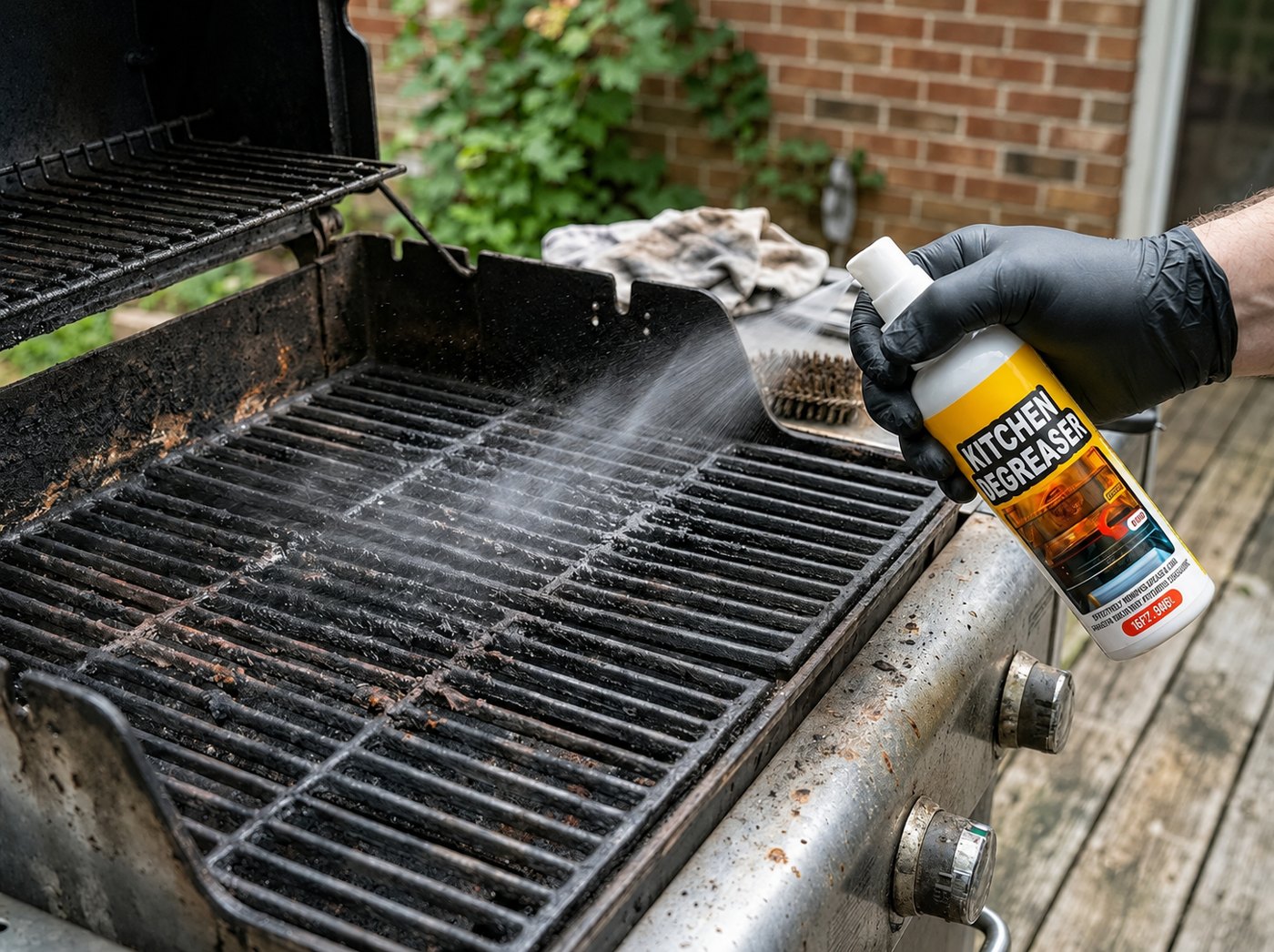
- Baked-on grill carbon: a degreaser, every time — baking soda mostly just moves it around
- Oven cavities and door glass: a degreaser, without the abrasive scratch risk on glass
- Delicate coatings and induction glass: a degreaser (baking soda's mild abrasiveness can micro-scratch over time)
- Budget deep-clean with time to spare: baking soda paste plus real patience and elbow grease
Time, cost and risk compared
Every method below removes grease eventually. The difference is how long it takes, what it costs per clean, and how much of your surface finish it takes with it.
| Method | Hands-on time | Cost per clean | Risk to finish |
|---|---|---|---|
| Baking soda paste, fresh grease | 10–20 min | ~$0.05/clean | Low — safe on nearly everything |
| Baking soda paste, carbonised grease | 45–90 min scrubbing | ~$0.05/clean | Medium — abrasive action on repeated scrubbing |
| Vinegar + baking soda combo | 20–30 min | ~$0.10/clean | Low, but weak cleaning power once reaction settles |
| Foaming degreaser spray | 2–5 min dwell + wipe | ~$1.30/clean | Low — built for carbonised residue |
Where baking soda actually loses
- Fully carbonised, months-old grill or oven residue — the mild alkalinity can't break that bond
- Glass and induction cooktops with repeated scrubbing — the mild abrasive can dull the surface over time
- Anywhere you need speed — a degreaser's 2-minute dwell beats a 45-minute scrub every time
- Delicate non-stick coatings, where any scrubbing pressure risks lifting the coating
How we tested this
Everything below comes from bench runs on matched grease samples split between baking soda paste and a foaming degreaser rather than marketing copy. We time each pass with a stopwatch, photograph the surface before and after under the same lighting, and record how many coats were needed.
- Fresh grease (24 hrs old) and carbonised grease (6+ months old) tested separately
- Time-to-clean measured with a stopwatch for both methods on identical residue
- Surface condition checked under raking light for abrasion after repeated scrubbing
- Cost per clean calculated at typical usage rates for each product
The realistic verdict
Use both, for different jobs. Keep baking soda on hand for everyday spills, sink odours and light film, and keep a degreaser for the jobs where scrubbing has already failed you — grill grates, oven cavities, and anything that's had months to carbonise. GreaseKiller™ is covered by a 90-day guarantee, so you can genuinely compare them side by side on the same grate or tray and see the difference yourself.
Continue reading
What customers say
“I scrubbed my grill grates with a baking soda paste for almost an hour and barely made a dent. Sprayed a degreaser on the same grate afterward and it came off in two minutes.”
Try GreaseKiller™ risk-free
Bundles start at $9 a bottle with free worldwide shipping and a 90-day results-or-refund guarantee. Checkout takes under a minute.
Get 50% Off Now