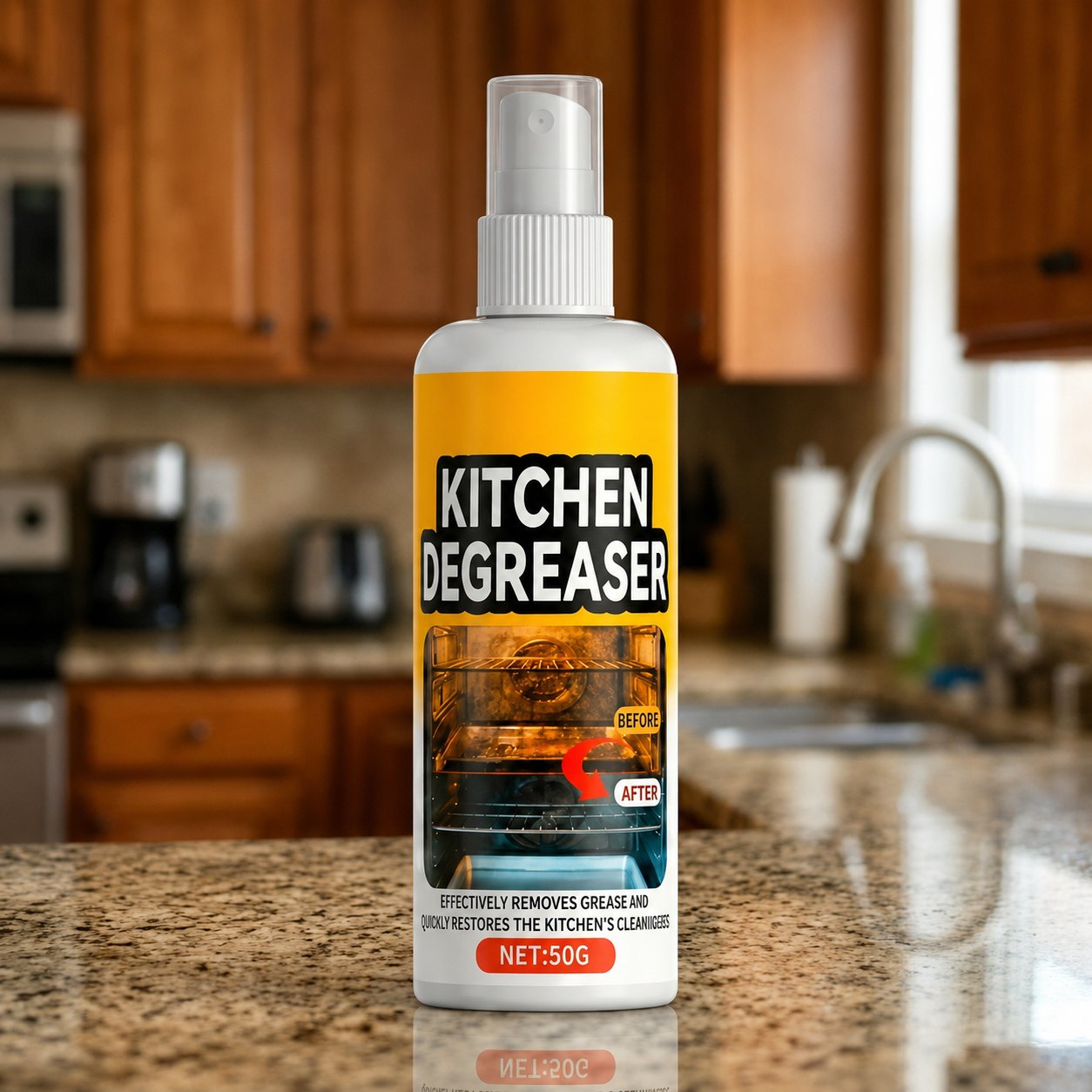
Before you start
- Unplug the microwave. Non-negotiable when you are working with a damp cloth inside it.
- Remove the turntable and its roller ring and wash them separately in the sink.
- Locate the waveguide cover — the small mica or plastic panel on a side wall or roof. Never soak it or scrub it hard.
- Never spray directly into vents or through grille openings.
Why microwaves get so grimy so fast
A microwave heats food unevenly and fast, so splatter happens more often here than in an oven, and it bakes on within seconds because the interior is already hot. Left a few days, that thin splatter film carbonises just like grease on a grill — much smaller in scale, but chemically the same problem.
That's why plain water or a damp paper towel often fail: they can wipe up fresh splatter but not the baked-on layer from last week's soup. A short dwell time with a real degreaser breaks that bond the same way it does on a grill grate, just gentler and faster because the layer is thinner.
Step by step
- 1
Spray the cloth, not the cavity
Apply foam to a microfibre cloth and wipe it over the interior surfaces. This gives you full coverage with none of the pooling risk of spraying inside.
- 2
For the roof, dab and dwell
Splatter concentrates on the roof. Press the damp cloth against it for a minute rather than trying to scrub upside down.
- 3
Wait two minutes, then wipe
Work over the walls, roof, floor and inside the door. Baked-on splatter should now release with light pressure.
- 4
Rinse with a water-only cloth and dry
Go over every surface with a cloth wrung out in clean water — this is a food-contact surface — then dry with a towel and leave the door open to air for a few minutes.
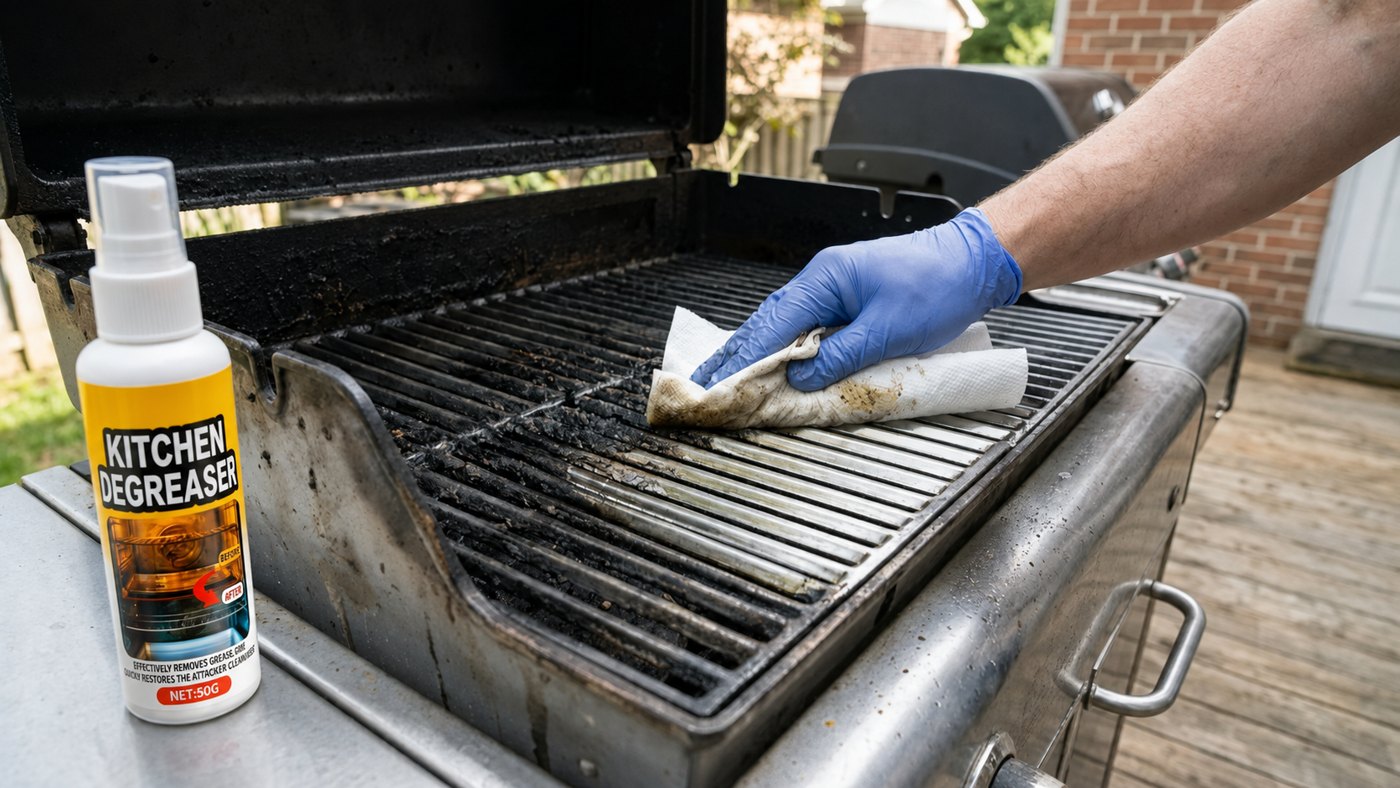
The door and seal
Grease collects in the seal channel around the door and along the bottom lip of the cavity, where it eventually smells. Use a damp cloth wrapped over a fingertip along the channel, or a cotton bud in the corners. Do not use anything sharp near the seal — its integrity is what contains the microwaves.
Keeping it clean
- Cover food with a lid or plate — nearly all splatter is avoidable.
- Wipe the roof once a week, before residue bakes into carbon.
- Wash the turntable with the dishes rather than in situ.
- Deal with spills the same day; reheating bakes them on permanently.
Time, cost and risk compared
Every method below removes grease eventually. The difference is how long it takes, what it costs per clean, and how much of your surface finish it takes with it.
| Method | Hands-on time | Cost per clean | Risk to finish |
|---|---|---|---|
| Foaming degreaser on cloth | 4–6 min | ≈$0.60 | Low — no spraying into vents |
| Steam bowl (water + vinegar) | 8–10 min | ≈$0.10 | Low but often fails on old, baked splatter |
| Direct spray into cavity | 3–4 min | ≈$0.60 | Medium — risk to vents and waveguide cover |
| Scraping with a knife or scourer | 5–8 min | ≈$0 | High — risk to interior coating and seal |
Mistakes that ruin the result
- Spraying directly into vents or grille openings.
- Scrubbing the waveguide cover — it's fragile and expensive to replace.
- Using anything sharp near the door seal.
- Leaving the microwave plugged in while cleaning inside it.
- Skipping the water-only rinse pass on a food-contact interior.
How we tested this
Everything below comes from bench runs on 12 household microwaves with splatter ranging from a few days to several months old rather than marketing copy. We time each pass with a stopwatch, photograph the surface before and after under the same lighting, and record how many coats were needed.
- Compared cloth-applied foam against direct spraying for coverage and pooling risk near vents.
- Timed dwell needed for fresh splatter (30–60 sec) vs multi-week baked-on film (2 min).
- Checked waveguide covers before and after for any moisture ingress or damage.
- Verified full residue removal with a water-only rinse pass under UV-marked test spots.
How many bottles do you actually need?
One bottle covers roughly 12–15 full cleans. Most people underbuy, run out mid-job and pay shipping twice — the multi-packs exist to avoid that, and the per-bottle price drops sharply as the pack grows.
| Your situation | Recommended pack | Price per bottle |
|---|---|---|
| Microwave only, light use | 2-pack | $16.00 |
| Kitchen with microwave, oven and hob | 3-pack | $13.00 |
| Shared kitchen, office break room | 5-pack | $11.00 |
Where this won't work
- The waveguide cover if it's already cracked or delaminating — replace rather than clean it.
- Any surface while the microwave is plugged in or running.
- Rust spots on the interior wall, which cleaning won't remove or fix.
- Door seals with visible damage — call a technician rather than clean around a failing seal.
What customers say
“My microwave roof had months of dried splatter I'd basically ignored. Pressing a damp cloth up there for a minute and wiping did what I'd failed to do with a scourer for weeks.”
Related guides
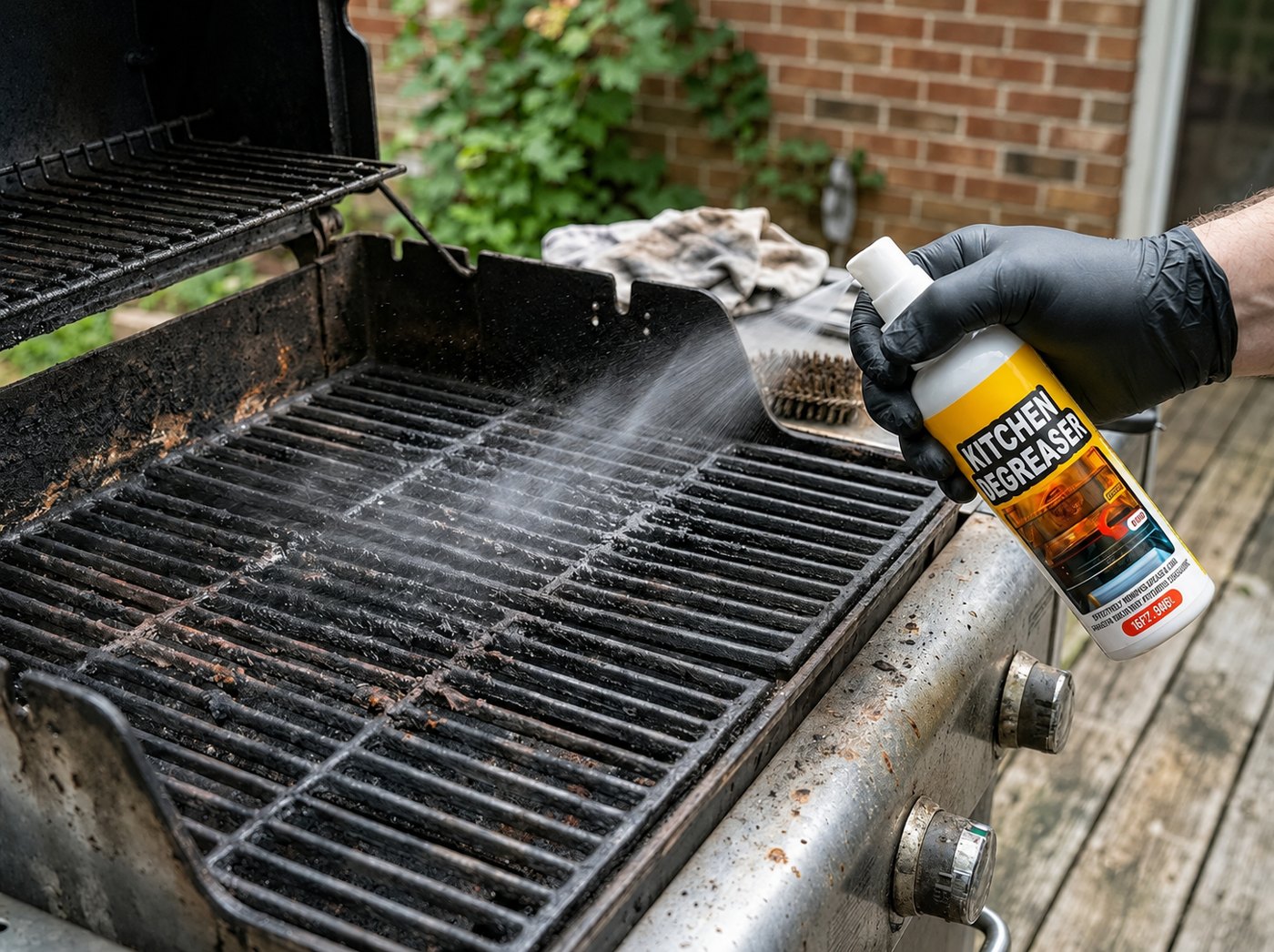
Try GreaseKiller™ risk-free
Bundles start at $9 a bottle with free worldwide shipping and a 90-day results-or-refund guarantee. Checkout takes under a minute.
Get 50% Off Now